AT A GLANCE
Manual therapy is skilled, hands-on treatment — joint mobilization, spinal manipulation, and soft tissue techniques — used by physical therapists to reduce pain and restore movement. Evidence shows it works best combined with exercise, which is how it’s delivered at RISE Physical Therapy: 45-minute one-on-one sessions in Boise and Nampa, Idaho, hands-on at every visit.
What is manual therapy?
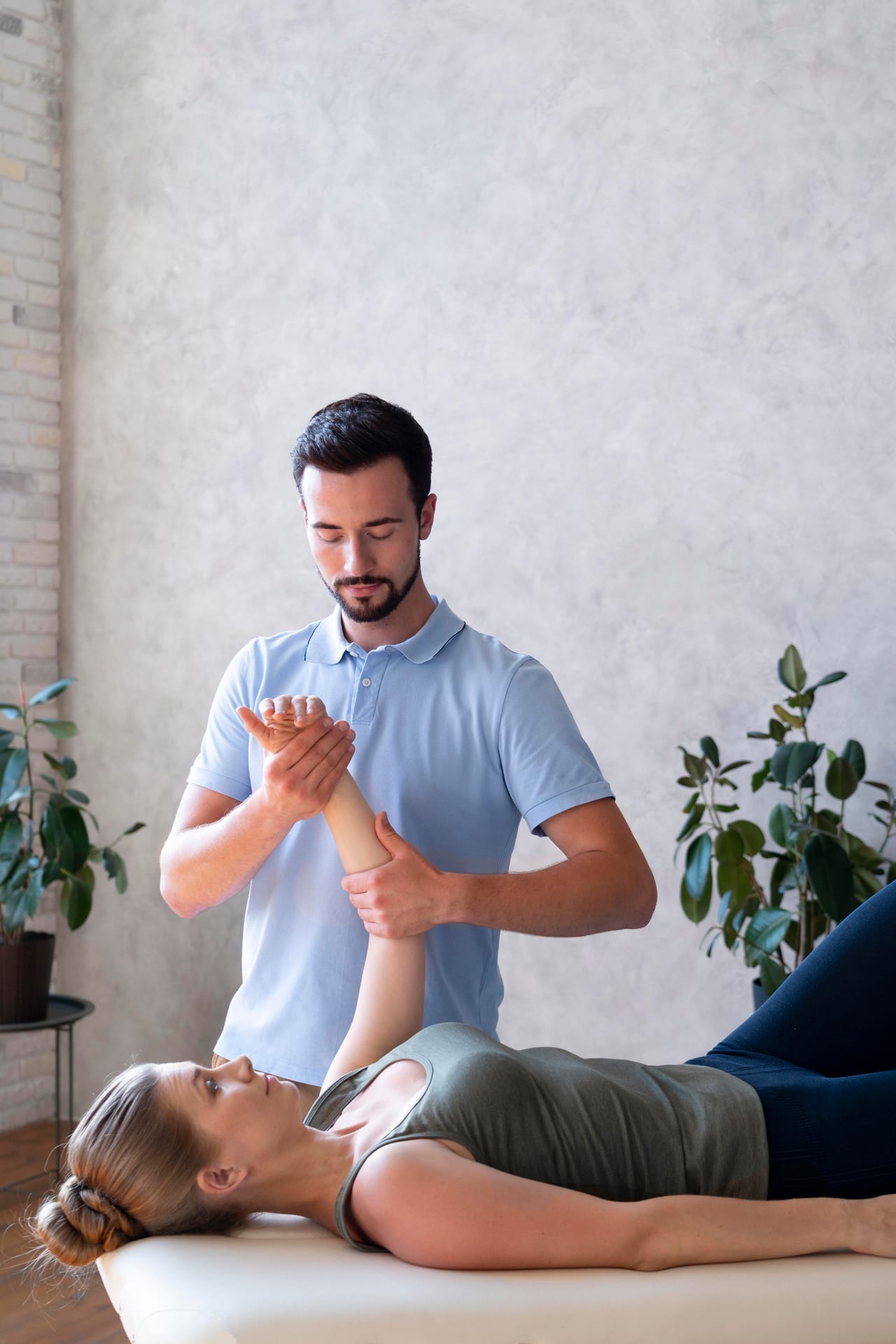
Manual therapy is the umbrella term for skilled, hands-on treatment performed by a physical therapist: mobilizing stiff joints, manipulating the spine, and working through restricted muscle and fascia. Where massage aims broadly at relaxation, manual therapy is targeted — a specific technique, applied to a specific joint or tissue, for a specific mechanical or neurological reason found in your exam.
The techniques fall into a few families: joint mobilization (graded, oscillating pressure that restores glide in a stiff joint), manipulation (the quick, precise movement that sometimes produces a pop), and soft tissue techniques ranging from deep pressure to instrument-assisted work and myofascial release.
How does manual therapy work?
Manual therapy works through two channels at once. Mechanically, mobilization restores the small accessory glides a joint needs to move through its full range. Neurologically — and this is the bigger effect — hands-on input dampens the nervous system’s protective guarding, reducing pain sensitivity and letting muscles relax enough to move well. That short window of reduced pain and improved motion is exactly when retraining movement pays off, which is why we never use manual therapy as a stand-alone.
What does the research say?
Manual therapy is among the most-studied physical therapy interventions, and the pattern in the evidence is consistent: real benefits, biggest when combined with exercise.
META-ANALYSIS · 2023
For non-specific neck pain, combining manual therapy with exercise improved pain and disability more than either approach alone.
View study →
META-ANALYSIS · 2026
In chronic low back pain, adding joint-based manual therapy to exercise produced greater improvements in disability at short- and long-term follow-up.
View study →
EVIDENCE SYNTHESIS
For chronic low back pain, spinal manipulation showed effects comparable to prescription NSAIDs, and outperformed placebo and general practitioner care short term.
View study →
NETWORK META-ANALYSIS · 2025
Across treatments for neck pain, multimodal care — hands-on treatment plus exercise — ranked most effective for improving pain and disability.
View study →
What is manual therapy used for?
Manual therapy earns a place in most orthopedic plans of care at our Boise and Nampa clinics, especially for:
- Neck pain, headaches, and TMJ dysfunction
- Low back pain and stiffness, including sciatica
- Frozen shoulder and post-injury shoulder stiffness
- Whiplash and carpal tunnel syndrome — where hands-on care has trial-level evidence
- Hip and knee arthritis-related stiffness
- Post-surgical scar and joint mobility restrictions
- Ankle sprains that never regained full motion
 Medically reviewed by Dr. Carson Bailey, PT, DPT · August 2026