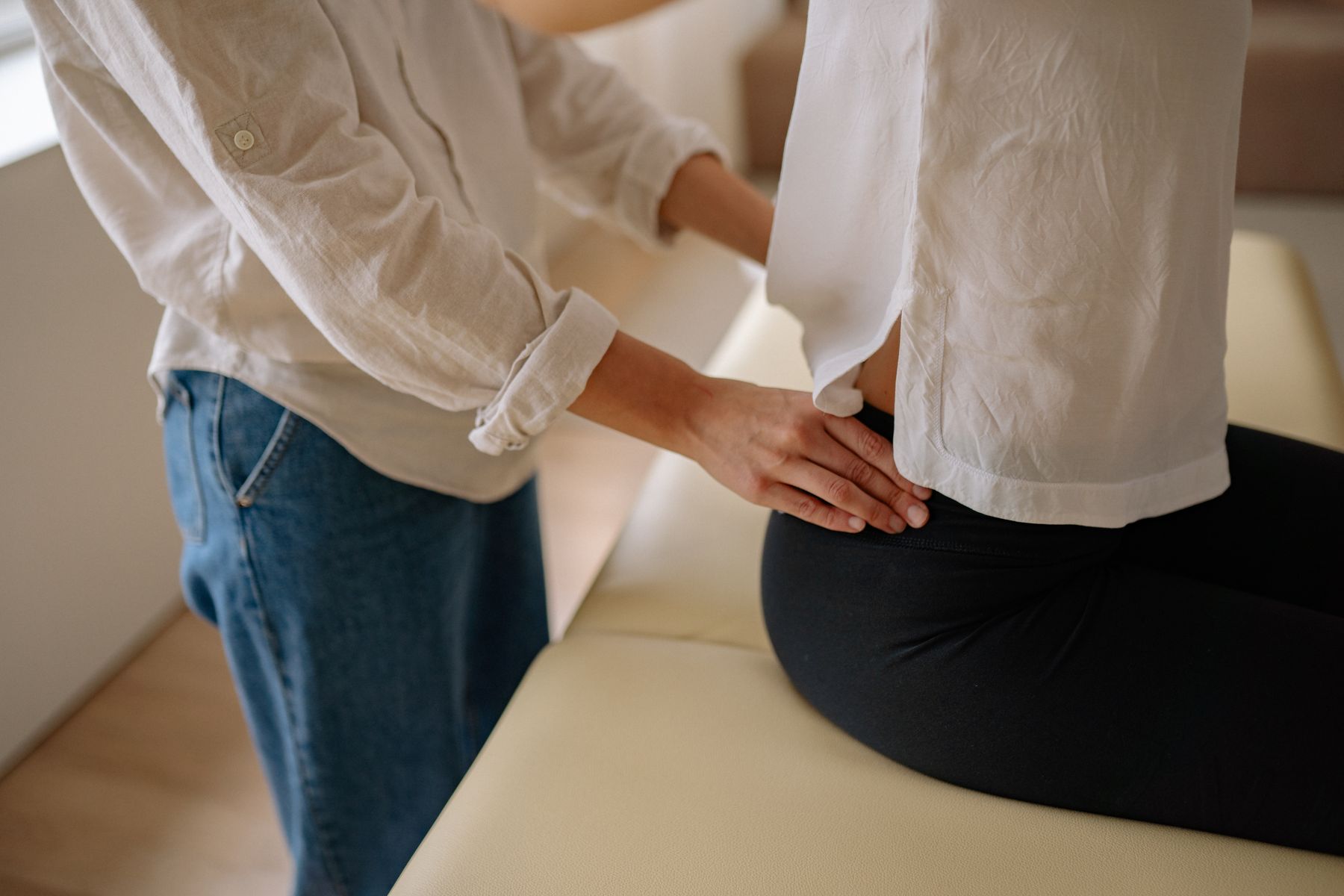
The stiff mornings, the guarded bending, the ache that flares every time you sit too long — low back pain responds to the right kind of movement. We find yours, one-on-one.
Low back pain is the world's leading cause of disability, affecting up to 80% of adults at some point — and most cases improve without surgery, injections, or imaging. Guideline-recommended care starts with exercise-based physical therapy, which reduces pain and disability while lowering downstream healthcare costs. RISE Physical Therapy evaluates and treats low back pain one-on-one in 45-minute sessions in Boise and Nampa, Idaho, with no referral required.
What causes low back pain?
Low back pain usually comes from a combination of ordinary structures doing extraordinary overtime: the small joints of the lumbar spine, the discs between the vertebrae, and the muscles that stabilize all of it. A specific injury — an awkward lift, a long drive, a weekend of yard work — is often just the last straw on top of gradual factors like prolonged sitting, deconditioning, poor sleep, and stress. True structural emergencies are rare.
That's also why scans are so often misleading. Disc bulges and "degeneration" show up on MRIs of huge numbers of adults with zero pain, which is why clinical guidelines recommend against routine imaging when no red flags are present. The exam that actually changes treatment is a movement exam: which directions hurt, which ease symptoms, what your hips and mid-back contribute, and how your trunk handles load.
Symptoms: when should you seek help?
Most low back pain episodes ease within 4–6 weeks — but "wait and see" gets less appealing when the pain keeps returning or starts to run your schedule. Seek an evaluation if you notice:
Aching, stiffness, or sharp catches in the lower back, especially in the morning or after sitting
Pain with bending, lifting, or the transition from sitting to standing
Muscle spasm or a feeling that your back might "go out"
Pain spreading into the buttock or the back of the thigh
Episodes that keep recurring a few times per year, each a bit worse
Urgent red flags are different: numbness in the groin, new loss of bowel or bladder control, progressive leg weakness, fever, unexplained weight loss, or pain after major trauma warrant a medical workup first — screening for these is step one of every RISE evaluation.
Most back pain comes from irritated joints, discs, and overworked muscle — structures that respond to graded movement, not rest.
Why physical therapy first?
Physical therapy is the guideline-recommended first stop for low back pain because active, exercise-based care outperforms passive approaches. A 2025 umbrella review of systematic reviews found exercise therapy consistently improves pain and function in low back pain across exercise types,[1] and a systematic review of systematic reviews in acute low back pain supports early movement over rest.[2] The economics point the same direction: patients who started physical therapy early after an acute episode showed lower back-related healthcare utilization and spending over the following year, including fewer opioid prescriptions and less imaging.[3]
The honest caveat: no single exercise style is magic. Research shows benefits across strengthening, motor control, Pilates-style, and general exercise — what matters most is that the program is progressive, matched to your presentation, and actually gets done. That's a coaching problem as much as a prescription problem, and it's where one-on-one time pays off.
How we treat low back pain at RISE
Every RISE back evaluation is 45 minutes one-on-one with the same Doctor of Physical Therapy — enough time to screen properly, test movement thoroughly, and start treatment the same day.
Directional movement exam: we map which movements provoke and which relieve your pain, because that pattern — not the MRI — usually drives the plan.
Hands-on treatment: joint mobilization and soft-tissue work to calm guarded muscle and restore motion so exercise actually feels doable.
Dry needling where it fits: trigger points in the lumbar paraspinals, glutes, and QL respond well in many patients.
Progressive loading: a graded strength program for the trunk and hips — the part that keeps the pain from coming back.
Red-flag screen, then a movement exam that identifies what provokes and what relieves your back.
02 — TREAT
Calm it down
Manual therapy, dry needling, and movement modifications that reduce pain within the first visits.
03 — REBUILD
Load it back up
Progressive trunk and hip strengthening so lifting, sitting, and sport stop being threats.
What to expect at your first visit
Your story first. When it started, what makes it better and worse, what you've already tried, and what it's keeping you from doing.
A safety screen. We rule out the rare red flags that need a physician before therapy — and refer you promptly if anything appears.
A movement exam. Bending, extension, hip mobility, and loaded movements — mapped to find your directional pattern.
Treatment on day one. Hands-on care plus two or three targeted exercises, not a generic printout of ten.
A clear plan. How many visits we expect, what progress should look like week to week, and what you can do between sessions.
Frequently asked questions
Can physical therapy really fix low back pain?+
For most people, yes. Exercise-based physical therapy is a first-line, guideline-recommended treatment for low back pain, with umbrella reviews of systematic reviews showing consistent reductions in pain and disability.[1] Most acute episodes improve substantially within 4–6 weeks, and active treatment speeds that up while cutting the risk of recurrence.
Do I need an MRI or X-ray before starting physical therapy?+
Usually not. Clinical guidelines recommend against routine imaging for low back pain without red flags, because disc bulges and degenerative changes show up on scans of many pain-free adults and rarely change the treatment plan. Your therapist screens for the situations where imaging or a physician referral genuinely is needed and will send you to the right provider if anything concerning appears.
Do I need a referral to see a physical therapist for back pain in Idaho?+
No. Idaho is a direct-access state, so you can book a back pain evaluation at RISE without a physician referral. Some insurance plans — commonly Medicare, Medicaid, and Tricare — require a referral for coverage, and we're happy to verify your plan's requirements before your first visit.
Should I rest my back or keep moving?+
Keep moving, within tolerance. Bed rest beyond a day or two is one of the most consistently harmful things for low back pain — muscles decondition, stiffness builds, and fear of movement grows. Modified activity with gradual, guided progression back to normal movement resolves symptoms faster than rest, which is exactly what your treatment plan is built around.
When is low back pain something more serious?+
Red flags are rare but real: numbness in the groin or inner thighs, loss of bowel or bladder control, progressive leg weakness, unexplained weight loss, fever with back pain, or pain after significant trauma. Any of these warrant urgent medical evaluation rather than starting therapy. Screening for them is the first step of every RISE back evaluation.
How many physical therapy visits does low back pain take?+
Many patients feel meaningful change within 2–4 visits, and a typical plan of care runs 6–12 visits over 4–8 weeks depending on how long symptoms have been present. Because every RISE session is 45 minutes one-on-one with the same Doctor of Physical Therapy, there's no time lost repeating your story or sharing your therapist with other patients.
Does insurance cover physical therapy for low back pain?+
Most major medical plans cover physical therapy for low back pain, and starting with PT early has been shown to lower overall back-related healthcare spending.[3] RISE is in-network with most major insurance plans in Idaho — check our insurance list or contact us and we'll verify your coverage before your first appointment.
Carson is a co-founder of RISE Physical Therapy and treats orthopedic, sports, and spine conditions with a hands-on, movement-first approach. He earned his Doctorate of Physical Therapy from Pacific University in Oregon. Meet the full team →
Initial Presentation for Acute Low Back Pain: Is Early Physical Therapy Associated with Healthcare Utilization and Spending? A Retrospective Review of a National Database. 2022. ncbi.nlm.nih.gov/pmc/articles/PMC9250203
 Medically reviewed by Dr. Carson Bailey, PT, DPT · August 2026