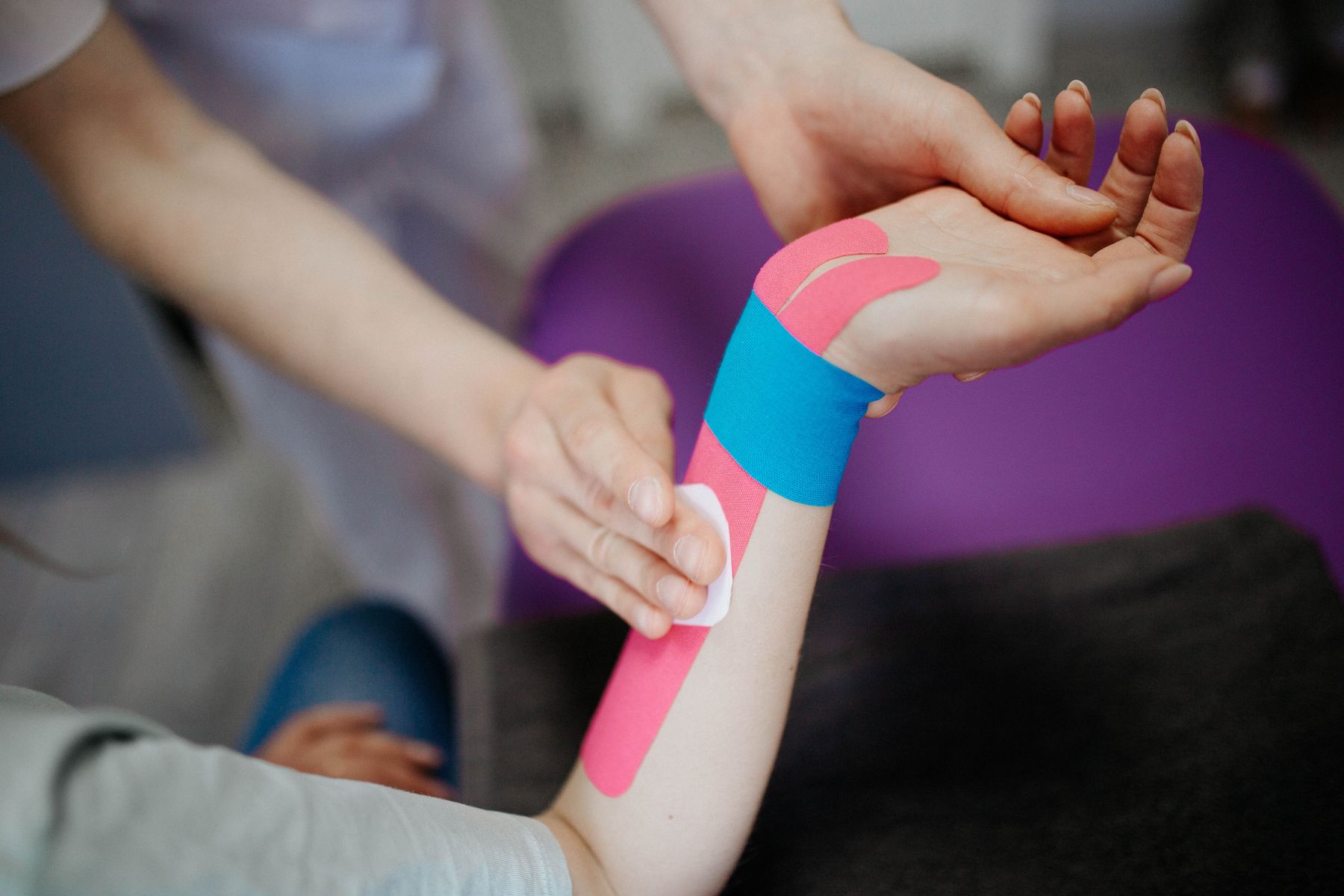
Hands that tingle at night and drop the coffee cup by day aren't a life sentence — and surgery isn't the only exit. Conservative carpal tunnel care, coached one-on-one.
Carpal tunnel syndrome is compression of the median nerve at the wrist, affecting roughly 4% of adults and causing numb, tingling fingers — classically at night. Randomized-trial evidence shows manual physical therapy can match surgery at one year for many patients, at lower cost. RISE Physical Therapy treats carpal tunnel one-on-one in 45-minute sessions in Boise and Nampa, Idaho, with no referral required.
What is carpal tunnel syndrome?
Carpal tunnel syndrome is a compression of the median nerve as it passes through a narrow passage at the base of the palm — the carpal tunnel — alongside nine tendons that bend the fingers. When pressure in that tunnel rises, the nerve's blood flow suffers and it begins to misfire, producing the numbness, tingling, and eventually weakness that define the condition. In a landmark population study, about 3.8% of adults had clinically confirmed carpal tunnel syndrome, making it the most common nerve entrapment in the body.[1]
The symptoms map the median nerve's territory: the thumb, index, middle, and half the ring finger — but not the pinky. That detail matters, because tingling that includes the pinky or runs down from the neck points to different diagnoses, from cubital tunnel syndrome to a cervical nerve root problem. Sorting the true source is the first job of the evaluation.
Symptoms: when should you seek help?
Carpal tunnel syndrome usually builds gradually. Book an evaluation if you notice:
Numbness or tingling in the thumb, index, and middle fingers
Symptoms that wake you at night and ease when you shake your hand out
Tingling while driving, holding a phone, or gripping a book
A weakening grip — dropped keys, jars you can't open
Aching that radiates from the wrist up the forearm
Two signs argue for prompt care rather than watchful waiting: numbness that has become constant, and any flattening or shrinking of the muscle pad at the base of the thumb. Both suggest the nerve is losing ground.
Sustained wrist positions can aggravate an irritated median nerve — workstation tweaks are part of the plan, not the whole plan.
Does physical therapy work as well as carpal tunnel surgery?
For many patients, yes — and this is one of the better-studied questions in conservative orthopedics. In a randomized trial of 120 patients with electrodiagnostically confirmed carpal tunnel syndrome, just three sessions of manual physical therapy — centered on desensitization of the nerve's pathway from neck to wrist — matched surgical release on function and pain at 12 months, and outperformed it at one and three months.[2] A follow-up economic analysis of the same trial found the physical therapy pathway achieved those outcomes at significantly lower cost.[3]
Honest caveats: the trial enrolled women with mostly mild-to-moderate disease, and severe cases with constant numbness or muscle wasting do better with timely surgical decompression. Conservative care and surgery aren't rivals so much as stages — the evidence supports starting conservatively when severity allows, and escalating without delay when it doesn't.
How we treat carpal tunnel at RISE
Carpal tunnel care at RISE treats the whole median nerve pathway — not just the wrist crease. Every session is 45 minutes one-on-one with the same Doctor of Physical Therapy.
Source confirmation: nerve testing separates true carpal tunnel from neck referral, cubital tunnel, and tendon problems that mimic it.
Manual therapy along the nerve path: targeted soft-tissue and mobility work from forearm to neck, modeled on the techniques validated against surgery.
Nerve and tendon gliding: specific exercises that restore the median nerve's ability to slide freely through the tunnel.
Night splinting and load changes: neutral-wrist splinting for sleep and practical adjustments to the grips, tools, and positions that provoke you.
Provocative testing and a neck-to-hand screen confirm the median nerve at the wrist — and whether conservative care is the right lane.
02 — TREAT
Quiet the nerve
Manual therapy, nerve glides, and night splinting reduce pressure and irritation — protecting your sleep first.
03 — REBUILD
Restore grip you trust
Progressive strengthening and workstation changes rebuild grip and endurance without re-provoking the tunnel.
What to expect at your first visit
Your story first. Which fingers tingle, what wakes you at night, what your hands do all day, and health factors — diabetes, thyroid, pregnancy — that raise carpal tunnel risk.
A nerve-focused exam. Provocative wrist tests, sensation and strength mapping, and screening of the neck and elbow to rule out mimics.
A severity check. Constant numbness or thumb-muscle changes shift the conversation — if surgical consultation is the wiser path, we say so plainly.
Treatment on day one. Manual work along the nerve path, your first gliding exercises, and a night-splint plan.
A practical provocations audit. We identify the grips and positions driving symptoms and set the two or three changes worth making this week.
Frequently asked questions
Can carpal tunnel be treated without surgery?+
Often, yes. In a randomized trial of 120 patients, three sessions of specialized manual physical therapy produced outcomes equivalent to surgical release at one year — with faster improvement in the first months[2] and lower cost.[3] Surgery remains the right call for severe or progressive nerve loss, which is exactly what a careful evaluation screens for.
Why do my hands go numb at night?+
Night numbness is the classic carpal tunnel symptom. Most people sleep with curled wrists, which raises pressure inside the carpal tunnel and compresses the median nerve; that's why symptoms wake you and why shaking the hand brings relief. It's also why a night splint that keeps the wrist neutral is one of the simplest evidence-supported first steps.
Is carpal tunnel caused by typing?+
Typing alone is a weaker culprit than its reputation suggests — evidence links carpal tunnel more strongly to forceful, repetitive gripping, vibration, health factors like diabetes, thyroid conditions, and pregnancy, and simple anatomy. That said, long hours of any sustained wrist position can aggravate an already-irritated nerve, so workstation and habit changes are part of a complete plan.
What happens if carpal tunnel is left untreated?+
Mild cases can wax and wane for years, but persistent compression can progress from intermittent tingling to constant numbness, weakness, and visible shrinking of the thumb muscles — and at that stage, recovery is slower and less complete even after surgery. Constant numbness or muscle wasting is a signal to seek care promptly rather than wait.
Do I need a referral for carpal tunnel treatment in Idaho?+
No. Idaho is a direct-access state, so you can book a carpal tunnel evaluation at RISE without a physician referral. Some insurance plans — commonly Medicare, Medicaid, and Tricare — require a referral for coverage, and we'll verify your plan's requirements before your first visit.
Does insurance cover physical therapy for carpal tunnel syndrome?+
Most major medical plans cover physical therapy for carpal tunnel syndrome. RISE is in-network with most major insurance plans in Idaho — check our insurance list or contact us and we'll verify your coverage before your first appointment.
Carson is a co-founder of RISE Physical Therapy and treats orthopedic, sports, and foot & ankle conditions with a hands-on, movement-first approach. He earned his Doctorate of Physical Therapy from Pacific University in Oregon. Meet the full team →
Fernández-de-las-Peñas C, et al. Manual Physical Therapy Versus Surgery for Carpal Tunnel Syndrome: A Randomized Parallel-Group Trial. The Journal of Pain, 2015. pubmed.ncbi.nlm.nih.gov/26281946
Fernández-de-las-Peñas C, et al. Cost-Effectiveness Evaluation of Manual Physical Therapy Versus Surgery for Carpal Tunnel Syndrome: Evidence From a Randomized Clinical Trial. Journal of Orthopaedic & Sports Physical Therapy, 2019. pubmed.ncbi.nlm.nih.gov/30501389
 Medically reviewed by Dr. Carson Bailey, PT, DPT · August 2026