Stubborn knots that massage never quite fixes? Certified dry needling releases trigger points at their source — delivered one-on-one by a Doctor of Physical Therapy, and always paired with a plan to keep them from coming back.
Dry needling is a treatment in which a licensed physical therapist inserts thin, sterile filament needles into tight bands of muscle — trigger points — to release tension, improve blood flow, and reduce pain. At RISE Physical Therapy, dry needling is performed by certified clinicians as part of one-on-one, 45-minute sessions at our Boise and Nampa, Idaho clinics.
What is dry needling?
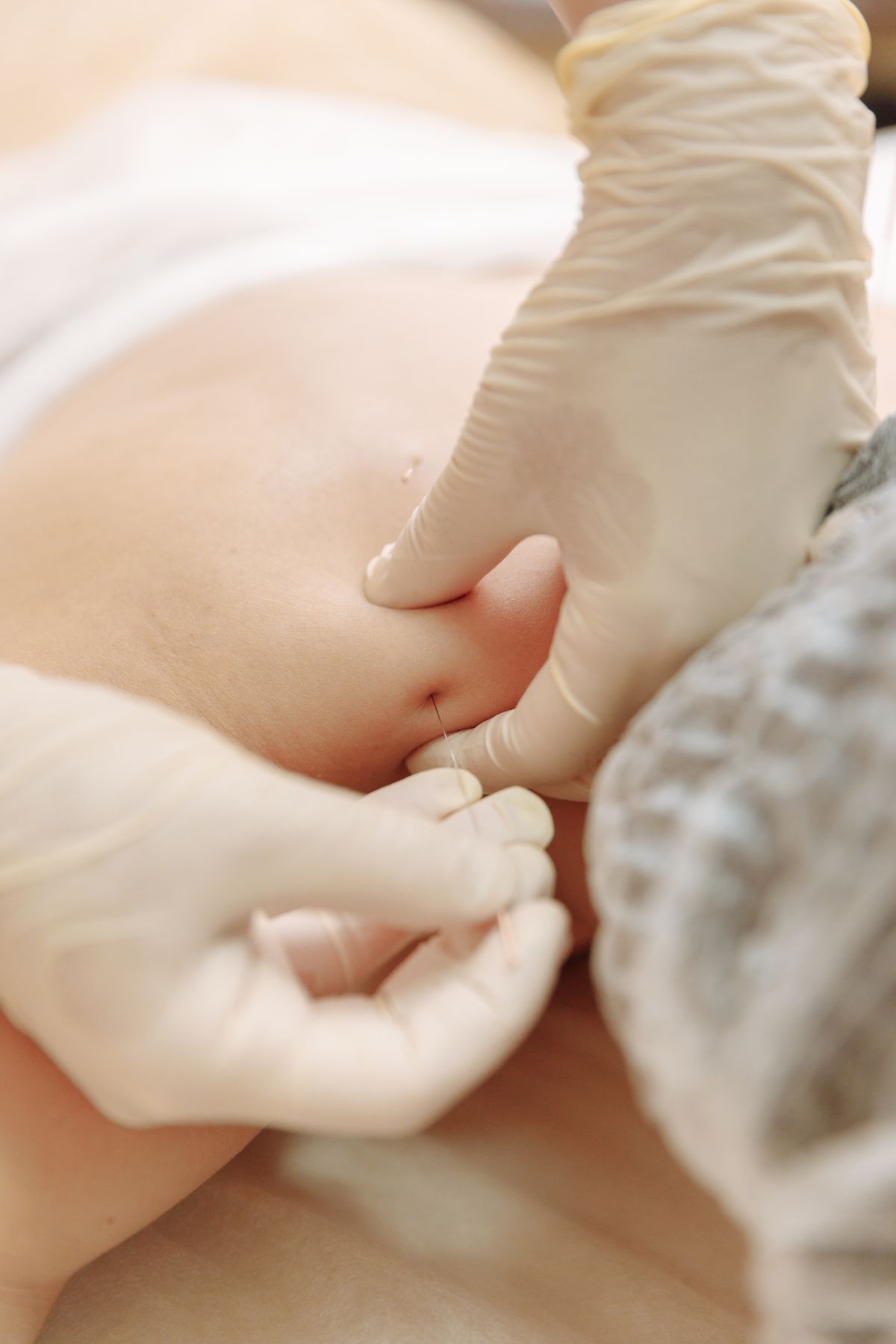
Dry needling is a skilled, anatomy-based technique used by physical therapists to treat myofascial trigger points — the taut, tender "knots" that form in overworked or protectively guarded muscle. Your therapist inserts a very thin filiform needle (the "dry" simply means nothing is injected) directly into the trigger point. The goal is to trigger a local twitch response: a quick, involuntary contraction that helps the tight band of muscle let go.
Trigger points do more than just ache. They can refer pain to other areas — a knot in your upper trapezius can drive headaches, and one in your glutes can mimic sciatica. They also change how a muscle fires, which is why a stubborn trigger point often sits underneath problems like tennis elbow, neck pain, or plantar fasciitis that haven't responded to stretching alone.
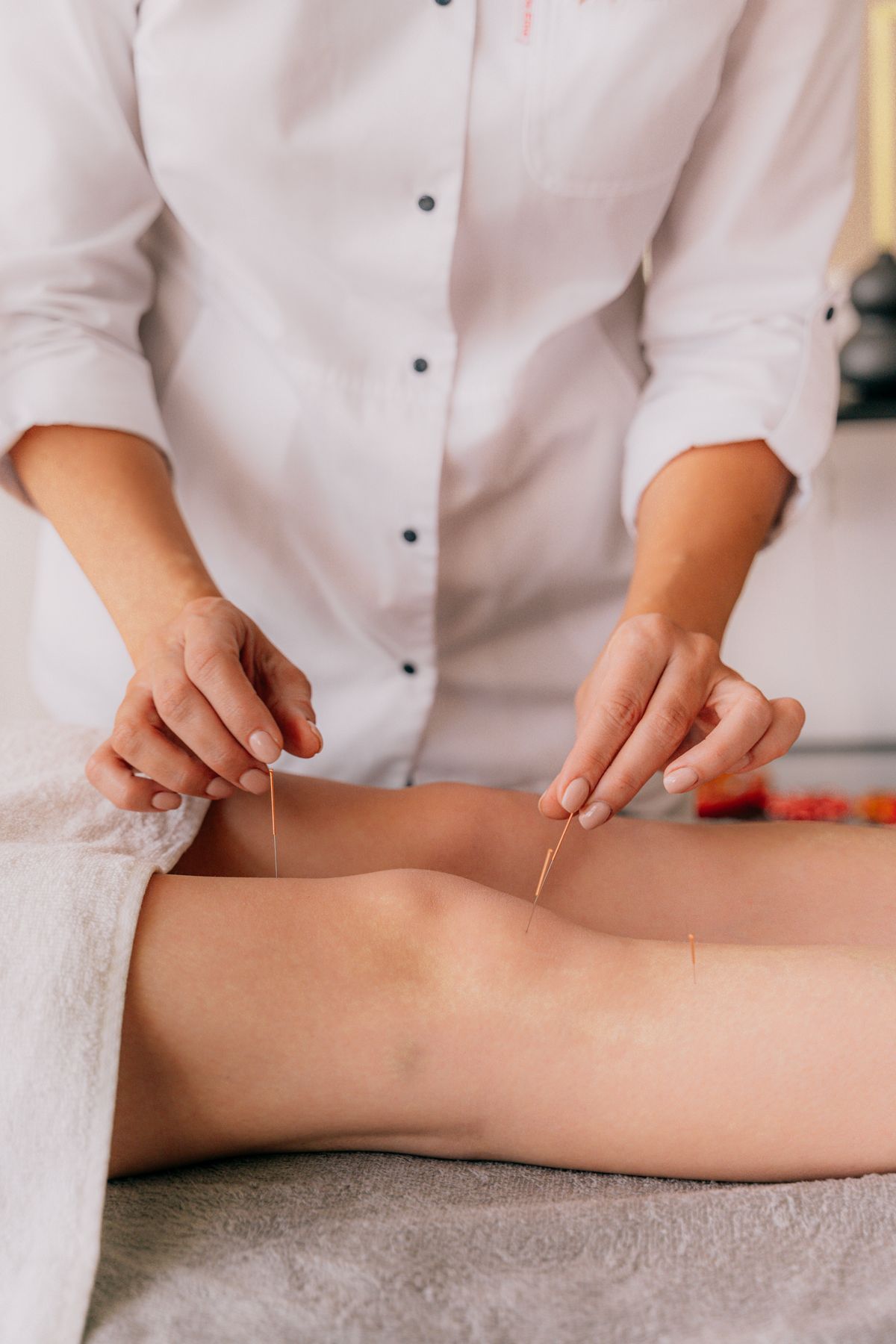
A filament needle is placed directly into the trigger point — precise, sterile, and nothing is injected.
Dry needling vs. acupuncture
Dry needling and acupuncture look similar — both use fine filament needles — but they come from different worlds. Acupuncture follows traditional Chinese medicine meridians; dry needling follows your anatomy. Your RISE therapist chooses needle placement based on a hands-on exam of your muscles, movement, and pain pattern, then treats the specific tissue that reproduces your symptoms.
How does dry needling work?
Dry needling appears to work through several overlapping mechanisms. Mechanically, the needle and its twitch response appear to disrupt the dysfunctional contraction of the trigger point, reducing tightness in the taut band. Locally, needling increases blood flow to tissue that has been starved of it, helping flush the chemical irritants that accumulate inside trigger points. And neurologically, the needle stimulus dampens the pain signaling loop between the muscle and the spinal cord, which is one reason relief can extend beyond the needled spot itself.[1]
What does the research say?
Dry needling has been studied extensively over the past decade. The honest summary: it reliably reduces pain and improves pressure sensitivity in the short to medium term, and it works best when combined with exercise and other physical therapy care — which is exactly how we use it.
META-ANALYSIS · JOSPT · 2017
Across 13 randomized trials, dry needling by physical therapists reduced pain and improved pressure pain threshold versus sham or no treatment in the short term.
Deep dry needling combined with stretching reduced trigger point pain more effectively than stretching alone — supporting needling as part of a plan, not a stand-alone fix.
Dry needling is used for a wide range of musculoskeletal problems where trigger points drive or feed the pain. At RISE Physical Therapy in Boise and Nampa, we most often reach for it with:
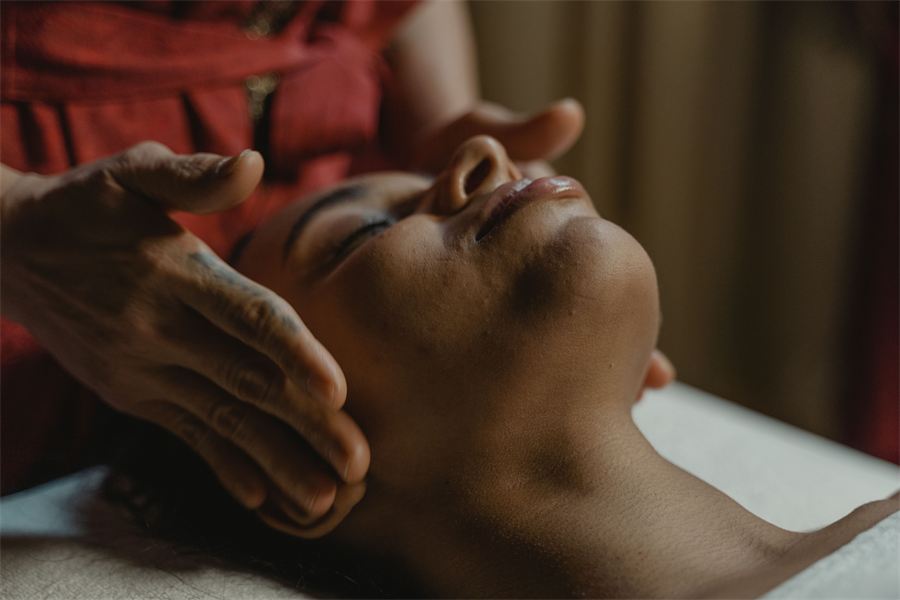
Neck pain and tension headaches
TMJ and jaw-related pain
Rotator cuff and shoulder pain
Tennis elbow and golfer's elbow
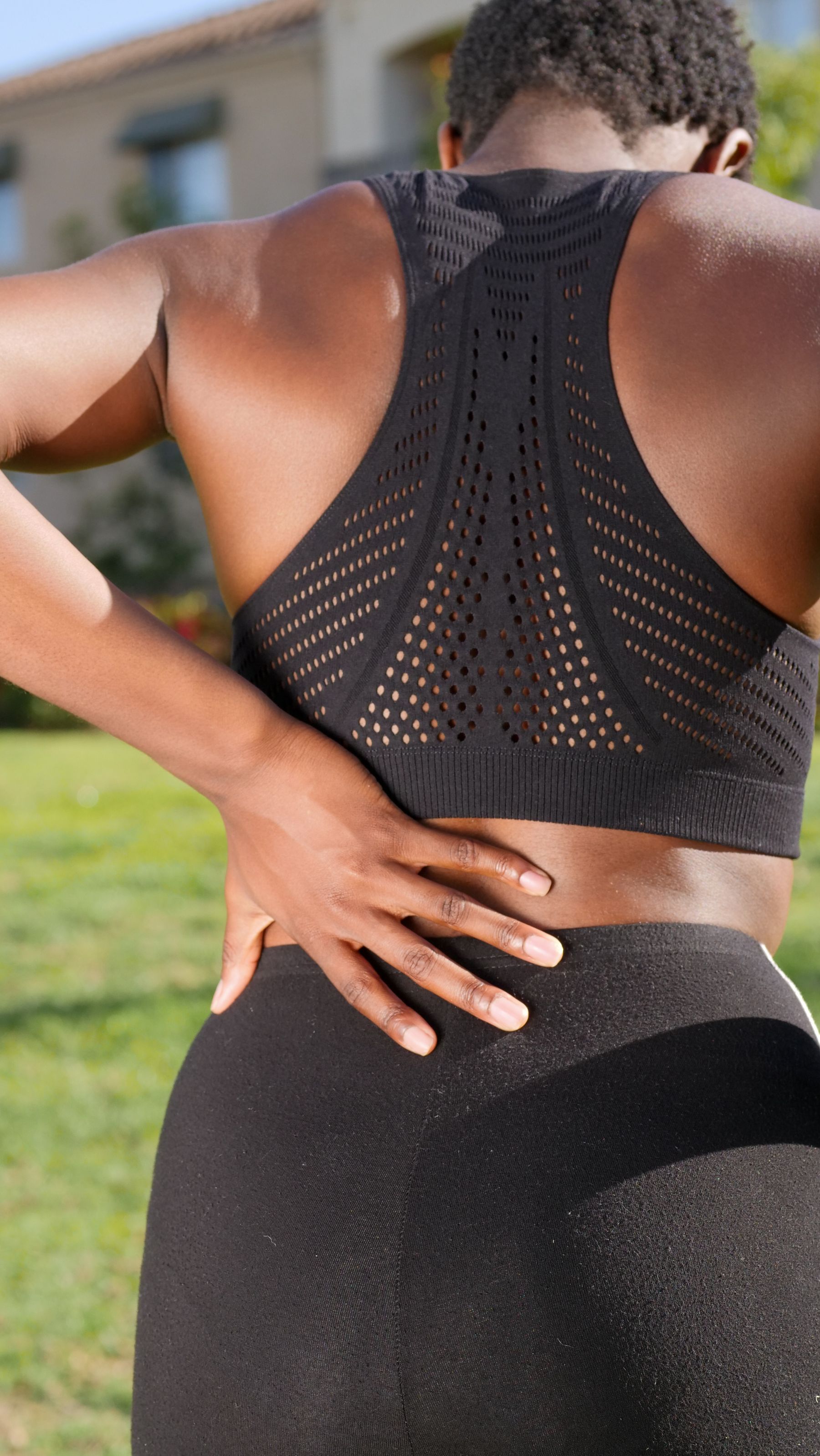
Low back pain and glute/hip pain that mimics sciatica
Hip and knee osteoarthritis pain
Hamstring, calf, and plantar fasciitis issues in runners and athletes
How we use dry needling at RISE
Dry needling is a tool, not a treatment plan. Every session at RISE is a full 45 minutes one-on-one with the same Doctor of Physical Therapy — so needling is always preceded by a real assessment and followed by the work that makes results stick.
Movement assessment first: we watch how you move and load, because the trigger point is often the symptom — the movement pattern is the cause.
Hands-on trigger point mapping: we palpate the involved muscles and confirm which points actually reproduce your pain before any needle is placed.
Precise needling by certified clinicians: sterile, single-use needles placed into the confirmed trigger points, often with brief twitch responses as the tissue releases.
Immediate retraining: we use the post-needling window — when the muscle is looser and less painful — to groove better movement and activate the muscles that were underworking.
A full movement and hands-on exam to identify which trigger points — and which habits — are behind your pain.
02 — TREAT
Release the tissue
Dry needling plus hands-on manual therapy to release the taut bands and restore normal muscle behavior.
03 — REBUILD
Make it last
Targeted strength and mobility work so the muscle stops overworking and the knot doesn't return.
What to expect at your first visit
We talk. Your history, your pain pattern, what you've already tried, and what you want to get back to.
We assess. A movement exam plus hands-on palpation to map the trigger points involved — and rule out anything that needs a different provider.
We treat on day one. If dry needling is right for you, it can usually start at the first visit, alongside manual therapy.
You move. We immediately retrain movement in the post-needling window, and you leave with a short, specific exercise plan.
You know the plan. Before you leave, you'll know what we found, how many visits we expect, and how we'll measure progress.
Frequently asked questions
Does dry needling hurt?+
Most patients feel very little as the needle passes through the skin — the filament is far thinner than an injection needle. When the needle reaches a trigger point you may feel a brief, deep ache or a muscle twitch. That twitch response is a good sign: it usually means the tight band is releasing. Any discomfort typically fades within seconds.
What is the difference between dry needling and acupuncture?+
Both use thin filament needles, but that is where the similarity ends. Acupuncture is rooted in traditional Chinese medicine and targets energy meridians. Dry needling is a Western, anatomy-based technique: your physical therapist examines your movement, identifies specific myofascial trigger points, and needles that exact tissue to change how the muscle behaves. At RISE it is always combined with movement retraining — never used as a stand-alone fix.
How many dry needling sessions will I need?+
Many patients notice a change within the first one to three sessions. Because we use dry needling as part of a broader plan — not as the whole treatment — the total number depends on your condition, how long you have had it, and how your tissue responds. Your therapist will give you an honest estimate after your first evaluation.
What should I expect after a dry needling session?+
Mild muscle soreness for 24–48 hours is common — similar to the feeling after a hard workout. Light movement, hydration, and gentle heat help it pass. Serious side effects are rare when dry needling is performed by a certified provider using sterile, single-use needles, which is the standard at RISE.
Do I need a doctor's referral for dry needling in Idaho?+
No. Idaho is a direct-access state, which means you can book an evaluation with a physical therapist at RISE without a physician referral.[5] A few insurance plans — commonly Medicare, Medicaid, and Tricare — still require a referral for coverage, so call our front desk and we will check your plan before your first visit.
Does insurance cover dry needling?+
Coverage varies by plan. Dry needling is often billed as part of your physical therapy treatment session, which most major plans cover, but some insurers treat it as a separate or non-covered service. RISE is in-network with most major insurance plans in Idaho — check our insurance list or contact us and we will verify your dry needling coverage before you are ever charged.
Is dry needling safe for everyone?+
Dry needling is very safe in trained hands, but it is not right for everyone. We avoid or modify it for people with needle phobia, certain bleeding disorders or blood thinners, active infection near the treatment area, lymphedema, or during some stages of pregnancy. Your therapist screens for all of this at your evaluation — and because every RISE session is one-on-one with the same clinician, nothing gets missed.
Devon is a co-founder of RISE Physical Therapy. He earned his Doctorate of Physical Therapy at Idaho State University, has been a Certified Strength and Conditioning Specialist since 2021, and received his dry needling certification in 2022. Meet the full team →
SOURCES
Gattie E, Cleland JA, Snodgrass S. The Effectiveness of Trigger Point Dry Needling for Musculoskeletal Conditions by Physical Therapists: A Systematic Review and Meta-analysis. J Orthop Sports Phys Ther, 2017. jospt.org/doi/10.2519/jospt.2017.7096
The Effectiveness of Dry Needling in Patients with Hip or Knee Osteoarthritis: A Systematic Review and Meta-Analysis. Life (Basel), 2022. ncbi.nlm.nih.gov/pmc/articles/PMC9605049
The Impact of Dry Needling With Electrical Stimulation on Pain and Disability in Patients With Musculoskeletal Shoulder Pain: A Systematic Review and Meta-Analysis of Randomized Controlled Trials. 2023. ncbi.nlm.nih.gov/pmc/articles/PMC10402652
Effectiveness of deep dry needling combined with stretching for the treatment of pain in patients with myofascial trigger points: A systematic review and meta-analysis. 2024. pubmed.ncbi.nlm.nih.gov/39593416
 Medically reviewed by Dr. Devon Hoffman, PT, DPT, CSCS, Cert. DN · August 2026