TECHNIQUE

Graston Technique in Boise & Nampa

Some tissue restrictions respond better to a precision instrument than to hands alone. Graston-style instrument-assisted soft tissue mobilization finds and treats them — as part of a complete plan.

AT A GLANCE

The Graston Technique is a form of instrument-assisted soft tissue mobilization (IASTM): a physical therapist uses contoured stainless-steel instruments to detect and treat restricted muscle, tendon, and fascia. Research shows short-term gains in range of motion and reductions in pain, with best results when combined with exercise. RISE Physical Therapy offers instrument-assisted soft tissue work in one-on-one, 45-minute sessions in Boise and Nampa, Idaho.

What is the Graston Technique?

The Graston Technique is the best-known form of instrument-assisted soft tissue mobilization (IASTM) — a treatment in which a trained clinician glides contoured stainless-steel instruments along muscle, tendon, and fascia. The instruments do two jobs at once: they amplify what the clinician can feel (restricted, fibrotic tissue produces a distinct texture through the tool) and they deliver controlled shear force precisely where the restriction lives.

If you've heard of gua sha — the traditional scraping technique — IASTM is its modern clinical descendant, applied with anatomical intent and paired with exercise rather than used as a stand-alone ritual.

How does it work?

IASTM appears to work through controlled stimulation of the tissue: the instrument's shear force increases local blood flow, stimulates the cells that remodel connective tissue, and reduces the nervous system's guarding of the area. Clinically, that shows up as freer tissue glide and less pain with movement — a window we immediately fill with loading, so the change becomes lasting adaptation rather than a pleasant afternoon.

What does the research say — honestly?

The IASTM evidence base is younger and more mixed than for exercise or manual therapy, and we think you deserve the straight version:

EFFECT-SIZE ANALYSIS · 2019

IASTM produced significant short-term gains in range of motion, with support for improving pain and patient-reported function in injured patients.

View study →
SYSTEMATIC REVIEW

In studies comparing IASTM groups to non-IASTM groups for musculoskeletal pain, the IASTM groups showed statistically and clinically significant pain reduction.

View study →
SYSTEMATIC REVIEW · 2016

Earlier reviews found inconsistent results across mixed-quality studies — a reminder that IASTM is an adjunct, not a miracle.

View study →

Our takeaway: IASTM earns its place for specific, stubborn restrictions — chronic tendinopathies, scar tissue, fascial adhesions — inside a plan built on loading, never instead of one.

What we use it for

How we use instrument-assisted work at RISE

An instrument is only as good as the assessment behind it. In 45-minute one-on-one sessions, instrument-assisted work is targeted to restrictions your exam actually reveals — then immediately backed with the loading that makes tissue change stick.

  • Assessment before instruments: we find the restriction by movement testing and palpation first; the tools confirm and treat it.
  • Right dose, right stage: pressure and duration matched to the tissue — post-surgical scars and chronic tendons get very different treatment.
  • Combined where it helps: IASTM pairs naturally with myofascial release, cupping, and dry needling for layered soft tissue problems.
  • Loaded immediately: every instrument session ends in exercise that uses the freed-up tissue — that’s where the lasting change comes from.

Techniques we often pair with it

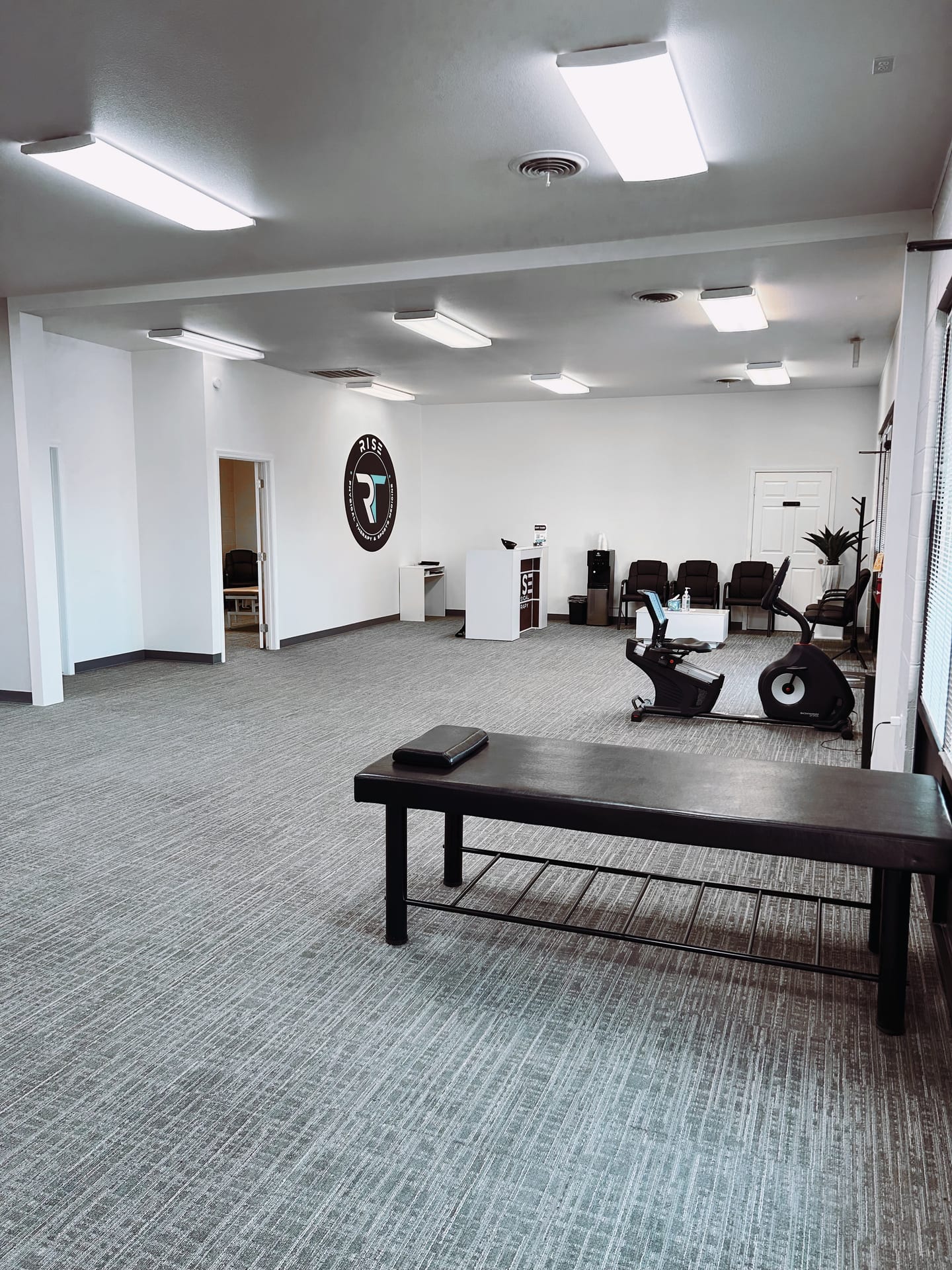
Treatment area at RISE Physical Therapy Nampa clinic
01 — ASSESS
Locate the restriction

Movement testing and tissue palpation find exactly where glide is lost.

02 — TREAT
Instrument + hands

Precision instrument work mobilizes the restricted tissue at the right dose for its stage.

03 — REBUILD
Remodel with load

Progressive loading tells the tissue how to rebuild — stronger and more mobile.

What to expect at your first visit

  1. History and goals. How the restriction started — injury, surgery, or slow accumulation — and what it’s limiting.
  2. Movement and tissue exam. We map where tissue glide is lost and confirm IASTM is the right tool for it.
  3. Treatment day one. Instrument-assisted work begins at the first visit, dosed conservatively to gauge your tissue’s response.
  4. Immediate loading. Targeted exercise uses the new mobility the same session.
  5. Plan and expectations. Honest talk about expected redness, mild soreness, visit count, and progress markers.

Frequently asked questions

Does the Graston Technique hurt? Will it leave marks?+
You’ll feel firm, focused pressure and sometimes a gritty sensation as the instrument passes over restricted tissue. Temporary redness is normal and expected; light bruising can occur but isn’t the goal — more aggressive is not more effective, and we dose accordingly. Most patients describe it as intense but tolerable.
Is this the same as gua sha?+
They share ancestry — both scrape tissue with a smooth tool. The clinical difference is intent and context: IASTM targets restrictions identified by an orthopedic exam, uses instruments contoured for specific anatomy, and is always paired with exercise so the tissue change translates into function.
How is this different from massage or myofascial release?+
Hands are versatile; instruments are precise. The tool concentrates force at exact depths and angles hands can’t easily sustain, and it transmits texture feedback that helps locate fibrotic tissue. In practice we often combine instrument work with hands-on myofascial release — each reaches what the other can’t.
How many sessions before I notice a change?+
Range of motion changes often appear within the first session or two — the research shows short-term ROM gains are IASTM’s most consistent effect. Lasting change in chronic tendon problems builds over 4–8 weeks alongside the loading program. We’ll reassess objectively at each visit.
Do I need a referral for Graston treatment in Idaho?+
No. Idaho is a direct-access state, so you can book at RISE without a referral. Some plans (Medicare, Medicaid, Tricare) require one for coverage — we’ll verify your insurance before your first visit.
Does insurance cover instrument-assisted soft tissue work?+
Yes — IASTM is billed as manual therapy within your physical therapy session, which most major plans cover. RISE is in-network with most major insurance plans in Idaho; contact us and we’ll confirm your benefits.
ONE PATIENT, ONE HOUR, ONE FOCUS

That old injury still feels “stuck”?

Precision soft tissue treatment inside a real plan of care — no referral needed in Idaho.

Dr. Thomas Kleingartner, PT, DPT
Dr. Thomas Kleingartner
PT, DPT · LOWER-EXTREMITY POST-OP & SPORTS

Thomas earned his Doctorate of Physical Therapy at South College in Knoxville and specializes in lower-extremity post-operative care, sports rehab, and orthopedic conditions at RISE. Meet the full team →

SOURCES

  1. Instrument-Assisted Soft Tissue Mobilization: A Systematic Review and Effect-Size Analysis. J Athl Train, 2019. pubmed.ncbi.nlm.nih.gov/31322903/
  2. The Efficacy of Instrument-Assisted Soft Tissue Mobilization for Musculoskeletal Pain: A Systematic Review. J Contemporary Chiropr. journal.parker.edu/article/78057-the-efficacy-of-instrument-assisted-soft-tissue-mobilization-for-musculoskeletal-pain-a-systematic-review
  3. The efficacy of instrument assisted soft tissue mobilization: a systematic review. J Can Chiropr Assoc, 2016. pubmed.ncbi.nlm.nih.gov/27713575/