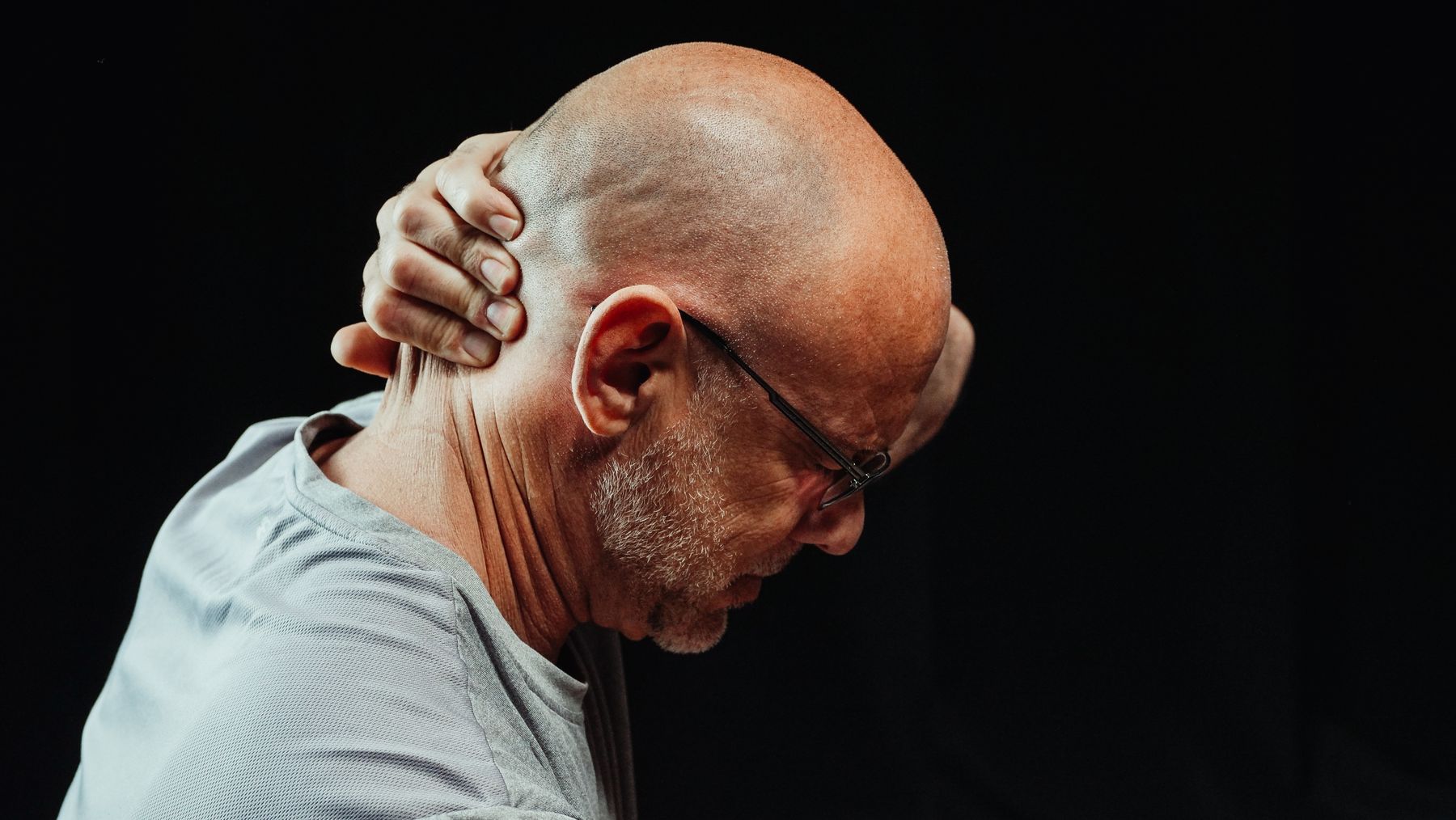
Checking your blind spot in stages, shoulders that live near your ears, tingling that wanders down an arm — neck pain has patterns, and patterns can be treated.
Neck pain is one of the most common musculoskeletal complaints, spanning postural strain, joint irritation, and nerve-root compression that sends symptoms into the arm. The best-supported treatment combines manual therapy with targeted exercise — a pairing shown in systematic reviews to deliver clinically important improvement. RISE Physical Therapy treats neck pain one-on-one in 45-minute sessions in Boise and Nampa, Idaho, with no referral required.
What causes neck pain?
The neck is a mobility marvel doing a stability job: seven small vertebrae balancing a 10–12 pound head through thousands of daily movements, while modern life asks it to hold nearly still for hours at a screen. Most neck pain comes from the predictable consequences — irritated facet joints, overworked muscles along the neck and shoulder blades, and discs that grumble under sustained flexion.
A second category matters because it changes the plan: nerve-root irritation, or cervical radiculopathy. When a nerve exiting the neck is compressed or inflamed — by a disc bulge or bony narrowing — pain, tingling, or numbness travels into the shoulder blade, arm, or hand, occasionally with weakness. It sounds alarming, but most cases improve with conservative care; the exam's job is to identify it, grade it, and track it honestly.
Symptoms: when should you seek help?
Neck problems rarely stay politely in the neck. An evaluation is worth booking if you notice:
Stiffness that limits turning — backing up the car, checking a blind spot
Aching between the shoulder blades or on top of the shoulders
Headaches that start at the base of the skull and wrap forward
Pain, tingling, or numbness running into the arm or fingers
Waking with a "crick" that keeps recurring, or pain building through every workday
Seek a physician first for neck pain with progressive arm or leg weakness, balance changes, fever, unexplained weight loss, or after significant trauma — the rare cases that need medical workup before therapy.
Neck pain patterns — joint, muscle, or nerve — each respond to a different emphasis of manual therapy and exercise.
What does the research say about treating neck pain?
The combination beats the ingredients. A Cochrane-based systematic review of manual therapy and exercise for neck pain found that mobilization or manipulation combined with exercise produced clinically important improvements in pain, function, and patient satisfaction for subacute and chronic neck pain — benefits not matched by either component alone.[1] A 2023 systematic review with meta-analysis reached the same conclusion for nonspecific neck pain, supporting combined manual therapy and exercise for pain and disability.[2] Against medication, a meta-analysis found manual therapy at least as effective as oral pain medication, without the side-effect profile.[3]
The realistic read: effect sizes in neck pain research are moderate, and no single technique is a miracle. What separates outcomes in practice is specificity — treating the segments and muscles that are actually involved — and follow-through on the strengthening that keeps joints from re-irritating. Both are time problems, which is why the one-on-one hour matters.
How we treat neck pain at RISE
Neck care at RISE treats the whole column — upper neck, lower neck, and the mid-back that so often drives it. Every session is 45 minutes one-on-one with the same Doctor of Physical Therapy.
Segment-by-segment exam: we find which joints are stiff, which are irritable, and whether a nerve root is involved — then treat accordingly.
Manual therapy: joint mobilization for the stiff segments and soft-tissue work for the guarded muscles, restoring the motion exercise needs.
Dry needling where it fits: the upper trapezius, levator scapulae, and suboccipitals hold trigger points that feed both neck pain and headaches.
Deep neck and mid-back strengthening: the endurance work that makes desk days survivable — dosed progressively, not a printout of chin tucks.
Joint, muscle, nerve, and posture contributions get identified — plus the headache connection if you have one.
02 — TREAT
Restore motion
Manual therapy and dry needling unlock stiff segments and calm overworked muscle in the first visits.
03 — REBUILD
Build endurance
Deep neck and scapular strengthening plus workstation strategy keep the gains through real workweeks.
What to expect at your first visit
Your story first. When it started, what your days look like, where symptoms travel, and whether headaches ride along.
A neurological screen. If anything radiates to the arm, we test strength, sensation, and reflexes to grade nerve involvement.
A hands-on exam. Segment-by-segment joint testing and muscle palpation of the neck, mid-back, and shoulder girdle.
Treatment on day one. Manual therapy plus your first two or three exercises — most patients leave moving noticeably better.
Workday strategy. Practical desk, monitor, and movement-break adjustments matched to your actual job, not an idealized one.
Frequently asked questions
What is the best treatment for neck pain?+
The strongest evidence supports combining manual therapy with targeted exercise. Systematic reviews show mobilization or manipulation plus exercise produces clinically important improvements in pain and function for subacute and chronic neck pain[1] — better than either alone and better than medication-first approaches for many patients.[3] Passive-only care (heat, massage, rest) tends to feel good but change little.
Is my arm pain or hand tingling coming from my neck?+
Quite possibly. When a cervical nerve root gets irritated — a "pinched nerve" or cervical radiculopathy — symptoms follow the nerve into the shoulder blade, arm, or fingers, sometimes with weakness or numbness. The exam maps which root is involved and whether it's improving; most cases recover with conservative care over 6–12 weeks.
Do I need a referral for neck pain treatment in Idaho?+
No. Idaho is a direct-access state, so you can book a neck evaluation at RISE without a physician referral. Some insurance plans — commonly Medicare, Medicaid, and Tricare — require a referral for coverage, and we'll verify your plan's requirements before your first visit.
Is my desk job causing my neck pain?+
It's usually a contributor rather than the whole cause. Hours of sustained posture with the head forward loads the small joints and muscles of the neck beyond what they're conditioned for — the problem is less that any posture is "bad" and more that it never changes. Treatment pairs neck and mid-back strengthening with practical workstation changes and movement breaks that actually fit your day.
When is neck pain serious?+
See a physician promptly for neck pain with fever, unexplained weight loss, progressive weakness in the arms or legs, changes in walking or balance, bowel or bladder changes, or after significant trauma like a car accident. Dizziness or visual changes with neck movement also deserve screening. These red flags are checked at the start of every RISE evaluation.
How long does it take physical therapy to fix neck pain?+
Many patients notice meaningful improvement within 2–4 visits, with typical plans running 6–10 visits over 4–8 weeks. Nerve-related arm symptoms usually take longer than simple mechanical neck pain — closer to 6–12 weeks. Every RISE session is 45 minutes one-on-one, which means manual therapy and exercise both happen every visit instead of splitting your care across appointments.
Does insurance cover physical therapy for neck pain?+
Most major medical plans cover physical therapy for neck pain and cervical radiculopathy. RISE is in-network with most major insurance plans in Idaho — check our insurance list or contact us and we'll verify your coverage before your first appointment.
Devon is a co-founder of RISE Physical Therapy and treats neck, TMJ, headache, concussion, orthopedic, and sports injuries. He earned his Doctorate of Physical Therapy at Idaho State University. Meet the full team →
SOURCES
Miller J, et al. Manual Therapy and Exercise for Neck Pain: A Systematic Review. Manual Therapy, 2010. pubmed.ncbi.nlm.nih.gov/20593537
The Combined Effects of Manual Therapy and Exercise on Pain and Related Disability for Individuals with Nonspecific Neck Pain: A Systematic Review with Meta-Analysis. 2023. pmc.ncbi.nlm.nih.gov/articles/PMC10642331
Effectiveness and Safety of Manual Therapy When Compared with Oral Pain Medications in Patients with Neck Pain: A Systematic Review and Meta-Analysis. 2024. ncbi.nlm.nih.gov/pmc/articles/PMC11020448
 Medically reviewed by Dr. Devon Hoffman, PT, DPT, CSCS · August 2026