That first-step stab in the heel every morning isn't something you have to walk off for another year. Plantar fasciitis responds to progressive loading — coached one-on-one.
Plantar fasciitis is the most common cause of heel pain, marked by sharp pain with the first steps after rest. It's a load-capacity problem of the plantar fascia, and the best-supported treatment combines specific stretching, progressive strengthening, taping, and footwear changes — not injections or rest. RISE Physical Therapy treats plantar fasciitis one-on-one in 45-minute sessions in Boise and Nampa, Idaho, with no referral required.
What is plantar fasciitis?
Plantar fasciitis is irritation of the plantar fascia — the thick band of connective tissue that runs from your heel bone to your toes and supports the arch like a bowstring. Despite the "-itis," research shows the tissue is usually more degenerated than inflamed: repeated overload outpaces the fascia's slow repair rate, and the attachment at the heel becomes painful and thickened.
It's common in two very different groups for the same underlying reason: runners and hikers who ramp mileage faster than the fascia adapts, and people who spend long days standing on hard floors, often after a change in weight, footwear, or activity. In both, the math is identical — load exceeded capacity. Treatment works by fixing both sides of that equation.
Symptoms: when should you seek help?
Plantar fasciitis has one of the most recognizable patterns in orthopedics. Book an evaluation if you notice:
Sharp, localized heel pain with the first steps of the morning
Pain that returns after sitting, then eases as you warm up
Tenderness when you press the inner front edge of the heel
Arch aching or tightness after long standing or walking
Pain that's starting to change how you walk, or spreading to the knee or hip from limping
Heel pain with numbness or tingling, night pain unrelieved by position, or pain after a fall deserves differential screening — nerve entrapment, fat pad injury, and stress fracture can masquerade as plantar fasciitis, and sorting that out is part of the first visit.
Plantar fasciitis is a load-capacity problem — the fascia's tolerance fell behind what daily life asks of it.
What actually works for plantar fasciitis?
A best-practice guide for plantar heel pain — built from a systematic review combined with expert clinical reasoning — recommends taping for short-term pain relief, stretching of the plantar fascia and calf, and individualized education and footwear advice as core care.[1] Strength research adds a useful upgrade: a systematic review of strength training for plantar fasciitis found high-load resistance work (slow, heavy calf raises with the toes extended) is associated with reduced pain and improved function, with the landmark trial showing faster improvement at 3 months versus stretching alone.[2] Manual stretching techniques also show benefit for plantar heel pain in systematic review.[3]
What doesn't hold up as first-line care: repeated corticosteroid injections (short-lived relief, tissue risk with repetition) and waiting for a heel spur to be removed — spurs are common in pain-free feet and are rarely the pain source. Shockwave and night splints have a role in stubborn cases; they're add-ons, not the foundation.
How we treat plantar fasciitis at RISE
Heel pain care at RISE starts by measuring what your foot can currently tolerate and what your week demands of it — then closing that gap. Every session is 45 minutes one-on-one with the same Doctor of Physical Therapy.
Differential exam: we confirm it's the fascia — not a nerve entrapment, fat pad, or stress reaction — before committing to a plan.
Load audit: running volume, standing hours, footwear, and surfaces get mapped so we modify the least amount necessary.
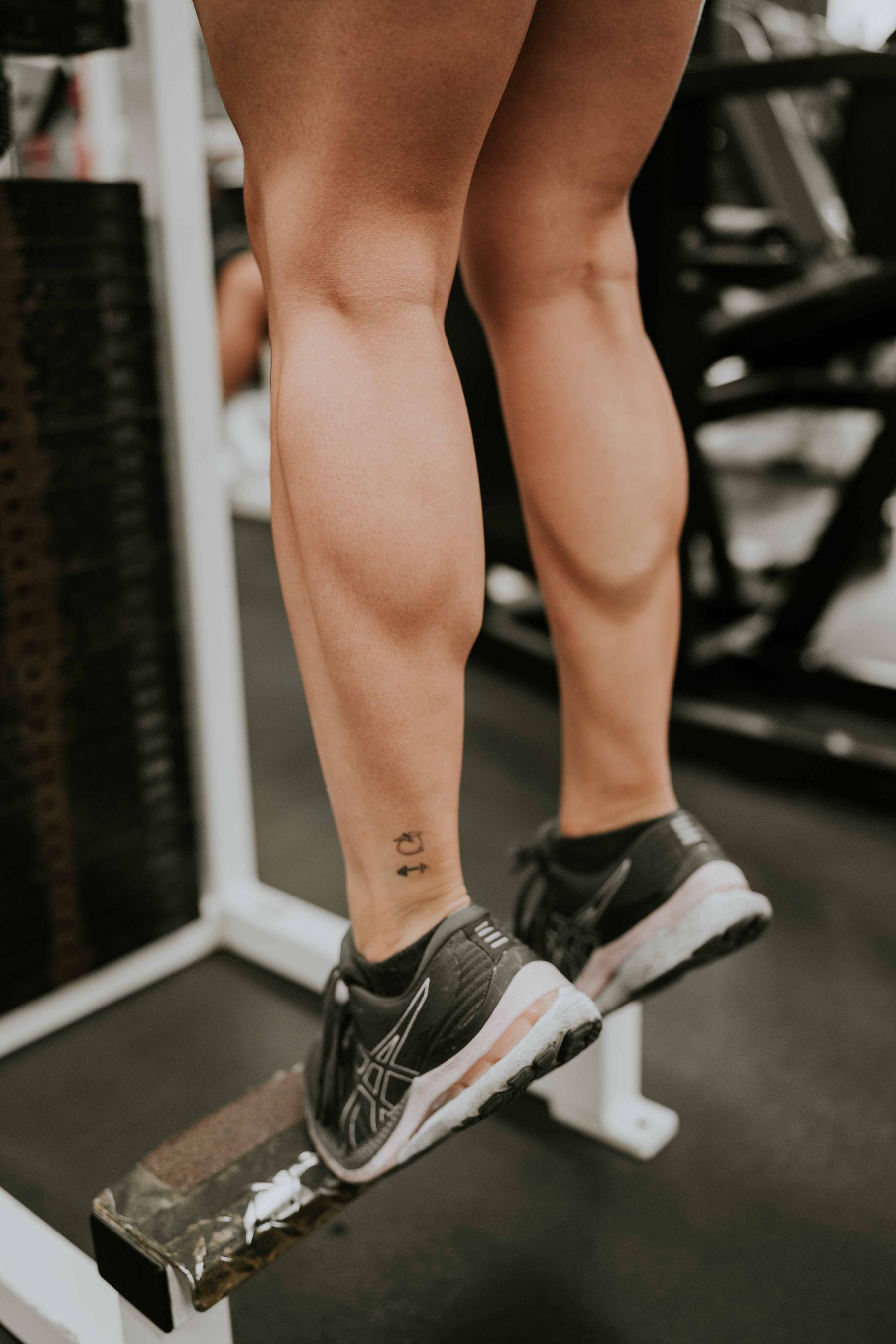
Progressive loading: heavy, slow calf and foot strengthening that rebuilds the fascia's capacity — the engine of long-term recovery.
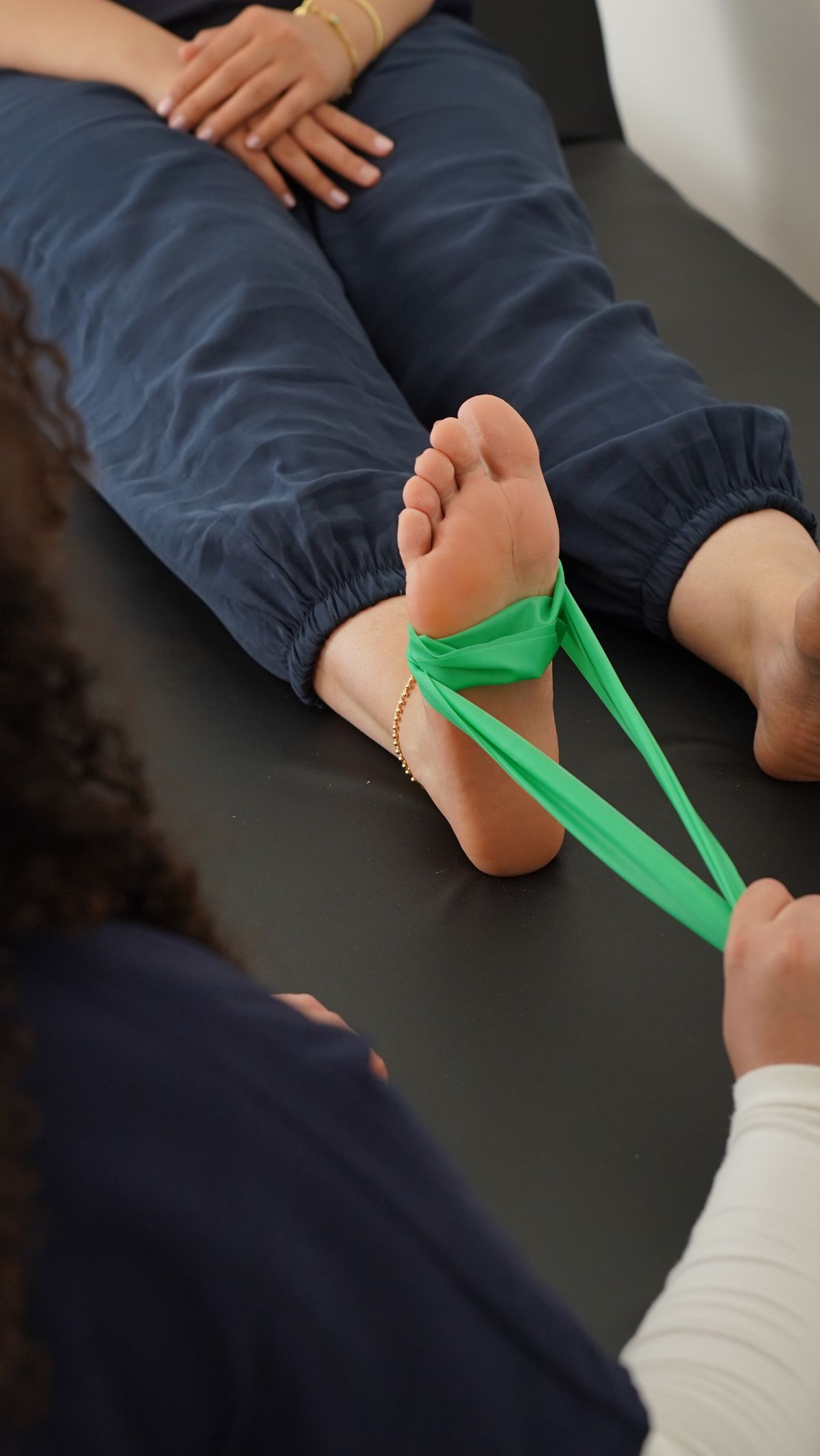
Symptom relief that keeps you moving: taping, soft-tissue work to the calf and plantar muscles, and instrument-assisted mobilization where it fits.
Differential testing confirms the fascia, then we baseline calf strength, ankle mobility, and load tolerance.
02 — TREAT
Settle the heel
Taping, targeted soft-tissue work, and load modification take the edge off morning steps within the first weeks.
03 — REBUILD
Reload the fascia
Progressive heavy-slow strengthening returns the capacity for miles, shifts, and trails — without the relapse.
What to expect at your first visit
Your story first. When the heel pain started, what changed beforehand — mileage, shoes, work, weight — and what a normal week asks of your feet.
A hands-on exam. Palpation of the fascia and heel, calf strength and flexibility testing, and screening for nerve or bone causes.
Footwear check. Bring your daily shoes and runners — small changes here often buy quick relief.
Treatment on day one. Taping or soft-tissue work plus the first two exercises of your loading program.
A realistic timeline. The fascia adapts over weeks, not days — we show you the milestones so progress is visible from the start.
Frequently asked questions
What gets rid of plantar fasciitis the fastest?+
The best-supported combination is plantar fascia-specific stretching, progressive strengthening of the calf and foot, taping for short-term relief, and sensible footwear — a package reflected in the 2021 best-practice guide for plantar heel pain.[1] Research on high-load strength training suggests adding heavy, slow calf raises can speed improvement in the first three months compared with stretching alone.[2]
Why does my heel hurt most with the first steps in the morning?+
Overnight, the plantar fascia rests in a shortened position while irritated tissue stiffens. Your first steps suddenly stretch it under full body weight, producing the classic sharp, bruise-like heel pain that eases as the tissue warms up. That signature start-up pain after rest is the hallmark that separates plantar fasciitis from most other causes of heel pain.
Do I need a referral for plantar fasciitis treatment in Idaho?+
No. Idaho is a direct-access state, so you can book a heel pain evaluation at RISE without a physician referral. Some insurance plans — commonly Medicare, Medicaid, and Tricare — require a referral for coverage, and we'll verify your plan's requirements before your first visit.
Do heel spurs cause plantar fasciitis?+
Usually not. Heel spurs show up on X-rays of many people with no heel pain at all, and plenty of people with severe plantar fasciitis have no spur. The pain comes from the overloaded fascia itself, not the bone — which is why treatment targets tissue capacity and load, and why most people improve without any procedure aimed at the spur.
Should I stop running or standing at work?+
Rarely completely. Plantar fasciitis is a load-tolerance problem, so the fix is adjusting load, not eliminating it — temporary changes to running volume, standing time, and footwear while the tissue rebuilds capacity through strengthening. We map your weekly load at the first visit and modify the smallest amount necessary to let healing win.
How long does plantar fasciitis take to heal?+
Most people improve meaningfully within 8–12 weeks of consistent loading treatment, though long-standing cases can take several months — the fascia adapts slowly. The encouraging flip side: the large majority of cases resolve fully with conservative care, and a typical RISE plan runs 6–10 visits with a home program carrying progress between sessions.
Does insurance cover physical therapy for plantar fasciitis?+
Most major medical plans cover physical therapy for plantar fasciitis. RISE is in-network with most major insurance plans in Idaho — check our insurance list or contact us and we'll verify your coverage before your first appointment.
Carson is a co-founder of RISE Physical Therapy and treats orthopedic, sports, and foot & ankle conditions with a hands-on, movement-first approach. He earned his Doctorate of Physical Therapy from Pacific University in Oregon. Meet the full team →
SOURCES
Management of Plantar Heel Pain: A Best Practice Guide Informed by a Systematic Review, Expert Clinical Reasoning and Patient Values. British Journal of Sports Medicine, 2021. pubmed.ncbi.nlm.nih.gov/33785535
Strength Training for Plantar Fasciitis and the Intrinsic Foot Musculature: A Systematic Review. Physical Therapy in Sport, 2017. pubmed.ncbi.nlm.nih.gov/27692740
 Medically reviewed by Dr. Carson Bailey, PT, DPT · August 2026