Shins that ache with every mile are your tibia asking for a better plan — not the end of your running. Graded loading and gait care, coached one-on-one.
Shin splints — medial tibial stress syndrome — is exercise-induced pain along the inner shin bone, affecting roughly 13–17% of runners and ranking among the most common running injuries. It sits on a bone-stress continuum with stress fractures, so accurate diagnosis and graded loading matter more than any gadget. RISE Physical Therapy treats shin splints one-on-one in 45-minute sessions in Boise and Nampa, Idaho, with no referral required.
What are shin splints?
Shin splints — medial tibial stress syndrome (MTSS) — is overload of the tibia and the tissue lining its inner border, produced when repetitive impact outpaces the bone's remodeling. Every running stride bends the tibia slightly; bone normally adapts to that stimulus and gets stronger, but a rapid rise in mileage, a switch to harder surfaces, or a season of jumping can push the microdamage-repair balance into deficit. The result is the familiar diffuse ache down the inner shin.
It's extremely common where running is booming: a systematic review of novice and recreational runners found MTSS rates around 13–17%, making it one of the most frequent running-related injuries.[1] Risk runs higher in women, in people with a previous episode, higher body mass index, flatter-arch mechanics (greater navicular drop), and fewer years of running experience.[2] In other words: newer tissue, bigger loads, less runway — a fixable combination.
Symptoms: when should you seek help?
Shin splints follow a recognizable pattern. Book an evaluation if you notice:
A diffuse ache along the inner edge of the shin bone, spanning several centimeters
Pain early in a run that may fade as you warm up, then returns afterward
Tenderness when you press along the inner tibia
Shin soreness after court sports, hills, or a big week
Symptoms in both shins — common in MTSS, rare in fractures
One symptom changes the urgency: pain concentrated at a single focal spot, worsening through a run, or aching at night. That pattern suggests a tibial stress fracture — further along the same bone-stress continuum — and needs protected rest and often imaging before any return-to-running plan.
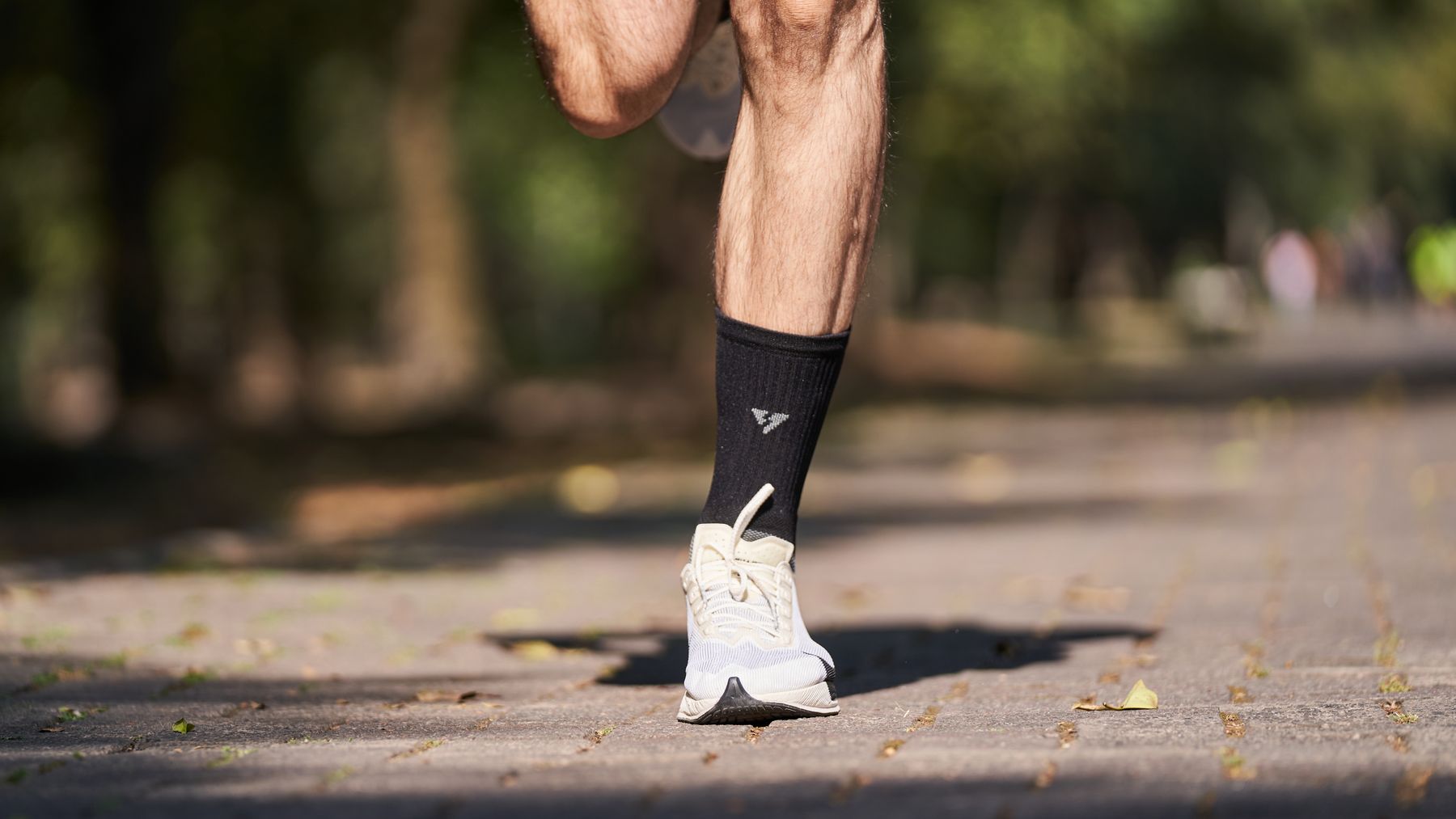
Every stride bends the tibia slightly — shin splints appear when loading outruns the bone's ability to adapt.
What does the research say about shin splint treatment?
The honest headline from the research: no gadget fixes shin splints. A systematic review of MTSS treatments in Sports Medicine found no single intervention — from shockwave to stockings to stretching — with strong enough evidence to recommend on its own.[3] That's not a counsel of despair; it's a redirect. The variables with the clearest connection to the condition are load and capacity: how fast tibial stress rose, and how prepared the bone, calf, and hip were to absorb it.[2]
Practically, that means care built on graded running progression kept below the symptom threshold, strengthening for the calf and hip that reduces tibial strain per stride, and, for some runners, cadence and footstrike adjustments that spread impact more kindly. Shock-absorbing insoles and supportive footwear can play a reasonable supporting role.[2] Rest alone tends to fail on a delay — the shins calm down, the runner returns to the same load curve, and the cycle restarts.
How we treat shin splints at RISE
Shin splint care at RISE is a running plan with rehab built in — engineered so the tibia adapts instead of breaking down. Every session is 45 minutes one-on-one with the same Doctor of Physical Therapy.
Bone-stress screening: focal tenderness, hop testing, and your training history tell us whether this is MTSS or something further along the continuum.
Load rebuild: a week-by-week running progression pegged below your symptom threshold — trimmed first, then climbed deliberately.
Strength for the shock absorbers: calf, foot, and hip strengthening that lowers the strain each stride delivers to the tibia.
Gait and surface strategy: cadence tweaks, hill and surface choices, and footwear guidance that spread load without overhauling your stride.
Palpation, hop tests, and load history separate shin splints from stress fracture and set the safe starting dose.
02 — TREAT
Calm the bone, keep moving
Load drops below threshold — not to zero — while soft-tissue work and strength training start immediately.
03 — REBUILD
Climb the mileage curve
A progressive return to full training, with strength and gait changes that keep the tibia ahead of the load.
What to expect at your first visit
Your story first. Weekly mileage and how fast it grew, surfaces, shoes, sport seasons, and any previous shin episodes.
A bone-stress exam. Careful palpation of the tibia, single-leg hop testing, and screening for the focal signs that would warrant imaging.
A capacity check. Calf endurance, foot and hip strength, and running form (for runners) — the levers that reduce tibial strain.
Your revised training week. You'll leave knowing exactly how much running is safe now and how the climb back will be structured.
Treatment on day one. Soft-tissue work as needed and the first strengthening exercises of your program.
Frequently asked questions
How do I know if it's shin splints or a stress fracture?+
Shin splints cause diffuse tenderness along several centimeters of the inner shin that often improves as you warm up. A stress fracture hurts at one focal spot, worsens the longer you run, and can ache at night or with hopping on that leg. The distinction matters enormously — a stress fracture needs protected rest — so focal pain gets screened carefully and referred for imaging when indicated.
Can I keep running with shin splints?+
Usually yes, at a reduced, controlled dose. Shin splints are a bone-stress problem, and bone adapts well when load is trimmed below the symptom threshold and rebuilt gradually — often alongside cadence changes and calf and hip strengthening. Pushing through escalating pain, though, is how shin splints turn into stress fractures.
Do compression sleeves or new shoes fix shin splints?+
Not by themselves. A systematic review of shin splint treatments found no single intervention with strong evidence — including braces, sleeves, and stretching alone[3] — which is why care targets the actual driver: how much load the tibia sees and how fast it rose. Shoes and shock-absorbing insoles can be sensible supporting moves, but the training plan is the treatment.
How long do shin splints take to go away?+
With a structured plan, most runners are back to normal training in 4–8 weeks, depending on how irritable the shin is and how long it's been brewing. The bigger win is preventing the relapse: rebuilding mileage on a schedule the bone can match, with strength work and gait tweaks that lower tibial load per stride.
Do I need a referral for shin splint treatment in Idaho?+
No. Idaho is a direct-access state, so you can book a shin pain evaluation at RISE without a physician referral. Some insurance plans — commonly Medicare, Medicaid, and Tricare — require a referral for coverage, and we'll verify your plan's requirements before your first visit.
Does insurance cover physical therapy for shin splints?+
Most major medical plans cover physical therapy for shin splints. RISE is in-network with most major insurance plans in Idaho — check our insurance list or contact us and we'll verify your coverage before your first appointment.
Thomas specializes in lower-extremity orthopedic and post-operative rehabilitation. He earned his Bachelor's in Kinesiology at Washington State and his Doctorate of Physical Therapy at South College in Knoxville, Tennessee. Meet the full team →
SOURCES
Menéndez C, et al. Medial Tibial Stress Syndrome in Novice and Recreational Runners: A Systematic Review. International Journal of Environmental Research and Public Health, 2020. pubmed.ncbi.nlm.nih.gov/33066291
Saad MA, et al. Medial Tibial Stress Syndrome: A Scoping Review of Epidemiology, Biomechanics, and Risk Factors. Cureus, 2025. pubmed.ncbi.nlm.nih.gov/40171337
Winters M, et al. Treatment of Medial Tibial Stress Syndrome: A Systematic Review. Sports Medicine, 2013. pubmed.ncbi.nlm.nih.gov/23979968
 Medically reviewed by Dr. Thomas Kleingartner, PT, DPT · August 2026