Tennis & Golfer's Elbow Treatment in Boise & Nampa
Coffee cups, doorknobs, handshakes, a mouse — when the elbow tendons are overloaded, small grips become big problems. Loading fixes what injections only pause.
Tennis elbow (lateral epicondylalgia) is an overload tendinopathy at the outside of the elbow causing pain with gripping and lifting — and most cases have nothing to do with tennis. Physiotherapy outperforms corticosteroid injection at one year, with a 5% recurrence rate versus 54% after injection in a landmark randomized trial. RISE Physical Therapy treats tennis and golfer's elbow one-on-one in 45-minute sessions in Boise and Nampa, Idaho, with no referral required.
What is tennis elbow?
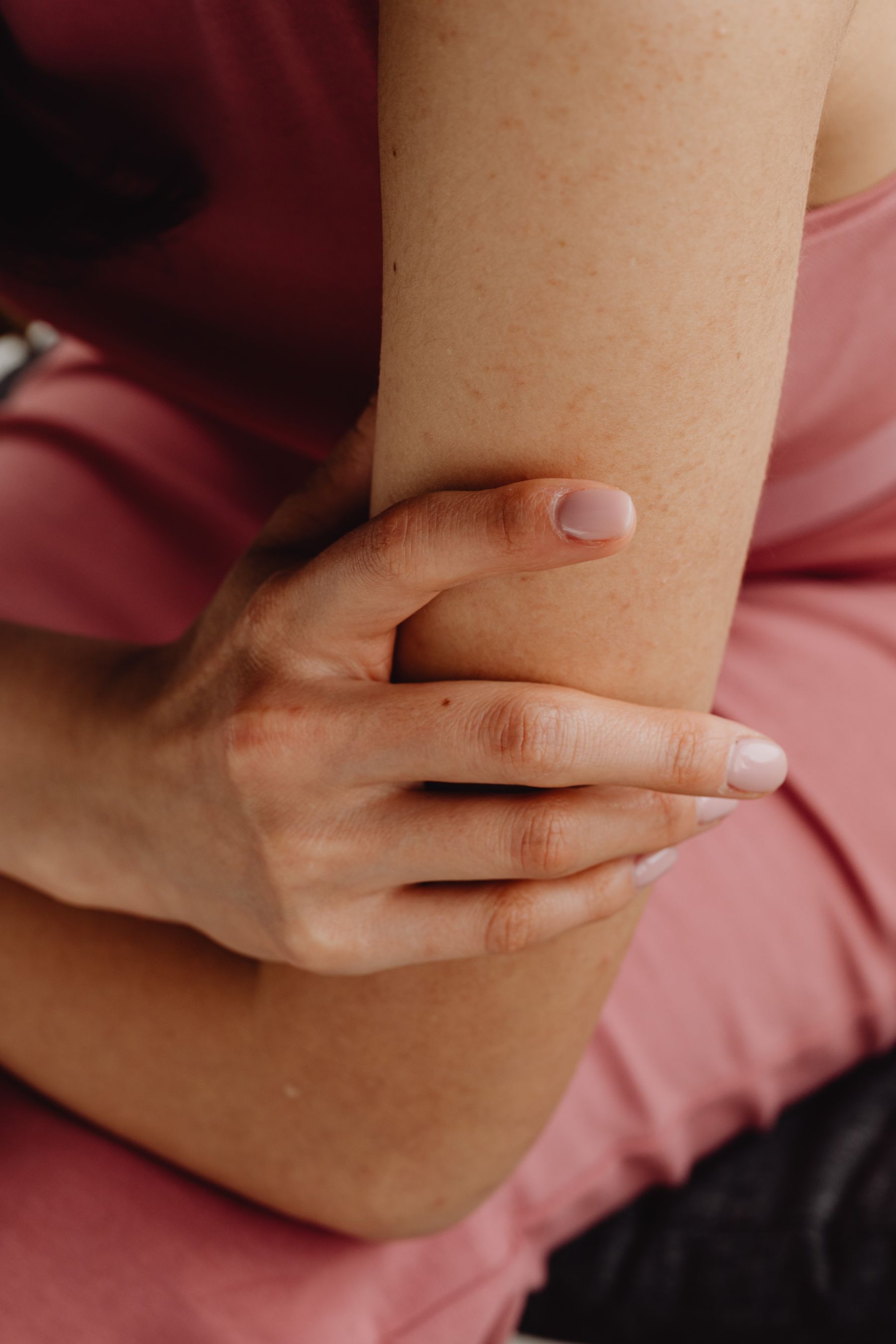
Tennis elbow — lateral epicondylalgia — is an overload problem of the tendons that anchor your wrist and finger extensor muscles to the bony bump on the outside of the elbow. Under sustained or repetitive gripping, the tendon's structure changes faster than it can repair: less inflammation, more disorganized tissue that protests every time the muscles pull through it. Golfer's elbow is the same story on the inner elbow, involving the wrist flexors.
Because the extensors fire every time you grip — they stabilize the wrist so the fingers can squeeze — everyday life becomes the aggravator: pouring coffee, shaking hands, dragging a mouse, turning a key. That's also the clue to treatment. The tendon doesn't need rest; it needs its capacity rebuilt to meet the demand.
Symptoms: when should you seek help?
Elbow tendinopathy tends to creep in over weeks. Book an evaluation if you notice:
Pain at the outside (or inside) of the elbow with gripping, lifting, or typing
A grip that's gone weak or unreliable — dropped cups, hesitant handshakes
Sharp catches lifting light objects with a straight wrist — a kettle, a milk jug
Tenderness when you press the bony bump of the elbow
Aching that builds through a work day of tools, keyboards, or repetitive tasks
Elbow pain with numbness or tingling into the ring and little fingers, night pain, or symptoms after a fall deserves screening for nerve involvement or other structures — part of every first visit.
Tennis elbow is a tendon-capacity problem: the extensors fire with every grip, so daily life keeps the overload going.
Why not just get a cortisone shot?
Because the best trial we have says it backfires. In a randomized controlled trial published in JAMA, corticosteroid injection for tennis elbow beat physiotherapy at 3 weeks — then reversed: at 52 weeks the injection group had lower complete-recovery rates and a 54% recurrence rate, versus 5% recurrence with physiotherapy.[1] A separate randomized trial found corticosteroid added to a physiotherapy program of manipulation, friction massage, stretching, and eccentric exercise provided no long-term advantage over the same program with placebo injection.[2]
The pattern across the literature is consistent: injections buy weeks, loading buys years. Progressive strengthening of the wrist extensors — isometrics early for pain relief, then heavier slow resistance — is the treatment that changes the tendon rather than silencing it.[3] The honest cost is patience: tendons remodel on a timescale of months, not days.
How we treat tennis elbow at RISE
Elbow tendinopathy care at RISE is a loading program wrapped in symptom management — dosed precisely, progressed weekly, and adjusted around your job and sport. Every session is 45 minutes one-on-one with the same Doctor of Physical Therapy.
Confirm the tendon: we differentiate lateral epicondylalgia from nerve entrapment, neck referral, and joint problems before starting.
Progressive tendon loading: isometrics for early pain relief, then heavy slow resistance for the extensors — the engine of recovery.
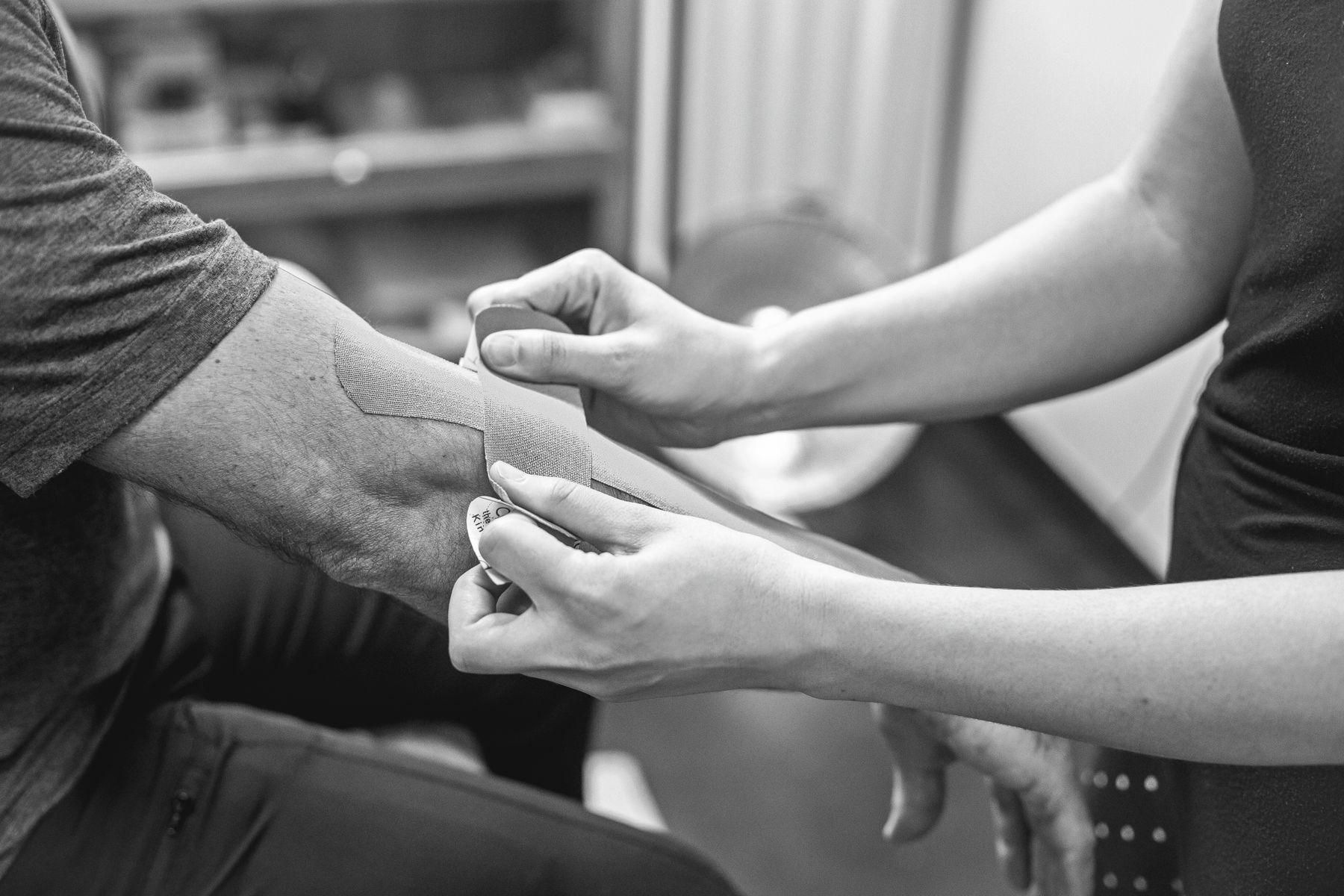
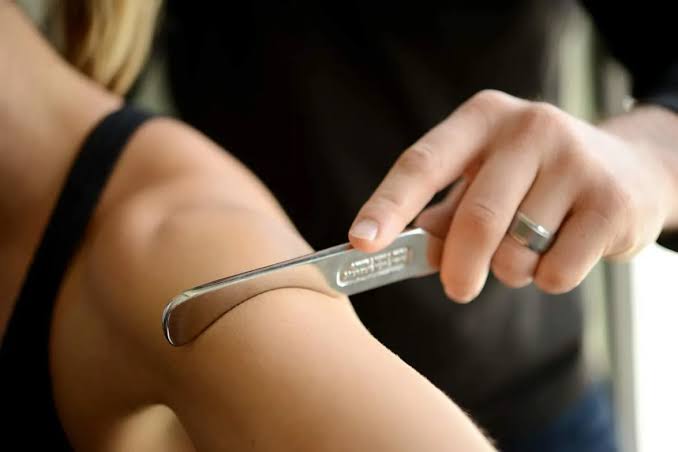
Hands-on adjuncts: soft-tissue work, dry needling to the extensor mass, and instrument-assisted mobilization where it helps tolerance.
Load management that fits your life: grip and workstation modifications, counterforce strap coaching, and a plan for the tasks you can't skip.
Grip testing, tendon loading tests, and a neck and nerve screen confirm what's actually driving the pain.
02 — TREAT
Quiet the tendon
Isometric loading, hands-on work, and smart task modification cut daily pain without shutting your life down.
03 — REBUILD
Reload the grip
Heavy slow resistance rebuilds tendon capacity until tools, racquets, and handshakes are uneventful again.
What to expect at your first visit
Your story first. What your hands do all day, what changed before the pain started, and what tasks hurt most.
A differential exam. Tendon load tests, grip dynamometry, and screening of the neck and nerves that can mimic elbow pain.
Honest expectations. Tendon timelines run in months — we show you the milestones so slow progress reads as progress.
Treatment on day one. Your first isometric loading doses plus any hands-on work that improves tolerance immediately.
Work-proofing. Grip, tool, and workstation adjustments — plus strap coaching if your job won't wait for the tendon.
Frequently asked questions
Should I get a cortisone shot for tennis elbow?+
The evidence argues strongly against it as a first move. In a landmark JAMA randomized trial, corticosteroid injection relieved pain quickly but produced worse outcomes at one year than physiotherapy or even doing nothing — with a 54% recurrence rate versus 5% for physiotherapy.[1] Short-term relief, long-term cost. Progressive loading is the better first-line plan for most people.
I don't play tennis — why do I have tennis elbow?+
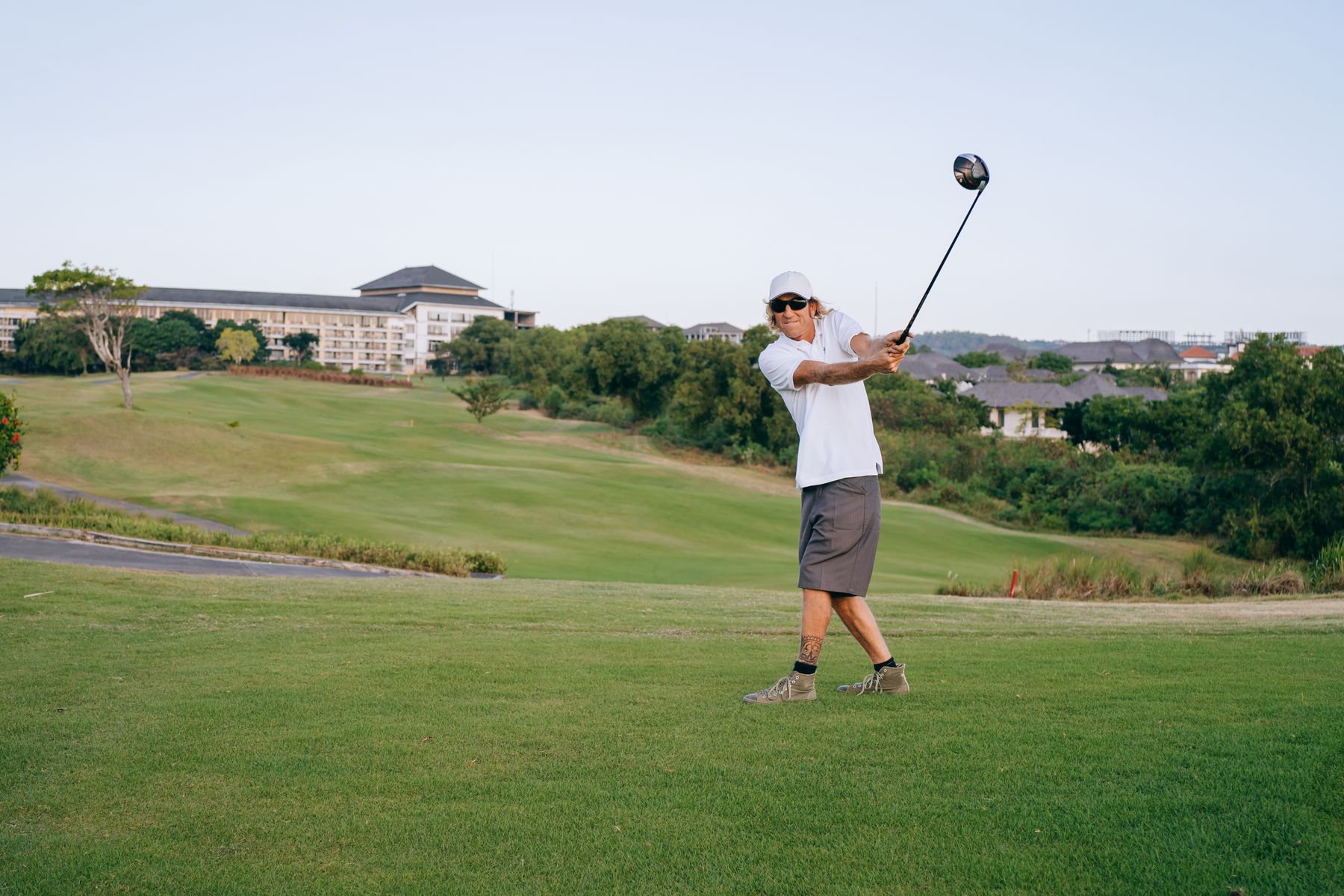
Only a small minority of cases come from racquet sports. Tennis elbow is an overload tendinopathy of the wrist extensor tendons, and anything with repetitive gripping or wrist work can drive it: keyboard and mouse marathons, hand tools, lifting with straight wrists, gardening, or a new gym program. The name stuck; the mechanism is universal.
Do I need a referral for tennis elbow treatment in Idaho?+
No. Idaho is a direct-access state, so you can book an elbow evaluation at RISE without a physician referral. Some insurance plans — commonly Medicare, Medicaid, and Tricare — require a referral for coverage, and we'll verify your plan's requirements before your first visit.
How long does tennis elbow take to heal?+
Tendons remodel slowly: most people improve meaningfully within 6–12 weeks of progressive loading, with full resolution often taking 3–6 months for long-standing cases. That timeline frustrates people into injection-hopping, but the loading route has the durable outcomes. A typical RISE plan runs 6–10 visits spaced out across that window, with the home program doing daily work.
Should I wear a brace or strap for tennis elbow?+
A counterforce strap can genuinely reduce pain during unavoidable gripping work — it redistributes load away from the irritated tendon attachment. It's a useful tool for staying functional, not a treatment: the tendon still needs progressive strengthening to rebuild capacity. We'll show you when a strap helps and when it just hides the problem.
What's the difference between tennis elbow and golfer's elbow?+
Location and muscles. Tennis elbow (lateral epicondylalgia) affects the wrist extensor tendons at the outside of the elbow; golfer's elbow (medial epicondylalgia) affects the wrist flexor tendons on the inside. Both are overload tendinopathies and both respond to the same principle — progressive loading matched to the irritated tissue — just aimed at different muscle groups.
Does insurance cover physical therapy for tennis elbow?+
Most major medical plans cover physical therapy for tennis elbow and golfer's elbow. RISE is in-network with most major insurance plans in Idaho — check our insurance list or contact us and we'll verify your coverage before your first appointment.
Carson is a co-founder of RISE Physical Therapy and treats orthopedic, sports, and tendon conditions with a hands-on, movement-first approach. He earned his Doctorate of Physical Therapy from Pacific University in Oregon. Meet the full team →
SOURCES
Coombes BK, Bisset L, et al. Effect of Corticosteroid Injection, Physiotherapy, or Both on Clinical Outcomes in Patients with Unilateral Lateral Epicondylalgia: A Randomized Controlled Trial. JAMA, 2013. jamanetwork.com/journals/jama/fullarticle/1568252
Corticosteroid or Placebo Injection Combined with Deep Transverse Friction Massage, Mills Manipulation, Stretching and Eccentric Exercise for Acute Lateral Epicondylitis: A Randomised, Controlled Trial. 2015. ncbi.nlm.nih.gov/pmc/articles/PMC4438532
Management of Lateral Elbow Tendinopathy: One Size Does Not Fit All. Journal of Orthopaedic & Sports Physical Therapy, 2015. jospt.org/doi/10.2519/jospt.2015.5841
 Medically reviewed by Dr. Carson Bailey, PT, DPT · August 2026