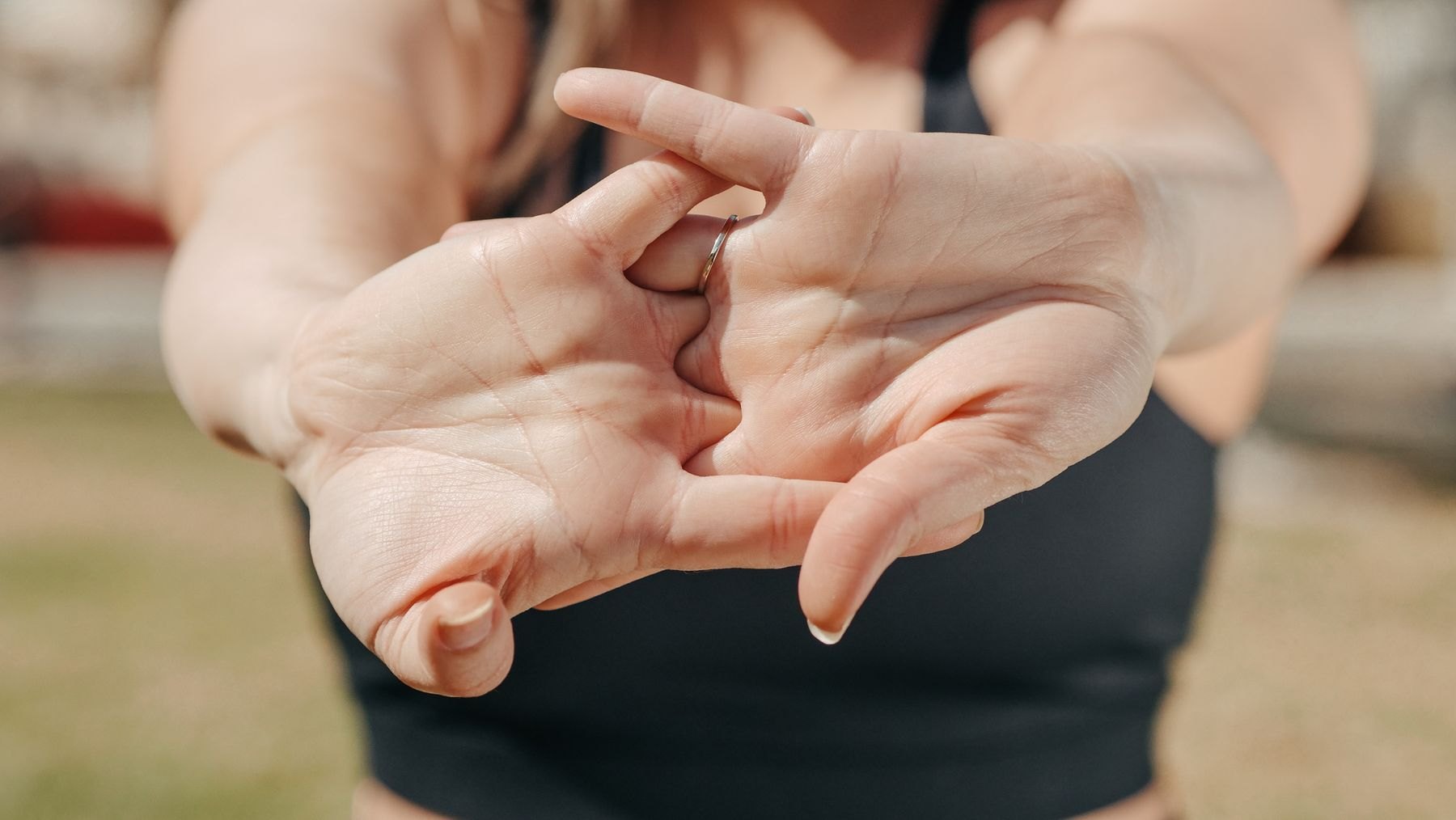
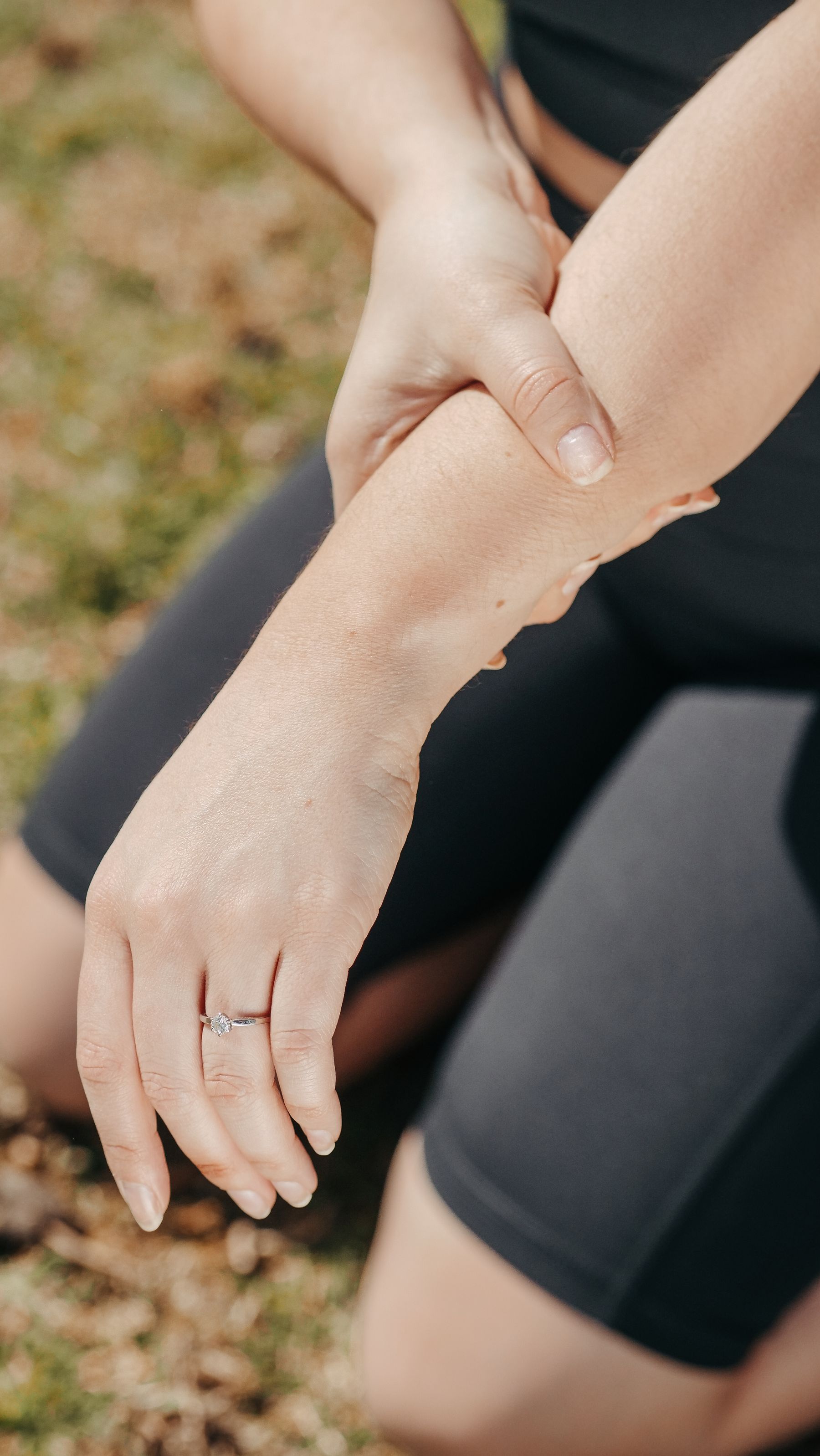
Jars, keys, zippers, tools, a coffee mug at 6am — arthritic hands lose the small tasks first. Most of that is recoverable with load, protection, and better leverage.
Hand and thumb arthritis is osteoarthritis of the small finger joints and of the saddle joint at the base of the thumb, and it is the most common osteoarthritis there is: roughly 22% of adults over 50 have symptomatic hand osteoarthritis, and the lifetime risk of developing it is 39.8% — 47.2% for women against 24.6% for men.[1][2] No treatment regrows cartilage, but hand exercise, a thumb base orthosis, and adapted tools each have pooled trial evidence behind them, and people treated non-surgically for thumb base arthritis have held their twelve-month gains out to nearly seven years.[3][5] RISE Physical Therapy treats hand and thumb osteoarthritis one-on-one in 45-minute sessions in Boise and Nampa, Idaho, and Idaho's direct-access law lets you start without a physician referral.
What is hand and thumb arthritis?
Hand and thumb arthritis is osteoarthritis affecting the small joints of the fingers and, very often, the trapeziometacarpal joint at the base of the thumb — the joint clinicians call the first carpometacarpal, or CMC, joint. The cartilage in those joints thins, the bone at the margins builds outward into the bony knobs people notice on their knuckles, and the ligaments and capsule around each joint change too. Because the joints involved are small and used constantly, the disease announces itself through tasks rather than through rest: the jar lid, the key, the seatbelt buckle, the second hour of pruning.
It is the most common form of osteoarthritis. About 22% of adults over 50 have symptomatic hand osteoarthritis — 16% of men and 28% of women.[1] Looked at across a lifetime, the numbers are larger still: in the Johnston County study the lifetime risk of symptomatic hand osteoarthritis was 39.8% overall, 47.2% in women and 24.6% in men, and 47.1% among people with obesity against 36.1% without.[2]
The thumb deserves separate billing. Its base is a saddle-shaped joint designed for an unusual amount of motion, and every pinch drives multiplied force through it. That combination is why thumb base arthritis is often the loudest joint in an arthritic hand, why it is the one an orthosis can help most directly, and why a hand can look mildly arthritic on an X-ray while the thumb quietly dictates what the person can and cannot do.
Hand osteoarthritis is diagnosed from the pattern — which joints, what provokes them, and how long stiffness lasts — not from an X-ray. Imaging is not required to make the diagnosis when the history and examination fit.[1]
What does hand and thumb arthritis feel like?
Hand and thumb arthritis usually feels like an ache that is triggered by use and settles with rest, together with brief morning stiffness and a slow loss of grip and pinch strength. It rarely arrives as one dramatic event. What people describe in clinic:
A deep ache at the base of the thumb, on the palm side of the wrist crease, that spikes with pinching, opening jars, turning keys, or lifting a full skillet
Bony enlargement of the finger joints — Heberden's nodes at the fingertip joints, Bouchard's nodes at the middle joints — which are firm rather than soft and puffy[1]
Morning stiffness that loosens within about half an hour, unlike inflammatory arthritis, where it drags on much longer[1]
Dropping things, or finding that a grip you took for granted quietly gives out partway through a task
Pain that shows up hours after the activity rather than during it — the classic gardening-Saturday, sore-Sunday pattern
In longer-standing thumb base arthritis, a squared-off look at the base of the thumb and difficulty flattening the hand on a table
Two contrasts are worth holding onto. Numbness and tingling — particularly at night, in the thumb, index and middle fingers — is a nerve pattern rather than an arthritis pattern, and belongs with our carpal tunnel page; the two conditions also coexist often enough that we screen for both. And soft, symmetrical swelling of the knuckles where the fingers meet the palm, with stiffness lasting well over an hour, is not the osteoarthritis pattern at all.
What causes hand and thumb arthritis, and who gets it?
Hand and thumb osteoarthritis comes from a mix of age, sex, genetics, joint shape and accumulated load rather than from any single injury. Age is the dominant factor and female sex the second: the female predominance is strong enough that specialist hand clinics see women outnumbering men several times over.[1] Obesity raises risk measurably, which is a useful reminder that hand osteoarthritis is not purely a wear-and-tear phenomenon — the hands do not carry body weight, so metabolic factors are clearly part of the story.[2]
On top of that sit the local factors: a previously fractured or dislocated finger, a hypermobile thumb base that has been shearing for decades, and years of high-repetition pinch work — trades, hairdressing, dentistry, upholstery, playing an instrument. In the Treasure Valley we see a fair amount of the seasonal version, where a hand that was fine all winter meets a full March of pruning, fencing and potting in three weekends.
What we push back on is the idea that using your hands caused this and therefore resting them is the fix. Hands that stop working lose strength quickly, and grip strength is one of the things that most directly determines whether an arthritic hand can still do its job. The goal is to change how load is delivered — better leverage, better tools, sensible pacing — not to stop delivering load.
Does hand therapy actually work for thumb and hand arthritis?
Hand therapy for thumb and hand osteoarthritis produces real but modest benefits, and the size of each one is worth knowing before you commit your time. The most recent systematic review informing European guidance pooled the available trials and reported low-certainty evidence of a small long-term effect of hand exercise on pain (standardised mean difference −0.34, 95% CI −0.58 to −0.09), low-certainty evidence of a moderate long-term effect of thumb base orthoses on pain (SMD −0.77, 95% CI −1.20 to −0.34), and moderate-certainty evidence — the strongest certainty rating in the whole review — that assistive devices produce a moderate long-term improvement in hand function (SMD −0.55, 95% CI −0.94 to −0.16).[3]
That last finding is the one most often skipped over, and it deserves more attention than it gets: the best-supported intervention in hand osteoarthritis is changing the tools. A jar opener, fatter-handled cutlery, a key turner, an electric can opener and a lighter watering wand are not a consolation prize for people who cannot exercise. They are the intervention with the most confident evidence base, and they work by removing the peak pinch forces that provoke the joint in the first place.
SYSTEMATIC REVIEW · 2025
Pooled trials found a small long-term pain effect for hand exercise and a moderate one for thumb orthoses, both on low-certainty evidence — while assistive devices carried moderate-certainty evidence of a moderate gain in hand function.
Across 17 UK hospital departments, adding a thumb splint to a therapist-supported self-management program produced no additional benefit over the self-management program alone — every group improved.
The second card is the uncomfortable one, and it is why we do not hand out splints reflexively. The OTTER II trial randomised people with symptomatic thumb base osteoarthritis to supported self-management alone, or the same program plus one of two splint types, and found the splints added nothing measurable to the outcome.[4] Read alongside the pooled orthosis data, the fair conclusion is not "splints don't work" but "good therapist-led self-management is doing much of the work, and a splint is a tool inside that plan rather than a substitute for it."
Guidelines land in the same place. The 2019 American College of Rheumatology and Arthritis Foundation guideline strongly recommends exercise and self-management programs for hand osteoarthritis, and gives first-CMC — thumb base — orthoses its strongest recommendation; heat and paraffin, orthoses for other hand joints, topical and oral NSAIDs, and intra-articular steroid injections are recommended conditionally, while glucosamine and biologic agents are recommended against.[6]
Does hand arthritis end in surgery?
Most hands with arthritis never reach an operating room, and the best long-term data on non-surgical care are reassuring. A multicentre cohort followed 217 people treated for thumb base osteoarthritis with hand therapy — exercise and education sessions plus an orthosis — and found their pain scores improved by 15.2 points on the Michigan Hand Outcomes Questionnaire over twelve months and were no worse at a median follow-up of 6.6 years. Twenty-two percent went on to surgery, and 70% of those did so within the first year.[5]
Two honest caveats about that reassurance. It is a cohort, not a randomised comparison, so improvement cannot be credited to therapy alone — and remarkably, no trial has ever compared surgery for thumb base arthritis against non-surgical treatment or against no surgery at all; the surgical literature compares operations to other operations.[3] That evidence gap cuts both ways. It means nobody can promise you that an operation will beat a good conservative plan, and it means nobody should tell you that surgery is a failure of rehab. When pain persists at rest and at night, when pinch has collapsed despite months of honest work, a hand surgery opinion is a reasonable next step, and we will help you get one.
When do sore hands need a doctor rather than rehab?
Most hand and thumb arthritis can start with a physical therapy evaluation, but a few presentations need medical assessment first. Contact a physician promptly, or go to urgent care, if any of these describe you:
A hot, swollen, exquisitely painful joint with fever or feeling unwell — a joint infection is an emergency
Symmetrical swelling of the knuckles where the fingers meet the palm, morning stiffness lasting well over an hour, or fatigue and general unwellness — the inflammatory arthritis pattern, which needs blood work early[1]
Nail pitting, scaly skin patches, or a personal or family history of psoriasis alongside sore finger joints
Sudden severe pain in a single joint, often the base of the thumb or a fingertip joint, arriving overnight and intensely red — a crystal arthritis presentation such as gout
Progressive numbness, tingling or wasting of the muscle at the base of the thumb — a nerve problem, not an arthritis problem
Hand pain that began with a fall or a forced twist, with deformity, or with an inability to move the joint
None of these are common. All of them are worth ruling out on day one, which is part of what an evaluation is for.
How we treat hand and thumb arthritis at RISE
Treating hand and thumb arthritis at RISE starts with finding out which joint is actually costing you function, because the fingers and the thumb base fail in different ways and respond to different fixes. Every session is a full 45 minutes, one-on-one with the same Doctor of Physical Therapy — enough time to test grip and pinch properly, fit and adjust an orthosis, and rehearse the specific tasks that have become difficult rather than handing you a sheet of exercises.
Measure grip and pinch, not impressions: grip and key-pinch strength side to side, which joints are tender and enlarged, thumb base provocation testing, and the specific household or work tasks you have quietly stopped doing — all recorded so change is visible.
Load the hand gradually: range-of-motion work and graded pinch and grip strengthening, dosed by the 24-hour rule, because grip strength is what determines whether an arthritic hand can still do its job.
Fit the thumb where it earns its place: a thumb base orthosis trialled for the tasks and hours that actually provoke pain, and adjusted at follow-up — rather than issued and forgotten.
Change the leverage: joint protection coaching and adapted tools for the highest-force tasks, the intervention with the strongest certainty of evidence in this condition.
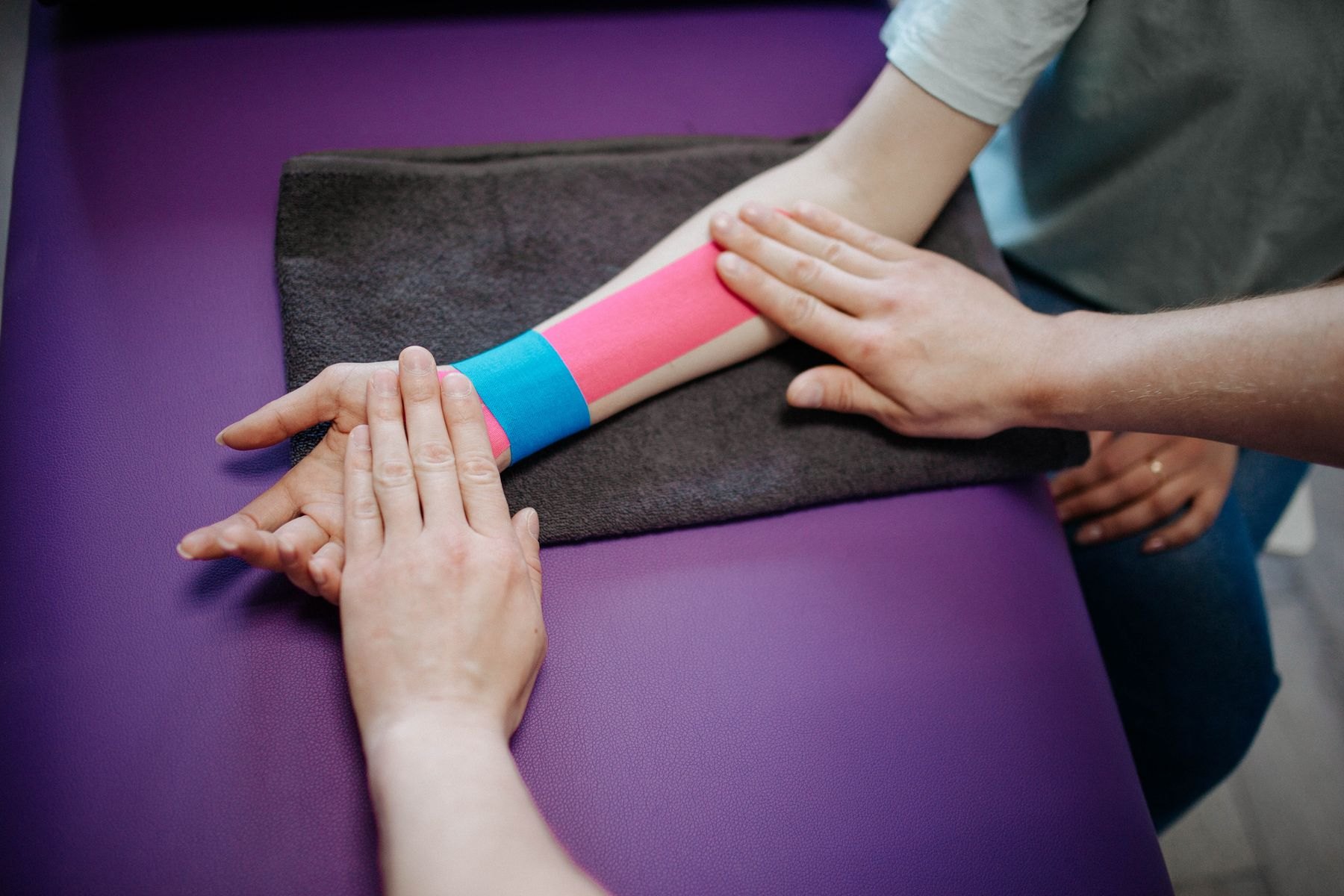
Hands-on work where it opens a window: manual therapy and soft tissue work through the thenar muscles and forearm, used to make loading tolerable, not as the treatment itself.
Know when to refer: a clear read on inflammatory patterns, nerve involvement, and the point at which an injection or hand surgery opinion belongs in the conversation.
Grip and pinch strength, joint-by-joint examination, thumb base provocation, and a red-flag screen that separates osteoarthritis from inflammatory arthritis and nerve compression.
02 — PROTECT & LOAD
Better leverage, then more strength
An orthosis and tool changes that cut the peak forces immediately, alongside graded range-of-motion and pinch work dosed so soreness settles within 24 hours.
03 — SUSTAIN
Keep the hand working
A home program short enough that you will actually do it, re-measured grip and pinch, and an honest read on whether conservative care is still delivering or a hand surgery opinion has arrived.
What to expect at your first visit
The task history. Which joints hurt, what provokes them, how long morning stiffness lasts, and which specific tasks — jars, keys, buttons, tools, the garden — have become a negotiation.
A measured hand exam. Grip and key-pinch strength both sides, joint-by-joint palpation for tenderness and bony enlargement, thumb base provocation testing, and range of motion at the fingers, thumb and wrist.
A screen for the things that are not osteoarthritis. Inflammatory arthritis patterns, nerve compression at the wrist, and tendon problems around the thumb — so anything needing a physician is identified on day one.
An orthosis trial where it fits. If the thumb base is the driver, we fit and adjust an orthosis and agree on when you will wear it — for the provoking tasks and, if night pain is an issue, overnight.
A plan with numbers in it. A short home program, specific tool changes for your highest-force tasks, and the grip and pinch measurements we will retest. Most hands are seen every one to two weeks over 6–10 weeks rather than several times a week indefinitely.
Frequently asked questions
Can hand and thumb arthritis be reversed?+
No. Nothing available today rebuilds cartilage in a finger or thumb joint, and the bony enlargement of arthritic knuckles does not shrink back. What can change is how much the hand hurts and how much it can do. Pooled trial data credit hand exercise with a small long-term reduction in pain, thumb base orthoses with a moderate one, and adapted tools and gadgets with a moderate improvement in hand function — the last being the finding the reviewers held with the most confidence.[3] A large cohort of people treated non-surgically for thumb base arthritis improved on the pain scale over twelve months and still held that improvement at a median of nearly seven years.[5] That is worth having, and it is not a cure; we would rather say so than promise otherwise.
Should I wear a thumb splint, and how many hours a day?+
A thumb base orthosis is worth trying if pinching and gripping are what hurt, and the American College of Rheumatology gives first carpometacarpal orthoses its strongest recommendation for hand osteoarthritis.[6] Pooled data put the long-term pain effect at a moderate size, though on low-certainty evidence.[3] The honest counterweight is the OTTER II trial, which randomised people with symptomatic thumb base arthritis across 17 UK hospital departments and found that adding a splint to a therapist-supported self-management program gave no additional benefit — every group improved.[4] Our practical read: most people do best wearing it for the specific tasks and hours that provoke pain, plus overnight if night pain is an issue, rather than all day every day, because a thumb that is never asked to work does not get stronger.
Why does the base of my thumb hurt more than my fingers?+
Because the thumb base is a saddle joint built for mobility and then asked to carry enormous load. Every pinch multiplies force through that joint, so the same arthritis that is only an ache in a fingertip joint becomes a sharp, specific pain when you open a jar, turn a key, pull a zipper, or lift a skillet. Thumb base arthritis is also more common in women and rises steeply with age.[1] Clinically it is the joint we can usually provoke on examination — pressing and rotating the thumb metacarpal reproduces the pain — and it is the joint where an orthosis and a change in how you load the hand make the most visible difference.
How is hand osteoarthritis different from rheumatoid arthritis?+
Osteoarthritis is a mechanical, joint-by-joint problem; rheumatoid arthritis is an autoimmune disease that needs different treatment and needs it early. Hand osteoarthritis typically involves the fingertip and middle finger joints and the thumb base, comes on gradually, is often asymmetric, produces hard bony enlargement, and its morning stiffness eases inside about half an hour. Patterns that point away from osteoarthritis include symmetrical swelling of the knuckles where the fingers meet the palm, morning stiffness lasting well over an hour, soft boggy swelling, fatigue or feeling unwell, and a family or personal history of psoriasis.[1] Those belong with a physician for blood work, not with a rehab plan.
Will gripping exercises wear my arthritic hands out faster?+
There is no evidence that sensibly dosed hand exercise accelerates hand osteoarthritis, and guidelines recommend exercise for it.[6] The rule we use is the same one we use for arthritic hips and knees: soreness that settles within about 24 hours is an acceptable cost, while soreness still present the next evening means the dose was too high. That usually means starting well below what feels heroic — often gentle range of motion and low-load pinch work several times a week rather than daily maximal gripping — and building from there. The honest limitation is that the evidence for hand exercise is low-certainty and the pain effect is small,[3] so we treat it as one part of a plan that also includes an orthosis, joint protection, and better tools.
Do I need a referral for hand arthritis physical therapy in Idaho?+
No. Idaho is a direct-access state, so you can book an evaluation at RISE in Boise or Nampa without seeing a physician first. Two things to know. Some plans — commonly Medicare, Medicaid, and Tricare — still require a physician referral for the visit to be covered, and we check that with your plan before your first appointment. And if what we find looks like inflammatory arthritis, a nerve problem, or a hand that needs a surgical opinion, we will say so and help you get to the right physician; direct access means the assessment happens promptly, not that everything gets managed here.
Does insurance cover physical therapy for hand and thumb arthritis?+
Most major medical plans cover physical therapy for hand and thumb osteoarthritis, both as conservative care and as rehabilitation after thumb base or finger joint surgery. Custom orthoses are sometimes billed separately from the therapy visit, which is worth knowing in advance. RISE is in-network with most major insurance plans in Idaho — see our insurance list or send us your details and we will verify your coverage, any visit limits, and whether your plan requires a referral before your first appointment.
Carson is a co-founder of RISE Physical Therapy and treats orthopedic, sports, and tendon conditions with a hands-on, movement-first approach. He earned his Doctorate of Physical Therapy from Pacific University in Oregon. Meet the full team →
SOURCES
Watt FE, Kennedy DL, Gardiner MD, Vincent TL. Current and future advances in practice: practical management of hand osteoarthritis. Rheumatology Advances in Practice, 2025;9(4):rkaf093. pmc.ncbi.nlm.nih.gov/articles/PMC12536898
Qin J, Barbour KE, Murphy LB, et al. Lifetime Risk of Symptomatic Hand Osteoarthritis: The Johnston County Osteoarthritis Project. Arthritis & Rheumatology, 2017;69(6):1204–1212. pubmed.ncbi.nlm.nih.gov/28470947
Kjeken I, Bordvik DH, Osterås N, et al. Efficacy and safety of non-pharmacological, pharmacological and surgical treatments for hand osteoarthritis in 2024: a systematic review. RMD Open, 2025;11(1):e004963. pmc.ncbi.nlm.nih.gov/articles/PMC11749855
Adams J, Barratt P, Rombach I, et al. The clinical and cost effectiveness of splints for thumb base osteoarthritis: a randomized controlled clinical trial. Rheumatology, 2021;60(6):2862–2877. pubmed.ncbi.nlm.nih.gov/33254239
Esteban Lopez LMJ, Hoogendam L, Vermeulen GM, et al. Long-Term Outcomes of Nonsurgical Treatment of Thumb Carpometacarpal Osteoarthritis: A Cohort Study. Journal of Bone and Joint Surgery (American), 2023;105(23):1837–1845. pmc.ncbi.nlm.nih.gov/articles/PMC10695337
Kolasinski SL, Neogi T, Hochberg MC, et al. 2019 American College of Rheumatology/Arthritis Foundation Guideline for the Management of Osteoarthritis of the Hand, Hip, and Knee. Arthritis & Rheumatology, 2020;72(2):220–233. pubmed.ncbi.nlm.nih.gov/31908149
 Medically reviewed by Dr. Carson Bailey, PT, DPT · August 2026