The inside of the elbow that barks when you grip a club, a wrench, or a barbell. It is a capacity problem in the flexor tendons — and capacity is trainable.
Golfer's elbow, known clinically as medial epicondylitis, is an overload tendinopathy of the flexor-pronator tendons on the inside of the elbow; a Finnish population study of 4,783 adults found it in 0.4% of people aged 30–64, about a third as often as tennis elbow. Progressive loading of the wrist flexors has the best track record — in 20 patients whose previous injections and therapy had failed, six weeks of a daily eccentric exercise cut DASH disability scores from 34.7 to 7.9. RISE Physical Therapy treats golfer's elbow one-on-one in 45-minute sessions in Boise and Nampa, Idaho, with no referral required.
What is golfer's elbow?
Golfer's elbow is a degenerative overload injury of the common flexor tendon, where the muscles that bend your wrist and turn your palm down anchor to the bony knob on the inside of the elbow; the pronator teres and flexor carpi radialis take most of it.[2] Despite the "-itis" in medial epicondylitis, these tendons show little classic inflammation under the microscope — what they show is disorganized collagen, tissue asked for more than it could rebuild.
It is the quieter sibling of tennis elbow. Among 4,783 Finnish adults aged 30 to 64, definite medial epicondylitis appeared in 0.4% against 1.3% for lateral, peaking in the 45-to-54 age band with no meaningful difference between men and women.[1] Note the age — this is not primarily a young athlete's injury, though throwers get their own version from valgus stress.
Symptoms: when should you get inner-elbow pain looked at?
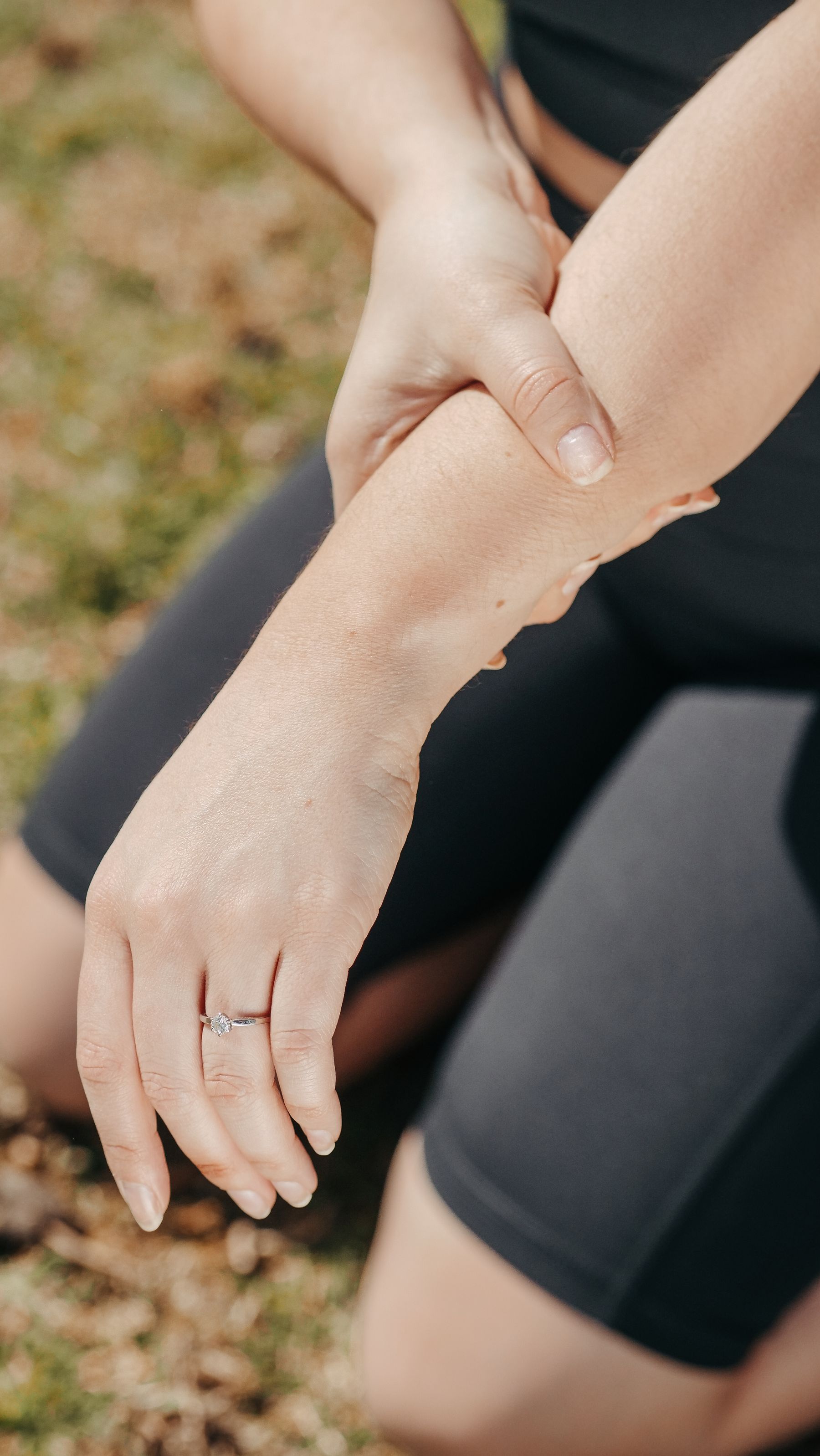
Golfer's elbow shows up as pain and tenderness on the inside of the elbow that worsens with gripping and with anything that bends the wrist or rotates the palm down. It usually builds over weeks. Book an evaluation if you notice:
A tender spot on the inside bump of the elbow you can cover with one finger
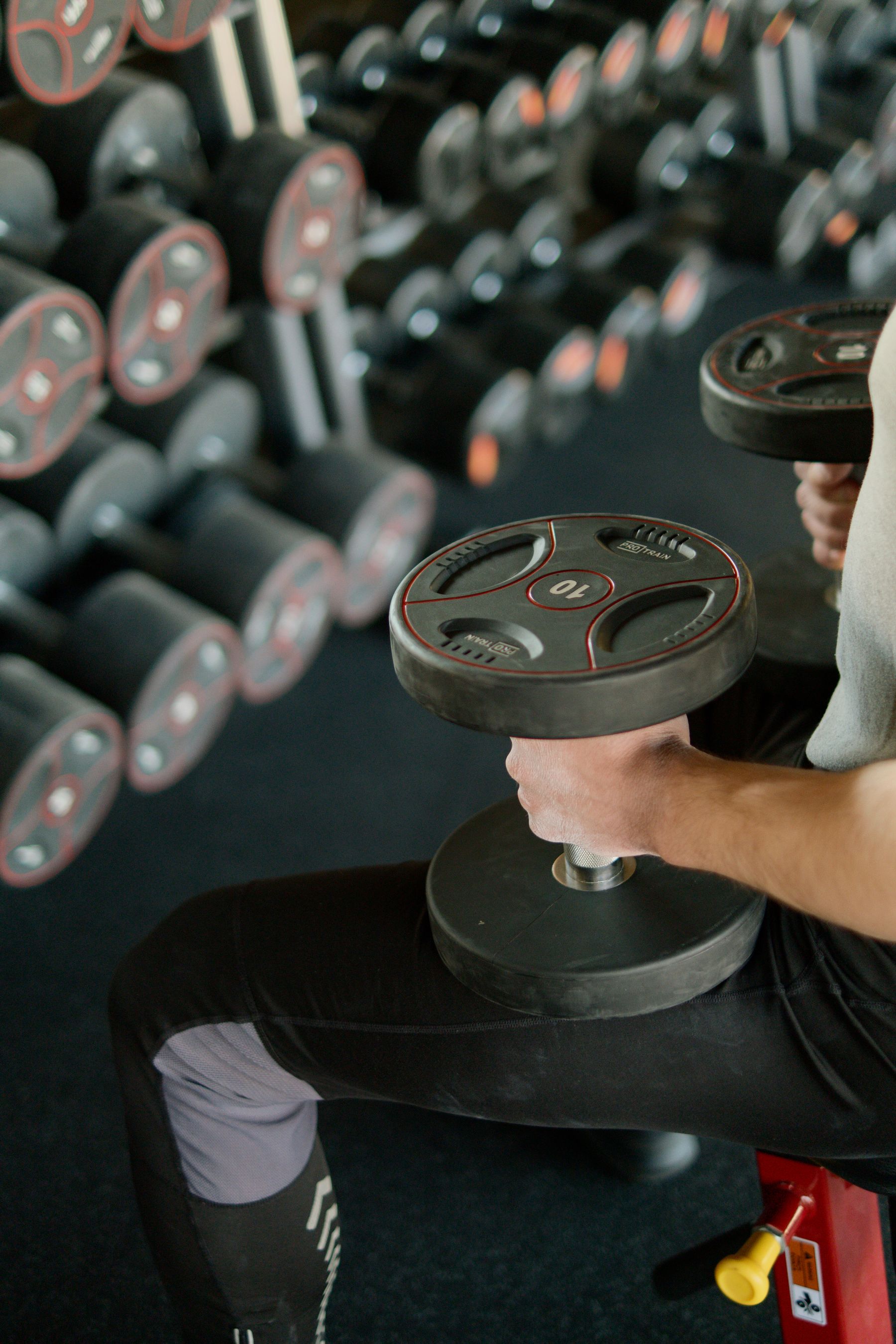
Pain gripping a club, steering wheel, hammer, or dumbbell — worse the harder you squeeze
A pull on the inner elbow flexing your wrist or twisting a screwdriver
Grip strength that has quietly dropped, or fatigues sooner than it used to
Morning stiffness through the elbow and forearm that loosens as you move
Pain lingering into the evening after a round of golf or a shift with tools
Two patterns change the plan. Numbness or tingling into the ring and little fingers points at the ulnar nerve behind the medial epicondyle, reported alongside this condition in anywhere from about one in five patients to more than half.[2] And pain that began with one hard throw, pull, or fall — especially with a sense of instability — needs the ulnar collateral ligament screened, not a tendon program.
Every time you grip, the forearm flexors pull on their attachment at the inside of the elbow — which is why golfer's elbow is felt at the elbow but rebuilt through the wrist and forearm.
Why do you get golfer's elbow if you don't golf?
Golfer's elbow comes from repeated forceful gripping and wrist flexion, and golf accounts for only a slice of cases. The Finnish population study found repetitive movement, forceful activity, smoking, and obesity each independently associated with medial epicondylitis — a profile describing trades and manual work more than weekend sport.[1] The histories we hear around the Treasure Valley are carpentry and mechanic work, irrigation and landscaping season, climbing gyms, and lifters who added pulling volume fast. The shape is always the same: demand rose faster than the tendon's capacity. That does not make the tendon fragile — the ramp was just steep.
Does golfer's elbow go away on its own, or do you need an injection?
Golfer's elbow often does improve with time, but the evidence suggests a cortisone shot changes how fast you get there rather than how well. In a randomized, double-blind trial of 60 elbows, patients injected with methylprednisolone had significantly less pain than the placebo group at six weeks — yet the groups were indistinguishable at three months and again at one year, leading the authors to conclude that steroid injection gives only short-term benefit, with both groups largely reflecting the natural course of the disorder.[3] Two caveats. "Resolves eventually" can mean a long time: patients entering one eccentric-exercise cohort had been symptomatic for a mean of 19 months.[4] And the ulnar nerve passes directly behind this injection site — one more reason to treat injection as a way to make rehab tolerable, not as the plan. The reassuring part: the large majority of cases, reported in the range of 90% and above, are managed without surgery.[2]
What does the research say about exercise for golfer's elbow?
Eccentric loading of the wrist flexors is the best-supported active treatment for golfer's elbow, though its evidence base is smaller than tennis elbow's. The most quoted result: 20 patients with chronic medial epicondylosis who had already failed medication, injections, or physical therapy added one eccentric wrist flexor exercise — twisting a rubber bar with the good arm and slowly releasing the twist with the painful one, three sets of 15, twice daily — and improved DASH disability scores by 77%, from 34.7 to 7.9, in six weeks.[5] A separate series ran 20 consecutive adults, mean age 47 with symptoms for a mean of 19 months, through a three-month home eccentric program.[4]
The limitation, stated plainly: a 2026 systematic review concluded that eccentric exercise appears to reduce pain and improve function in medial epicondylitis — especially inside a multimodal program — but that the certainty of the evidence remains low and larger randomized trials are needed.[6] Small samples, few control groups. What that changes in practice is modest: loading still has the best evidence behind it, the mechanism matches what is known about tendon adaptation, and the downside is negligible. It does mean we measure progress rather than assume it.
How we treat golfer's elbow at RISE
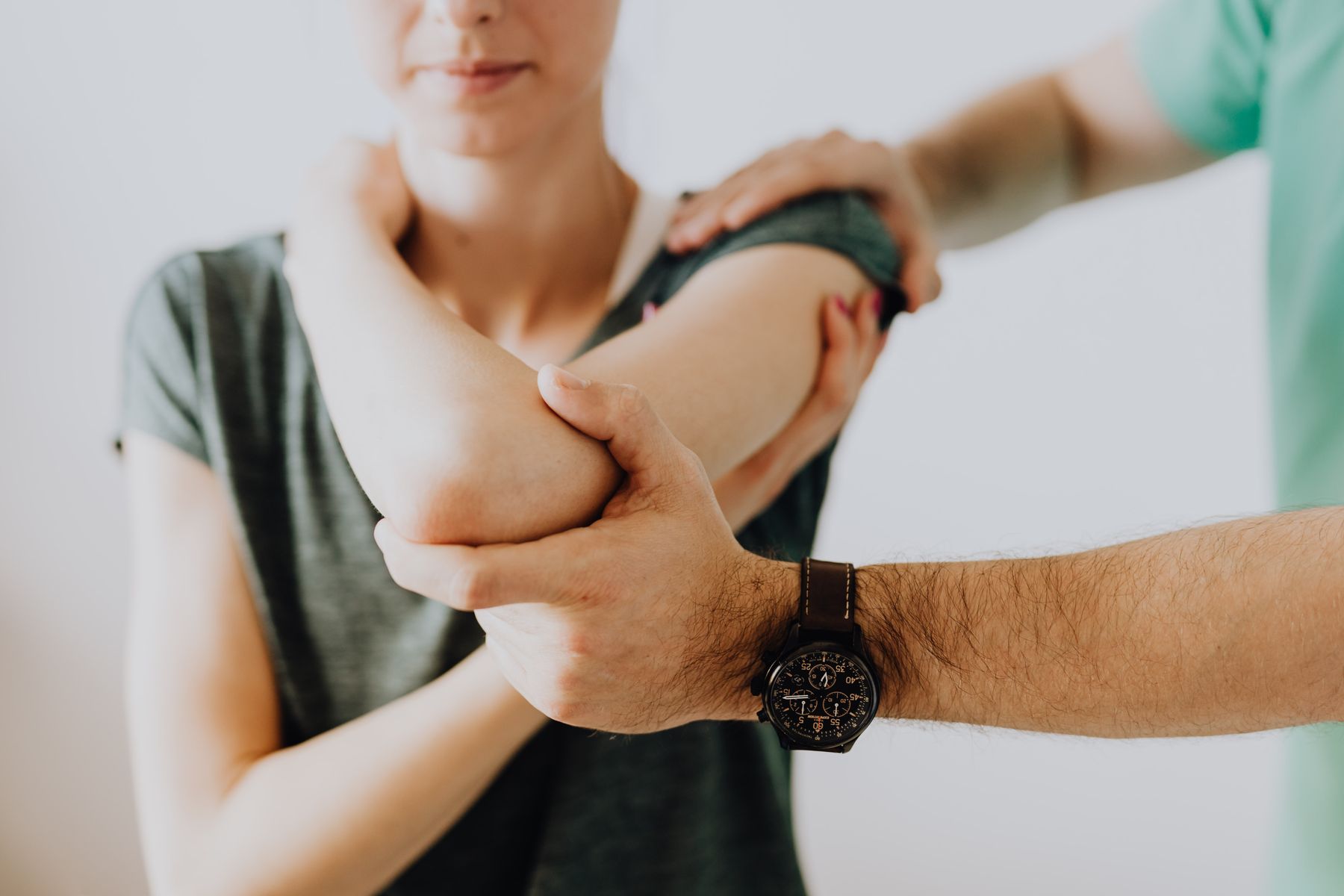
Treating golfer's elbow at RISE means finding the true source of the medial elbow pain, then dosing tendon load precisely enough that it adapts without flaring. Every session is a full 45 minutes, one-on-one with the same Doctor of Physical Therapy — which is what makes adjusting that dose week to week possible.
Sort the medial elbow: tendon, ulnar nerve, ligament, and referred neck pain all cause inner-elbow symptoms. We test them apart before loading anything.
Eccentric and heavy slow loading: wrist flexion and pronation work, progressed by measured grip strength and symptom response rather than by calendar.
Hands-on work that buys tolerance: soft tissue treatment through the flexor-pronator mass, joint mobilization, or dry needling.
Nerve-aware programming: if the ulnar nerve is irritable, we adjust elbow position, sleep setup, and progression speed rather than push through it.
Fix what caused it: grip mechanics, tool and club changes, and a return-to-load ramp for the sport or job you actually do.
Resisted wrist flexion and pronation, grip testing, ulnar nerve screening, and a valgus stress check tell us whether this is tendon, nerve, ligament, or neck.
02 — TREAT
Settle the flare
Isometric holds for pain relief, hands-on work through the forearm, and specific load edits so daily gripping stops re-irritating the tendon.
03 — REBUILD
Rebuild the grip
Eccentric and heavy slow resistance work builds real capacity back into the flexor-pronator group, then we reintroduce the swing, the tools, or the bar.
What to expect at your first visit
The history that matters. What changed 4–12 weeks before the pain started — a new grip, a job task, a training block — is usually the whole diagnosis.
A differential exam. Palpation of the medial epicondyle, resisted wrist flexion and pronation, grip dynamometry, ulnar nerve tests, valgus stress testing, and a cervical screen.
A number to beat. We measure grip strength and your worst task on day one so progress is visible instead of remembered.
Treatment the same visit. Your first loading doses — isometrics if you are irritable, eccentrics if you are not — plus hands-on work if it improves tolerance immediately.
A plan for the next two weeks. What to keep, modify, or pause, and exactly how the home exercise is dosed. Most people run 6–10 visits across a 3-month arc.
Frequently asked questions
How long does golfer's elbow take to heal?+
Plan in months, not weeks. Most people notice meaningful change within 6–12 weeks of consistent loading, and stubborn cases run 3–6 months. Two things shorten it: starting early, and doing the daily home exercise rather than only the clinic visits. In the trial of patients whose previous treatments had failed, six weeks of a daily eccentric wrist flexor exercise cut disability scores by 77%.[5]
Should I get a cortisone shot for golfer's elbow?+
The best trial on this question says the benefit is temporary. In a randomized, double-blind study of 60 elbows, the methylprednisolone group had significantly less pain than the saline group at six weeks — but the two were indistinguishable at three months and at one year.[3] There is also a specific risk here: the ulnar nerve runs directly behind the medial epicondyle. It is a reasonable option for someone in too much pain to start rehab, not a substitute for rehab.
Do I need a referral for golfer's elbow treatment in Idaho?+
No. Idaho has direct access to physical therapy, so you can book an elbow evaluation at RISE in Boise or Nampa without seeing a physician first. Some plans — commonly Medicare, Medicaid, and Tricare — still require a referral for the visit to be covered, and we verify your specific plan's rules before your first appointment.
Can I keep golfing or lifting while golfer's elbow heals?+
Usually yes, at a modified dose. Complete rest lets the tendon lose the capacity it still has, and the pain returns the moment you resume. Our working rule is that pain during activity stays mild and settles within 24 hours; what gets adjusted first is whatever spikes it — grip-heavy pulling, hitting off mats, chin-ups, or a sudden jump in range time.
Why are my ring and little fingers numb with golfer's elbow?+
Because the ulnar nerve passes through the cubital tunnel immediately behind the medial epicondyle — the same corner of the elbow those tendons attach to. Published series report ulnar nerve symptoms alongside golfer's elbow in anywhere from roughly one in five patients to more than half.[2] It changes what we test, how we position your elbow at night, and how fast we progress loading, so numbness or weakness in those fingers deserves an exam rather than a wait.
Does a counterforce strap or brace help golfer's elbow?+
A strap worn on the forearm just below the elbow can take the edge off gripping you cannot avoid, and a night splint sometimes helps if you sleep with the elbow bent and wake up numb. Neither rebuilds the tendon. Bracing keeps you working while the loading program does the real work — still needing it after several weeks means the loading dose needs revisiting.
Does insurance cover physical therapy for golfer's elbow?+
Most major medical plans cover physical therapy for medial epicondylitis. RISE is in-network with most major insurance plans in Idaho — see our insurance list or send us your details and we will verify your coverage, visit limits, and any referral requirement before your first appointment.
Carson is a co-founder of RISE Physical Therapy and treats orthopedic, sports, and tendon conditions with a hands-on, movement-first approach. He earned his Doctorate of Physical Therapy from Pacific University in Oregon. Meet the full team →
SOURCES
Shiri R, Viikari-Juntura E, Varonen H, Heliövaara M. Prevalence and Determinants of Lateral and Medial Epicondylitis: A Population Study. American Journal of Epidemiology, 2006. pubmed.ncbi.nlm.nih.gov/16968862
Stahl S, Kaufman T. The Efficacy of an Injection of Steroids for Medial Epicondylitis: A Prospective Study of Sixty Elbows. Journal of Bone and Joint Surgery (Am), 1997. pubmed.ncbi.nlm.nih.gov/9384424
Tyler TF, Nicholas SJ, Schmitt BM, Mullaney M, Hogan DE. Clinical Outcomes of the Addition of Eccentrics for Rehabilitation of Previously Failed Treatments of Golfers Elbow. International Journal of Sports Physical Therapy, 2014. pubmed.ncbi.nlm.nih.gov/24944855
 Medically reviewed by Dr. Carson Bailey, PT, DPT · August 2026