A torn meniscus is not automatically a surgical problem. For most knees, the strongest evidence points the other way — start with rehab, and keep surgery in reserve.
A meniscus tear is a split in one of the two C-shaped cartilage discs that cushion the knee, and it is far more common than knee pain is: among 991 adults aged 50 to 90, 61% of those found to have a meniscal tear on MRI had had no knee pain, aching or stiffness in the previous month.[1] For degenerative tears, randomised trials followed out to five and ten years have found exercise-based physical therapy no worse than arthroscopic surgery for knee function, with the same rate of later arthritis.[2][4] RISE Physical Therapy rehabs meniscus tears one-on-one in 45-minute sessions in Boise and Nampa, Idaho, and Idaho's direct-access law lets you start without a physician referral.
What is a meniscus tear?
A meniscus tear is a split in one of the two crescent-shaped pads of fibrocartilage that sit between the end of the thigh bone and the top of the shin bone. Each knee has two — one on the inside (medial), one on the outside (lateral) — and they do a job no other structure in the knee can do: they deepen a shallow joint, spread load across a wider surface, and help the knee stay stable through rotation. Take one out entirely and the pressure on the cartilage underneath rises sharply, which is the whole reason surgical thinking has shifted over the last twenty years from removing torn tissue to preserving it.
Tears come in two broad flavours, and confusing them is the single most common source of bad advice. A traumatic tear happens in one identifiable moment — a planted foot, a rotated knee, usually in a younger and more athletic person, often alongside a ligament injury. A degenerative tear develops without a defining event, in tissue that has gradually become less elastic with age; people often notice it after something unremarkable, like standing up out of a low chair or squatting to weed a garden bed. After about age 40 the degenerative kind is much the more common, and almost all of the research that follows is about that group.
Which brings up the uncomfortable and useful fact about this diagnosis. In a Framingham population study, 991 ambulatory adults aged 50 to 90 had knee MRIs regardless of whether their knees hurt. Meniscal tear or destruction showed up in 19% of women aged 50 to 59 and in 56% of men aged 70 to 90 — and 61% of everyone found to have a tear had had no knee pain, aching or stiffness at all in the previous month.[1] A torn meniscus on a scan is a finding. Whether it is your problem is a clinical question, not a radiological one.
Because meniscal findings are so common on imaging, the diagnosis that matters is made at the joint line — where it is tender, what provokes it, and how the knee behaves through flexion, extension and rotation.[1]
What does a meniscus tear feel like?
A meniscus tear usually feels like a specific, localised pain along the joint line — the crease you can feel on the inside or outside of the knee — that flares with twisting, squatting and deep knee bend rather than with straight-line walking. The pattern is more distinctive than the intensity. What people describe in clinic:
Pain you can point to with one finger, along the inner or outer joint line, rather than a vague all-over ache
Swelling that comes up gradually over 12 to 24 hours after a twisting injury — immediate, dramatic swelling within an hour points more toward a ligament tear or fracture and needs assessment
Pain getting out of a low car, going down stairs, kneeling to garden, or squatting to pick something off the floor
Catching or clicking, or a moment where the knee feels like it might buckle
A knee that will not fully straighten — see the red flags below, because true locking is a different conversation
Quadriceps that visibly soften within a few weeks; the thigh loses strength faster than most people expect
Two things are worth separating out. Noise on its own — clicking, crunching, a knee that sounds like gravel — is common in knees that work perfectly well and is not evidence of a tear. And pain that is diffuse, worse in the morning, and eases as you move is more the language of knee arthritis than of a meniscus problem, though in adults over 50 the two very often coexist.
What causes a meniscus tear?
Meniscus tears come from two quite different mechanisms: a single rotational load on a bent, weight-bearing knee, or the slow loss of tissue quality that makes the same everyday movement enough. The first is the sports version — the pivot in basketball or soccer, the ski edge that catches, the fall where the foot stays put and the body keeps turning. The second is the version we see far more often in the Treasure Valley: someone in their fifties who felt a twinge stepping down from a truck bed and has had a sore, swollen knee ever since.
Risk rises steeply with age, and it rises for men more than women in the older brackets.[1] Beyond age, the practical contributors are the ones you would expect — previous knee injury or surgery, existing arthritic change in the joint, work that involves repeated deep squatting or kneeling, and a sudden jump in load after a quiet stretch. Idaho supplies the last one reliably: a winter of not much, then a full weekend of ski moguls, or the first three hunting hikes of the season stacked back to back.
The part worth pushing back on is the phrase people arrive with — I tore my knee cartilage, so the cushion is gone. In most degenerative tears the meniscus is still there and still doing most of its job; a portion of it has split. That is why strengthening the muscles that control how load arrives at the knee changes symptoms so reliably, and why removing the torn fragment so often does not.
Can a meniscus tear be treated without surgery?
For degenerative meniscus tears, exercise-based physical therapy performs as well as arthroscopic surgery — and the trials backing that up are now long, large, and consistent. This is one of the better-tested questions in orthopedics, so it is worth walking through the actual numbers rather than the headline.
The ESCAPE trial randomised 321 people aged 45 to 70 with a degenerative meniscal tear to either arthroscopic partial meniscectomy or exercise-based physical therapy. At five years the difference in patient-reported knee function was 2.8 points on the IKDC scale (95% CI −0.9 to 6.5) — well inside the 11-point margin the researchers had set in advance, so physical therapy was formally non-inferior to surgery. Radiographic arthritis progressed at essentially the same rate in both groups (difference 0.1 points, P = 0.78).[2]
The OMEX trial followed 140 similar patients for a full decade. At ten years there was no significant difference in arthritis progression on X-ray (adjusted mean difference 0.39, 95% CI −0.19 to 0.97, with slightly more progression in the surgical group), new radiographic knee arthritis developed in 23% of the surgery group against 20% of the exercise group, and there were no differences between groups on any KOOS subscale or on measured knee muscle strength.[4]
RANDOMISED TRIAL · 5-YEAR
In 321 adults aged 45–70 with degenerative meniscal tears, physical therapy remained non-inferior to arthroscopic partial meniscectomy for knee function at five years, with identical rates of arthritis progression.
Exercise therapy matched surgery on patient-reported outcomes at two years and produced significantly greater thigh muscle strength at three months — the one outcome where the two treatments genuinely differed.
That second card is the one we care most about clinically. Kise and colleagues randomised 140 middle-aged patients (mean age 49.5) to twelve weeks of supervised exercise or to arthroscopic partial meniscectomy. At two years the difference in KOOS4 was 0.9 points (95% CI −4.3 to 6.1, P = 0.72) — nothing. But at three months the exercise group was significantly stronger on every thigh muscle strength measure (P ≤ 0.004).[3] Equal pain relief, better strength, no operation. Guidance has followed the data: a 2017 BMJ Rapid Recommendation panel issued a strong recommendation against arthroscopy in nearly all patients with degenerative knee disease, noting that fewer than 15% experience even a small short-term improvement at three months and that the benefit does not persist to one year.[5]
Three honest limitations, because they change how this applies to you. First, every trial above studied degenerative tears in middle-aged adults; none of it tells you what to do about a 19-year-old with a bucket-handle tear from a soccer pivot. Second, "physical therapy first" is not "physical therapy only" — 32.1% of the ESCAPE physical therapy group went on to have surgery within five years, and 19% of Kise's exercise group crossed over within two.[2][3] That is a reasonable, planned sequence rather than a failure. Third, the finding is equivalence, not superiority: rehab is not a better painkiller than surgery. Its advantages are the strength you keep, the operation you avoid, and the option you retain.
When does a meniscus tear actually need surgery?
Surgery earns its place for a meniscus tear in a fairly narrow set of situations: a knee that is genuinely locked, a traumatic tear in a younger athlete where the tear pattern and location make repair feasible, a tear alongside a ligament injury being reconstructed anyway, and a knee that has had an honest supervised rehab trial without meaningful change. Outside those, the trials above are the reason we start with loading.
The distinction between the two operations matters more than most people are told. A partial meniscectomy trims the torn portion away — quick recovery, and the procedure the degenerative-tear trials tested and found no better than exercise. A meniscus repair stitches the tear back together to preserve the tissue — a longer, more protected rehabilitation, but it keeps the meniscus doing its load-spreading job. Repair is generally only possible for tears in the outer, blood-supplied rim, which is one reason younger traumatic tears are more often repairable than older degenerative ones.
If you do have a repair, the rehab is genuinely different and should not be improvised. A 2025 systematic review of ten studies covering 313 isolated meniscal repairs found that accelerated weight-bearing-as-tolerated and restricted weight-bearing protocols produced broadly comparable failure rates (24.1% versus 28.3%), while a modified progressive protocol — one that tailored range-of-motion and weight-bearing limits to tear size — recorded the lowest failure rate at 4.3%. The reviewers' conclusion was that individualised protocols, matched to tear characteristics and surgical technique, likely beat one-size-fits-all rules.[6] The honest caveat is that this literature is small and heterogeneous, which is exactly why we work from your surgeon's protocol first and our judgement second. Our post-surgical rehab page covers how that partnership runs.
When does knee pain need a doctor rather than rehab?
Most meniscus tears can safely start with a physical therapy evaluation, but a few presentations need medical assessment first. Contact a physician promptly, or go to urgent care, if any of these describe you:
True mechanical locking — the knee physically will not straighten, and no amount of coaxing changes it. That can mean a displaced fragment of meniscus sitting in the joint, and it is the clearest surgical indication there is
A knee that swelled dramatically within an hour of a twisting injury, which suggests bleeding into the joint from a ligament tear or fracture rather than a meniscus tear alone
Inability to bear weight on the leg, or obvious deformity, after an injury
A hot, red, very painful knee with fever or feeling unwell — a joint infection is an emergency
Calf pain, swelling or tightness that is disproportionate to the knee problem, particularly after surgery or a long period of reduced activity
Numbness, pins and needles, or a foot that catches when you walk — a nerve pattern, not a meniscus pattern
None of these are common. All are worth ruling out on day one, which is part of what an evaluation is for.
How we treat a meniscus tear at RISE
Treating a meniscus tear at RISE starts with deciding which of the two problems you actually have — an irritable knee that needs the provoking positions dialled back for a few weeks, or a knee that has already settled and is now limited by a thigh that lost 20% of its strength while you were protecting it. Both are common, they need opposite emphases, and telling them apart is what a full 45 minutes one-on-one with the same Doctor of Physical Therapy buys you.
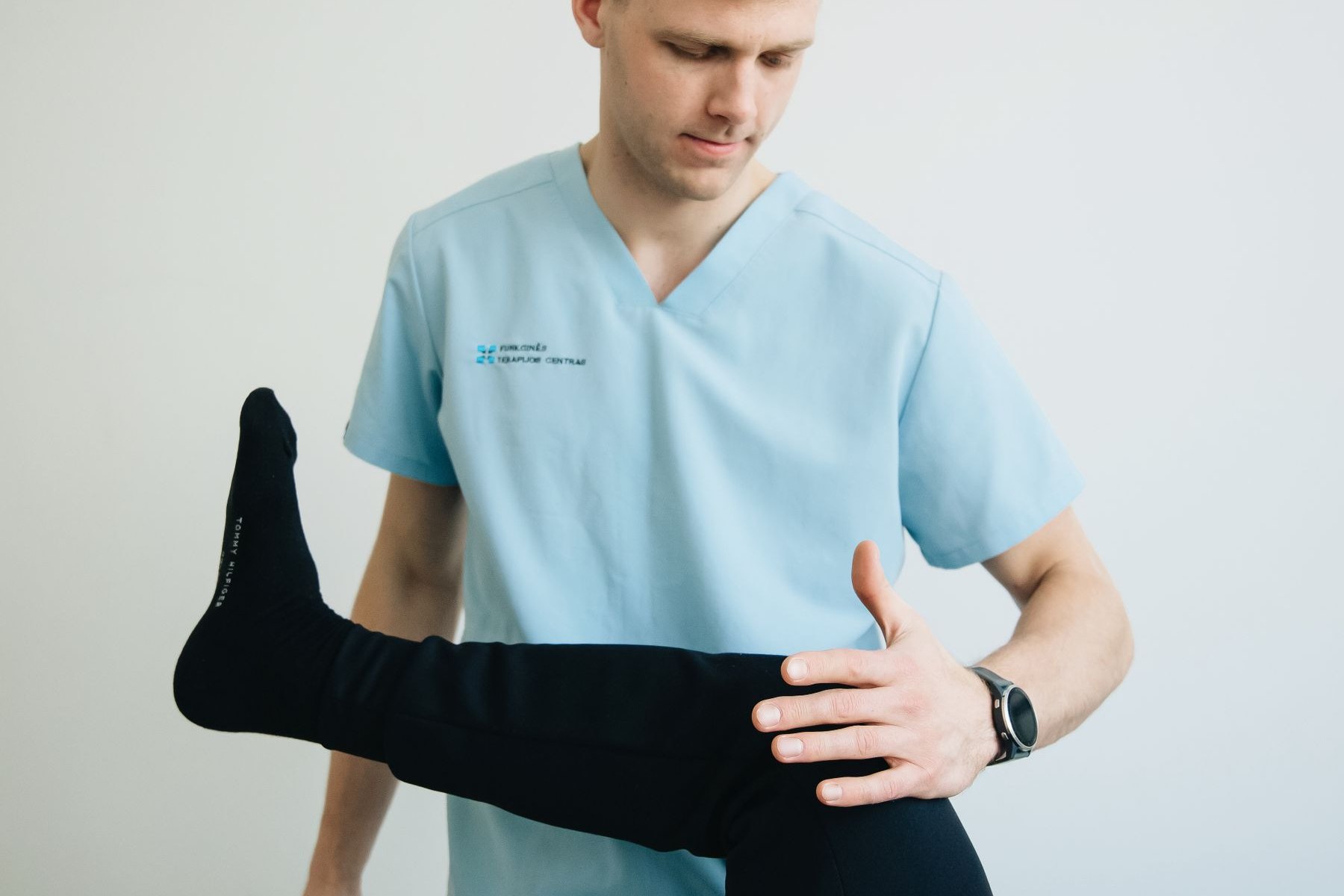
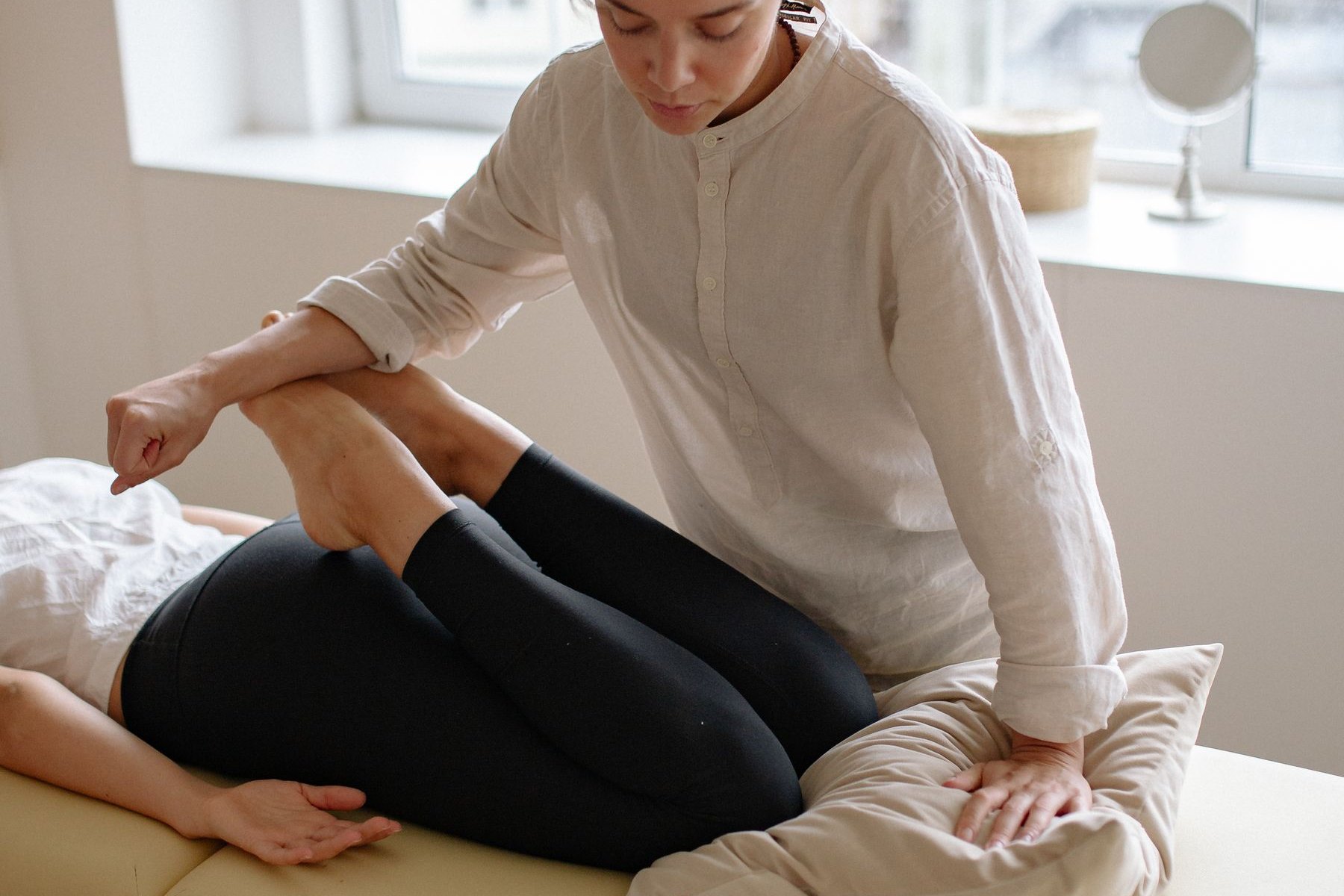
Establish the pattern, not just the diagnosis: joint-line palpation, flexion and rotation testing, a check for true locking versus a knee that is merely stiff, and a ligament screen — because a meniscus tear alongside an ACL injury changes the whole plan.
Measure the quadriceps: side-to-side strength, single-leg control, and the specific tasks you have stopped doing, all recorded at baseline so progress is a number rather than an impression.
Restore full extension early: a knee that cannot fully straighten loads badly and stays weak, so getting terminal extension back is an early priority rather than an afterthought.
Load progressively over 8–12 weeks: the dose used in the trials that matched surgery — building quadriceps, hamstring and hip strength while keeping deep loaded flexion and twisting on a short leash at the start.
Reintroduce depth and rotation deliberately: squats, stairs, descents, cutting and skiing positions added back in a planned order rather than tested by accident on a trail or a mogul field.
Know when to refer: a clear read on locking, on suspected repairable traumatic tears, and on the point where an orthopedic opinion genuinely belongs in the conversation.
Joint-line and ligament examination, a check for true locking, and baseline quadriceps strength and single-leg control — so the plan matches your knee rather than your MRI report.
02 — SETTLE & LOAD
Calm it down, then build it up
Short-term modification of deep bend and twisting while full extension and quadriceps strength come back, with soreness that settles inside 24 hours as the dosing rule.
03 — REBUILD
Put the depth and rotation back
Progressive loading through 8–12 weeks, then a staged return to stairs, hills, skiing or cutting sport — with retested strength deciding the timing rather than the calendar.
What to expect at your first visit
The story of the knee. Whether there was a single twisting moment or a gradual onset, how fast it swelled, what positions provoke it now, and whether it has ever caught, locked or given way.
A structured knee examination. Joint-line tenderness, range of motion in both directions, flexion and rotation testing, and a ligament screen — plus a specific check for whether the knee can fully straighten.
Baseline strength numbers. Quadriceps and hamstring strength side to side, single-leg control, and the functional tasks that have become difficult, all recorded so we can retest rather than guess.
A straight answer about imaging and surgery. Whether your presentation is one where an MRI or an orthopedic opinion would change anything — and if it is, we say so and help you get there.
A plan with a timeline. A short home program you will actually do, the positions to modify for the next few weeks, and the strength targets we are working toward. Most people are seen once or twice a week across 8–12 weeks.
Frequently asked questions
Can a torn meniscus heal on its own?+
Only the outer rim of the meniscus has a blood supply, so only tears in that outer third have a realistic chance of knitting back together — and even those usually need protected loading rather than rest alone. But that is the wrong question to build a plan around. Most people who get better after a meniscus tear do not get better because the tear healed; they get better because the knee around it calmed down, regained full motion, and got strong again. That is why a torn meniscus on an MRI is a poor predictor of how someone will feel: in a study of 991 adults aged 50 to 90, 61% of the people found to have a meniscal tear had had no knee pain, aching or stiffness at all in the previous month.[1] The tear and the pain are related, but they are not the same thing.
How long does meniscus tear rehab take?+
Plan on roughly 8 to 12 weeks of structured rehabilitation for a meniscus tear managed without surgery, which is the exercise dose used in the trials that matched surgery — 12 weeks of supervised exercise therapy in both the ESCAPE and OMEX trials.[2][4] Symptoms often ease well before that, commonly in the first three to six weeks, and the temptation is to stop there. We would rather you did not: the strength deficit that follows a knee injury is what quietly limits stairs, skiing and hiking months later, and it takes longer to rebuild than the pain takes to settle. At RISE most people with a meniscus tear are seen once or twice a week over that window rather than three times a week indefinitely.
Do I need an MRI for a suspected meniscus tear?+
Usually not before starting rehabilitation, because an MRI rarely changes what the first six weeks look like. Meniscal findings are extremely common in knees that feel fine — prevalence on MRI runs from 19% in women aged 50 to 59 up to 56% in men aged 70 to 90[1] — so an image showing a tear does not by itself explain your pain or justify an operation. Imaging is genuinely useful when the knee is truly locked and will not straighten, when a young athlete has had a significant twisting injury with immediate swelling and a possible repairable tear or ligament injury, or when a reasonable trial of rehab has not moved the needle and a surgical decision is actually on the table. If we think you are in one of those groups, we will say so and help you get to the right physician.
Can I keep skiing, hiking or running with a meniscus tear?+
Often yes, with modifications, and usually not on the same terms as before. The activities that genuinely provoke a torn meniscus are deep knee bend under load and twisting on a planted foot — moguls, steep descents, squatting to lift, pivoting sports. Straight-line walking, cycling and flat running are typically far better tolerated. The exception is a knee that catches, locks or gives way unpredictably, which is worth settling before you are halfway up a Boise Foothills trail or in the middle of a Bogus Basin run. Our approach is to protect the provoking positions for a few weeks while we rebuild quadriceps and hip strength, then reintroduce depth and rotation deliberately rather than waiting to find out on the mountain.
What is the difference between a meniscus tear and knee arthritis?+
A meniscus tear is damage to one of the two cartilage discs that cushion the knee; knee arthritis is thinning of the smooth cartilage coating the joint surfaces. In middle-aged and older adults the two travel together often enough that separating them cleanly is sometimes impossible — a degenerative meniscal tear is frequently one visible feature of a knee that is changing with age, not a separate event. That matters for treatment, because it is a large part of why arthroscopic surgery performs no better than exercise in this group: trimming the torn tissue does not change the joint it sits in.[5] Practically, joint-line pain with twisting and a specific tender spot points more toward the meniscus, while diffuse ache, morning stiffness and pain with prolonged standing points more toward arthritis. The rehabilitation overlaps a great deal either way.
Do I need a referral for meniscus tear physical therapy in Idaho?+
No. Idaho is a direct-access state, so you can book an evaluation at RISE in Boise or Nampa without seeing a physician first. Two caveats worth knowing. Some plans — commonly Medicare, Medicaid, and Tricare — still require a physician referral for the visit to be covered, and we verify that with your plan before your first appointment. And direct access does not mean everything gets managed here: if your knee is locked, if the examination suggests a ligament injury alongside the meniscus, or if you have already done honest rehab without progress, we will tell you plainly and help you get an orthopedic opinion.
Does insurance cover physical therapy for a meniscus tear?+
Most major medical plans cover physical therapy for a meniscus tear, both as first-line conservative care and as rehabilitation after meniscus repair or partial meniscectomy. Post-operative rehab is usually covered under the surgical episode, though visit limits still apply and are worth knowing before you start. RISE is in-network with most major insurance plans in Idaho — see our insurance list or send us your details and we will verify your coverage, your visit allowance, and whether your plan requires a referral before your first appointment.
Thomas specializes in lower-extremity orthopedic and post-operative rehabilitation. He earned his Bachelor's in Kinesiology at Washington State and his Doctorate of Physical Therapy at South College in Knoxville, Tennessee. Meet the full team →
SOURCES
Englund M, Guermazi A, Gale D, et al. Incidental Meniscal Findings on Knee MRI in Middle-Aged and Elderly Persons. New England Journal of Medicine, 2008;359(11):1108–1115. pubmed.ncbi.nlm.nih.gov/18784100
Noorduyn JCA, van de Graaf VA, Willigenburg NW, et al. Effect of Physical Therapy vs Arthroscopic Partial Meniscectomy in People With Degenerative Meniscal Tears: Five-Year Follow-up of the ESCAPE Randomized Clinical Trial. JAMA Network Open, 2022;5(7):e2220394. pmc.ncbi.nlm.nih.gov/articles/PMC9270699
Kise NJ, Risberg MA, Stensrud S, et al. Exercise therapy versus arthroscopic partial meniscectomy for degenerative meniscal tear in middle aged patients: randomised controlled trial with two year follow-up. BMJ, 2016;354:i3740. pmc.ncbi.nlm.nih.gov/articles/PMC4957588
Berg B, Roos EM, Englund M, et al. Arthroscopic partial meniscectomy versus exercise therapy for degenerative meniscal tears: 10-year follow-up of the OMEX randomised controlled trial. British Journal of Sports Medicine, 2025;59(2):91–98. pubmed.ncbi.nlm.nih.gov/39326908
Siemieniuk RAC, Harris IA, Agoritsas T, et al. Arthroscopic surgery for degenerative knee arthritis and meniscal tears: a clinical practice guideline. BMJ, 2017;357:j1982. pmc.ncbi.nlm.nih.gov/articles/PMC5426368
Bouchard MD, Macciacchera M, Gilbert J, Lameire DL, Abouali J. Postoperative Rehabilitation Protocol After Isolated Meniscal Repair: A Systematic Review. Orthopaedic Journal of Sports Medicine, 2025;13(7). pmc.ncbi.nlm.nih.gov/articles/PMC12290329
 Medically reviewed by Dr. Thomas Kleingartner, PT, DPT · September 2026