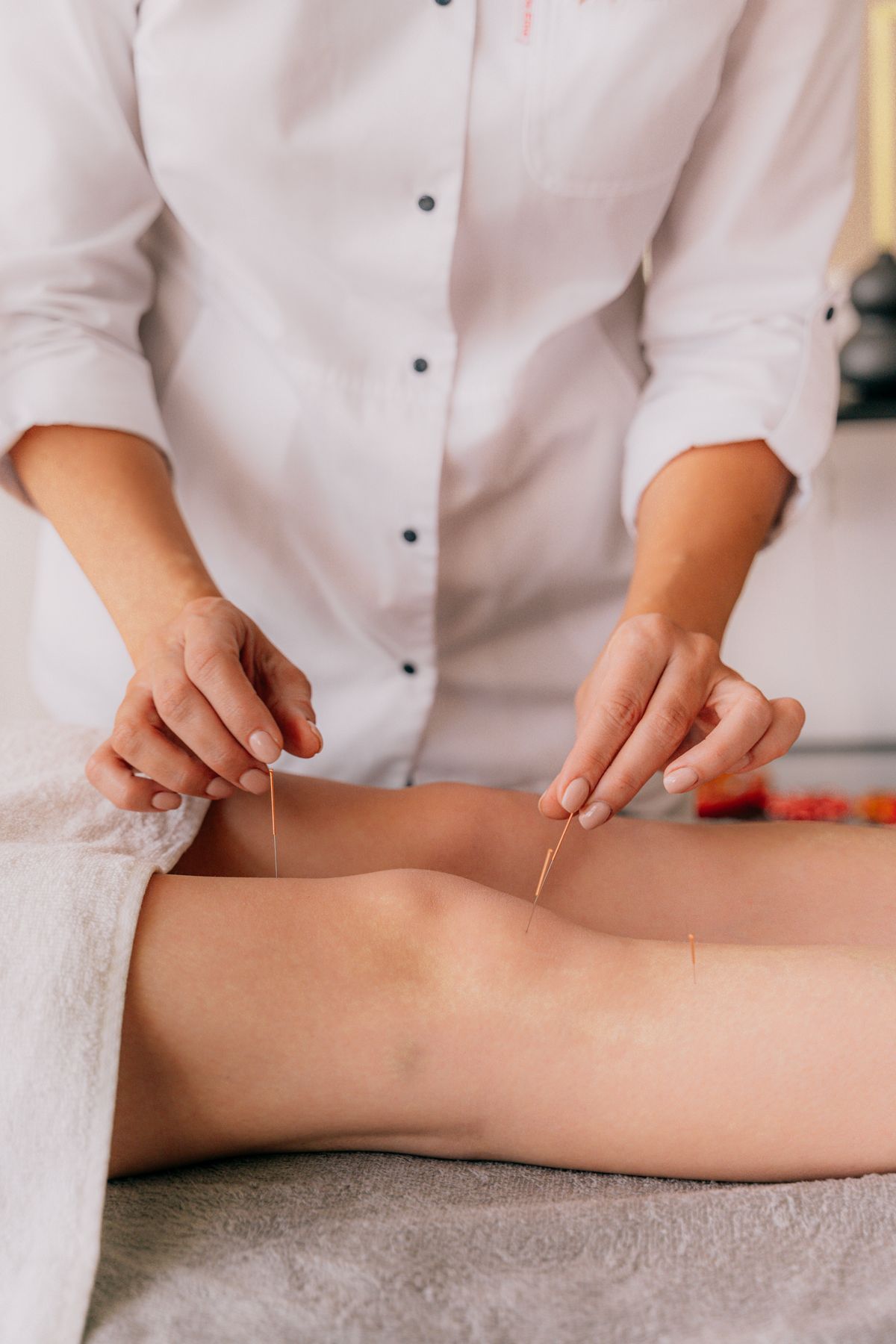
Stairs taken one at a time, hikes you've stopped planning, a knee that announces the weather — arthritic knees respond to strength. The evidence on this is unusually clear.
Knee osteoarthritis is the most common form of arthritis, causing pain, stiffness, and difficulty with stairs, walking, and standing. Exercise therapy is its most evidence-backed treatment: high-quality trials show strengthening reduces pain and improves function, and physical therapy outperformed steroid injections at one year in a randomized trial. RISE Physical Therapy treats knee arthritis one-on-one in 45-minute sessions in Boise and Nampa, Idaho, with no referral required.
What is knee osteoarthritis?
Knee osteoarthritis (OA) is a gradual change in the whole joint — cartilage thins, the bone underneath remodels, the joint lining can become irritated, and the muscles around the knee weaken. It's often described as "wear and tear," but that framing misleads: joints aren't tires with a fixed tread. Cartilage is living tissue that adapts to sensible loading, and weakness, previous injury, and body weight influence symptoms at least as much as age.
The disconnect between pictures and pain is worth repeating: X-ray severity predicts symptoms poorly. People with "bone-on-bone" imaging can hike comfortably; people with mild changes can be miserable. That's not an argument that the arthritis isn't real — it's evidence that strength, movement quality, and load management are levers you can actually pull.
Symptoms: when should you seek help?
Knee OA builds slowly, which makes it easy to shrink your life around it without noticing. Book an evaluation if you recognize:
Aching in or around the knee during or after walking, stairs, or standing
Stiffness in the morning or after sitting that loosens with movement
Swelling or warmth after busier days
Grinding, clicking, or a sense the knee might buckle
Activities quietly dropped — hikes, gardens, stairs, kneeling — because the knee vetoed them
A hot, red, swollen knee with fever, or a knee that locks completely, deserves a physician evaluation first — those point away from routine OA.
Knee OA symptoms track with muscle strength and load tolerance far more than with X-ray grade.
What does the evidence say about treating knee arthritis?
Exercise is the most consistently supported treatment in all of knee OA care. A Cochrane review of 45 randomized trials with 4,607 participants found high-quality evidence that land-based exercise reduces pain and improves physical function, with benefits persisting after programs end.[1] The comparison patients often ask about was tested directly in a randomized trial published in the New England Journal of Medicine: patients who received physical therapy had less pain and functional disability at one year than those who received glucocorticoid injections.[2]
Honest expectations matter: exercise doesn't regrow cartilage, and effect sizes are moderate — pain reduced, function improved, not erased. But it's the only treatment that also builds the reserve that makes daily life easier, and if a knee replacement is eventually the right call, entering surgery stronger improves the outcome on the other side. Nothing about starting PT closes the surgical door; it just often makes the door unnecessary.
How we treat knee arthritis at RISE
Arthritic knees need progressive strength delivered at the right dose — enough to adapt, not enough to flare. That dosing is exactly what 45 uninterrupted minutes with the same Doctor of Physical Therapy makes possible.
Function-first baseline: sit-to-stand capacity, stair mechanics, walking tolerance, and quad and hip strength — numbers we retest so progress is visible.
Progressive strengthening: quadriceps and hip loading matched to your irritability, the engine of symptom change in every major trial.
Blood flow restriction when knees are cranky: BFR builds strength at gentle loads when heavy resistance isn't tolerated yet.
Flare management: manual therapy, activity pacing, and a written plan for bad weeks — so a flare is a speed bump, not a reset.
Strength, stairs, and walking tolerance get baselined — your progress is tracked in function, not just pain.
02 — TREAT
Settle and strengthen
Hands-on care eases symptoms while graded quad and hip loading starts at the dose your knee tolerates.
03 — REBUILD
Reclaim the miles
Progressive capacity work returns stairs, hikes, and standing days — with an independent plan you keep.
What to expect at your first visit
Your story first. How the knee behaves across a normal week, what you've stopped doing, and what you want back.
A functional exam. Strength testing, sit-to-stand and stair assessment, swelling check, and screening for the non-OA mimics.
Plain-language findings. What's driving your symptoms, what the imaging does and doesn't mean, and where the opportunity is.
Treatment on day one. Your first correctly-dosed exercises plus hands-on work — you leave with the program started, not scheduled.
A long-game plan. Visit count, milestones, and the transition to independent training — including gym or home setup guidance.
Frequently asked questions
Can physical therapy help knee arthritis, or is surgery inevitable?+
Physical therapy helps — and surgery is far from inevitable. High-quality evidence from a Cochrane review of 45 trials shows exercise reduces knee osteoarthritis pain and improves function,[1] and a randomized trial in the New England Journal of Medicine found physical therapy beat glucocorticoid injections for pain and function at one year.[2] Many people manage knee OA for years, or permanently, without a replacement.
Is walking good or bad for arthritic knees?+
Good — genuinely. Cartilage is living tissue that responds to regular, moderate loading, and exercise trials in knee osteoarthritis consistently show reduced pain rather than accelerated damage. The key is dosage: build walking gradually, let flare-ups guide adjustment rather than abandonment, and pair it with strengthening so the muscles absorb more of the load.
Do I need a referral for knee arthritis treatment in Idaho?+
No. Idaho is a direct-access state, so you can book a knee evaluation at RISE without a physician referral. Some insurance plans — commonly Medicare, Medicaid, and Tricare — require a referral for coverage, and we'll verify your plan's requirements before your first visit.
My X-ray says bone-on-bone. Is exercise still worth it?+
Yes. X-ray severity correlates surprisingly poorly with pain and function — some people with severe imaging walk comfortably while others with mild changes struggle. Strengthening the quadriceps and hips improves symptoms across the severity spectrum, and even when a replacement is eventually needed, going in stronger measurably improves the recovery afterward.
Should I get injections for my knee arthritis?+
Injections can calm a stubborn flare, but they're a bridge, not a plan. In a head-to-head randomized trial, physical therapy produced less pain and disability than glucocorticoid injections at one year.[2] If you do use an injection, the weeks of relief it buys are an ideal window to build the strength that provides lasting benefit.
How long does physical therapy for knee arthritis take to work?+
Most people notice meaningful change in 4–6 weeks of consistent strengthening, with continued gains over 3 months and beyond. A typical RISE plan runs 8–12 visits spread over that window, transitioning into an independent program — knee OA management is a skill you keep, not a service you rent forever.
Does insurance cover physical therapy for knee osteoarthritis?+
Most major medical plans cover physical therapy for knee osteoarthritis, including Medicare. RISE is in-network with most major insurance plans in Idaho — check our insurance list or contact us and we'll verify your coverage before your first appointment.
Thomas specializes in lower-extremity orthopedic and post-operative rehabilitation. He earned his Bachelor's in Kinesiology at Washington State and his Doctorate of Physical Therapy at South College in Knoxville, Tennessee. Meet the full team →
Deyle GD, et al. Physical Therapy versus Glucocorticoid Injection for Osteoarthritis of the Knee. New England Journal of Medicine, 2020. pubmed.ncbi.nlm.nih.gov/32268027
 Medically reviewed by Dr. Thomas Kleingartner, PT, DPT · August 2026