The ache around your kneecap on stairs, squats, and long sits has a plan with real evidence behind it — and it starts at the hip. Patellofemoral rehab, coached one-on-one.
Runner's knee — patellofemoral pain — is aching around or behind the kneecap with running, squatting, stairs, and long sitting, and it affects an estimated 23% of adults in a given year. The best-supported treatment combines hip and knee strengthening with smart load management, which meta-analyses show beats knee exercises alone. RISE Physical Therapy treats runner's knee one-on-one in 45-minute sessions in Boise and Nampa, Idaho, with no referral required.
What is runner's knee?
Runner's knee is the everyday name for patellofemoral pain — pain arising from the joint between the kneecap (patella) and the thigh bone (femur). Every time you bend a loaded knee, the kneecap glides through a groove on the femur under forces that reach several times body weight on stairs and hills. When the total load on that joint outruns its tolerance — a mileage jump, a new squat program, a season of soccer — the tissue gets irritable and the trademark ache appears.
Despite the name, it's not just runners. A systematic review and meta-analysis put the annual prevalence of patellofemoral pain around 22.7% of the general population — and 28.9% among adolescents — making it one of the most common knee problems seen in clinics.[1] It's also not "damage" in the structural sense: imaging usually looks normal, which is good news, because it means the problem — and the solution — is capacity, not injury.
Symptoms: when should you seek help?
Patellofemoral pain has a recognizable signature. Book an evaluation if you notice:
A diffuse ache around or behind the kneecap — often hard to point to with one finger
Pain with squatting, kneeling, stairs (especially down), or downhill running
The "moviegoer's sign": aching after sitting with bent knees through a film or flight
Grinding or clicking without significant swelling
Pain that's trimming your mileage, workouts, or willingness to take the stairs
Swelling, locking, giving way, or pain after a twisting injury point away from patellofemoral pain toward structures like the meniscus or ligaments — part of what the first-visit exam sorts out.
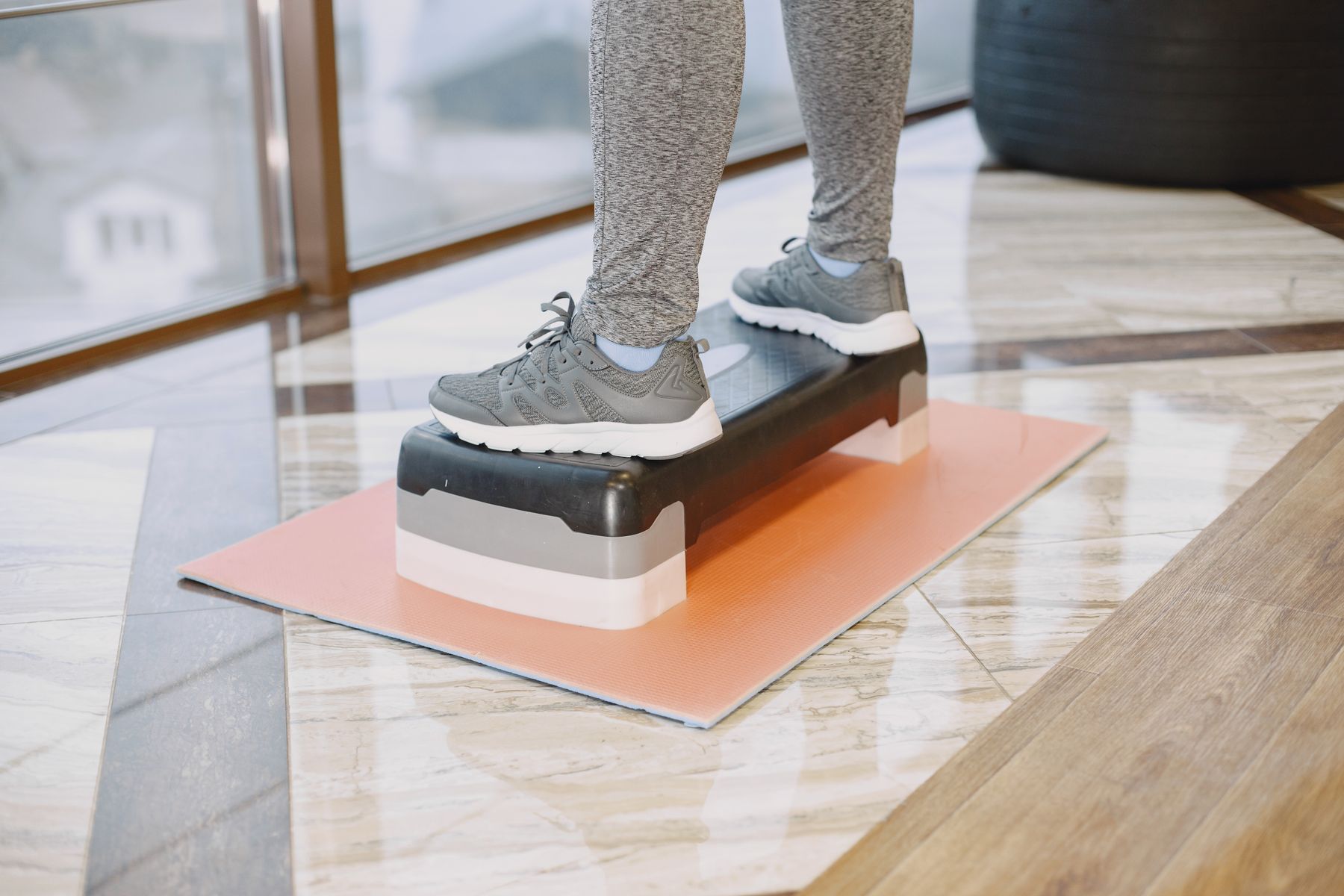
Step-downs and single-leg control work are staples of patellofemoral rehab — strength is the treatment.
What does the research say about runner's knee treatment?
Exercise therapy is the cornerstone, and the details matter. The international consensus statement on patellofemoral pain — built from systematic review and expert agreement at the 5th International Patellofemoral Pain Research Retreat — recommends exercise therapy as the core treatment, specifically combining hip and knee exercises, with foot orthoses or taping as short-term adjuncts and a firm thumbs-down on passive-only care.[2] A 2025 systematic review and meta-analysis confirms the hip's starring role: programs strengthening both hip and knee reduced pain and improved function more than knee-only strengthening.[3]
Why the hip? The gluteal muscles control how the thigh rotates and angles beneath the kneecap during running and landing; weak or untrained hips let the femur collapse inward, concentrating load on one edge of the patellofemoral joint. Strengthen the system above the knee, and the joint below runs quieter. What doesn't hold up: rest as a strategy (the pain typically returns with the load), and knee braces or arch supports as stand-alone fixes.
How we treat runner's knee at RISE
Patellofemoral care at RISE pairs a strength program with a training plan — because both sides of the load-capacity equation need attention. Every session is 45 minutes one-on-one with the same Doctor of Physical Therapy.
Movement diagnosis: single-leg squats, step-downs, and running form (for runners) show us where load concentrates — and what to change.
Hip + knee strengthening: the evidence-backed combination, progressed from controlled work to loaded, sport-specific strength.
Load management, not shutdown: mileage, hills, cadence, and gym variables adjusted so you keep training while capacity rebuilds.
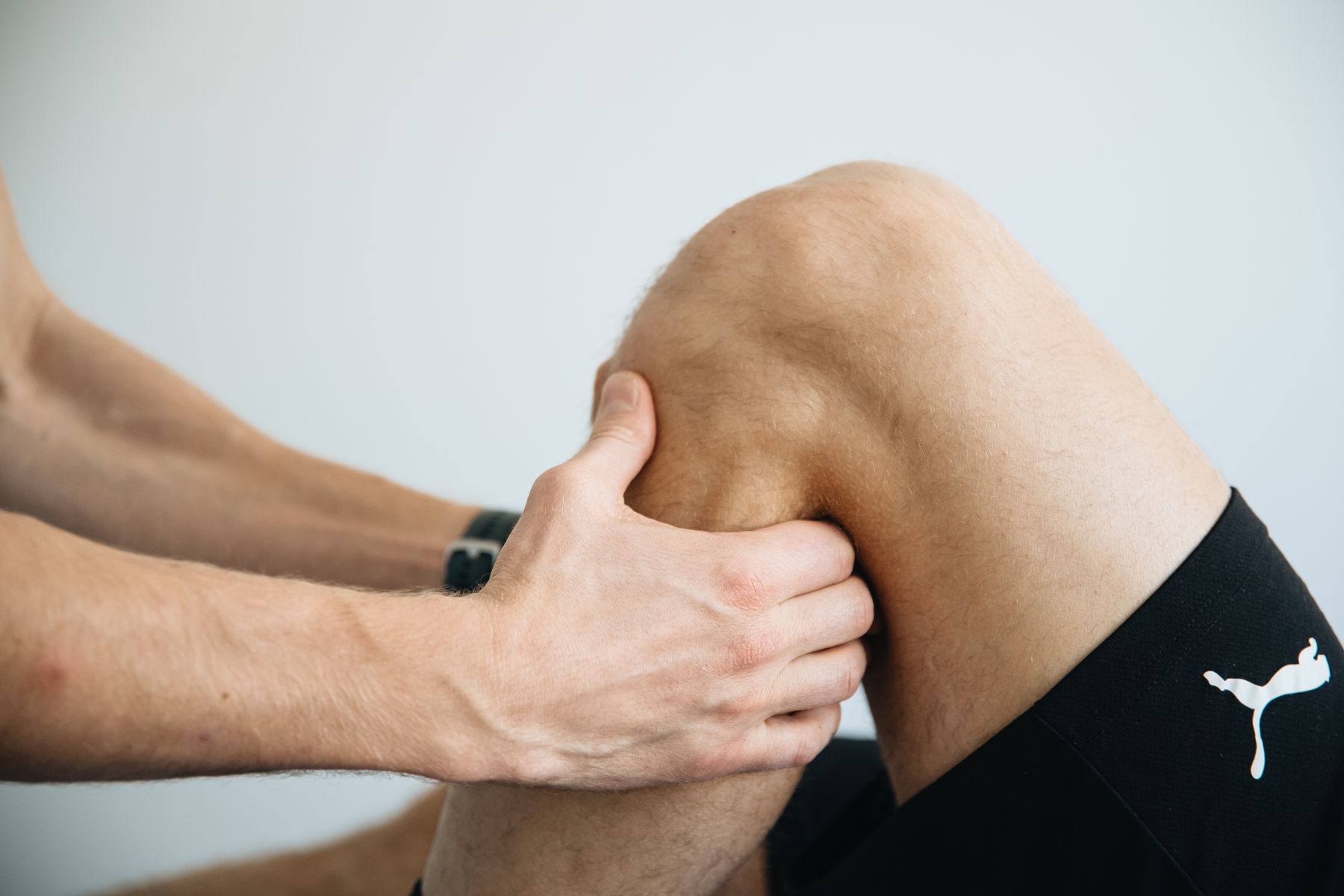
Short-term relief that serves the plan: taping and manual therapy to calm symptoms enough to train well.
Strength testing and movement analysis reveal where patellofemoral load concentrates and which links need capacity.
02 — TREAT
Calm and recalibrate
Symptom-settling techniques plus training adjustments bring the joint back inside its tolerance without stopping you.
03 — REBUILD
Load the hips and knee
Progressive hip and knee strength — then hills, speed, and volume — until stairs and long runs are boring again.
What to expect at your first visit
Your story first. When the ache started, what changed in training or life beforehand, and exactly which activities light it up.
A movement exam. Squats, step-downs, single-leg control, and hip and quad strength testing — plus screening for meniscus, ligament, and tendon problems that mimic it.
A load audit. Weekly mileage, hills, gym work, and daily stairs get mapped so modifications are minimal and specific.
Treatment on day one. Taping or manual work if it helps, and the first exercises of your hip-and-knee program.
A realistic timeline. Strength changes take 6–12 weeks — we set testable milestones so you can watch capacity climb.
Frequently asked questions
What is the fastest way to fix runner's knee?+
The strongest evidence supports exercise therapy that strengthens both the hip and the knee, combined with temporarily adjusting the loads that provoke pain. Meta-analyses show hip-plus-knee strengthening reduces pain and improves function more than knee exercises alone.[3] Taping or foot orthoses can help in the short term, but they're adjuncts — the strength work does the heavy lifting.
Why does my knee hurt going down stairs but not up?+
Descending stairs loads the patellofemoral joint with several times your body weight while the quadriceps works eccentrically — lengthening under load — which compresses the kneecap against the thigh bone more than stepping up does. That's why downhill running and descending stairs are classic runner's knee complaints while flat walking often feels fine.
Is it OK to keep running with runner's knee?+
Often yes, with modifications. Patellofemoral pain is a load-tolerance problem, so we typically trim the provocative parts — downhill, speed work, big weekly jumps — rather than stop running entirely, using pain that settles within 24 hours as the guide. A short, steeper cadence and building strength alongside keep most runners running through rehab.
Do I need an MRI for runner's knee?+
Rarely. Patellofemoral pain is diagnosed clinically — by your story and a movement exam — and imaging findings correlate poorly with symptoms. An MRI earns its place when the presentation doesn't fit: significant swelling, locking, giving way, a traumatic injury, or pain that defies a well-run course of rehab.
Do I need a referral for runner's knee treatment in Idaho?+
No. Idaho is a direct-access state, so you can book a knee evaluation at RISE without a physician referral. Some insurance plans — commonly Medicare, Medicaid, and Tricare — require a referral for coverage, and we'll verify your plan's requirements before your first visit.
Does insurance cover physical therapy for runner's knee?+
Most major medical plans cover physical therapy for patellofemoral pain. RISE is in-network with most major insurance plans in Idaho — check our insurance list or contact us and we'll verify your coverage before your first appointment.
Thomas specializes in lower-extremity orthopedic and post-operative rehabilitation. He earned his Bachelor's in Kinesiology at Washington State and his Doctorate of Physical Therapy at South College in Knoxville, Tennessee. Meet the full team →
SOURCES
Smith BE, et al. Incidence and Prevalence of Patellofemoral Pain: A Systematic Review and Meta-analysis. PLOS One, 2018. pubmed.ncbi.nlm.nih.gov/29324820
Collins NJ, et al. 2018 Consensus Statement on Exercise Therapy and Physical Interventions to Treat Patellofemoral Pain: Recommendations From the 5th International Patellofemoral Pain Research Retreat. British Journal of Sports Medicine, 2018. pubmed.ncbi.nlm.nih.gov/29925502
Halabi et al. The Efficacy of Hip and Knee Muscles Strengthening Versus Knee Muscle Strengthening Alone in Managing Patellofemoral Pain Syndrome: A Systematic Review and Meta-Analysis. Musculoskeletal Care, 2025. pubmed.ncbi.nlm.nih.gov/39934098
 Medically reviewed by Dr. Thomas Kleingartner, PT, DPT · August 2026