Jaw clicking, face pain, temples that throb by afternoon — TMJ disorders and headaches usually share the same drivers. We treat the jaw and neck together, one-on-one, until the cycle breaks.
Temporomandibular disorders (TMD, often called "TMJ") affect the jaw joint and chewing muscles, causing jaw pain, clicking, and frequently headaches. Physical therapy — manual therapy to the jaw and neck plus targeted exercise — is an evidence-supported, non-invasive treatment. RISE Physical Therapy treats TMJ and headache patients one-on-one in 45-minute sessions in Boise and Nampa, Idaho, with no referral required.
What is TMJ dysfunction?
TMJ dysfunction — clinically, temporomandibular disorder (TMD) — is a group of problems affecting the temporomandibular joint that connects your jaw to your skull, and the muscles that move it. The joint sits just in front of your ear and works thousands of times a day: talking, chewing, yawning, and, for many people, clenching. When the joint's disc, capsule, or surrounding muscles become irritated or overworked, the result is pain that can spread well beyond the jaw itself.
TMD is common — studies estimate it affects roughly 5–12% of adults, and it's a leading cause of facial pain. It's also one of the most under-treated: many people bounce between dentists, ENT visits, and imaging without anyone examining how the jaw and neck actually move.
Symptoms: when should you seek help?
TMJ dysfunction rarely stays confined to the jaw. Common symptoms include:
Jaw pain or fatigue, especially with chewing or in the morning after clenching overnight
Clicking, popping, or grinding sounds when opening the mouth
Limited or zig-zagging mouth opening, or a jaw that occasionally "locks"
Headaches at the temples or behind the eyes — often worse late in the day
Ear pain, pressure, or fullness without an ear infection
Neck stiffness and pain at the base of the skull
Seek an evaluation if symptoms have lasted more than a week or two, keep returning, or are changing how you eat, sleep, or concentrate. Sudden inability to open or close the mouth warrants prompt care.
Jaw pain that flares with chewing or clenching is the hallmark of TMD — and it often travels to the temples as headache.
Why your jaw and your neck are usually in it together
The jaw and upper neck share wiring. Sensory nerves from the upper cervical spine and the trigeminal nerve (which supplies the jaw and face) converge in the same brainstem relay, which is why a stiff, guarded neck can produce face pain and why jaw clenching can fuel headaches. Common contributors we see at RISE include nighttime clenching and grinding (bruxism), sustained forward-head posture at a desk, stress-driven muscle tension, a previous jaw injury, and long dental procedures.
Research reflects this connection: high- and moderate-quality evidence shows manual therapy to the jaw and neck reduces TMD pain and improves mouth opening in both the short and long term,[1] and the effects last longer when combined with therapeutic exercise.[2] An umbrella review of physiotherapy for TMD found moderate effects for manual therapy and exercise on both pain and mouth opening.[3]
How we treat TMJ & headache at RISE
TMJ care at RISE starts with a different assumption: the jaw, the neck, and your daily habits are one system. Every session is 45 minutes one-on-one with the same Doctor of Physical Therapy — enough time to actually treat all three.
Joint-by-joint exam: we measure how your jaw opens, where it deviates, what the joint sounds are telling us, and how your upper neck moves — because the neck is a driver in a large share of headache cases.
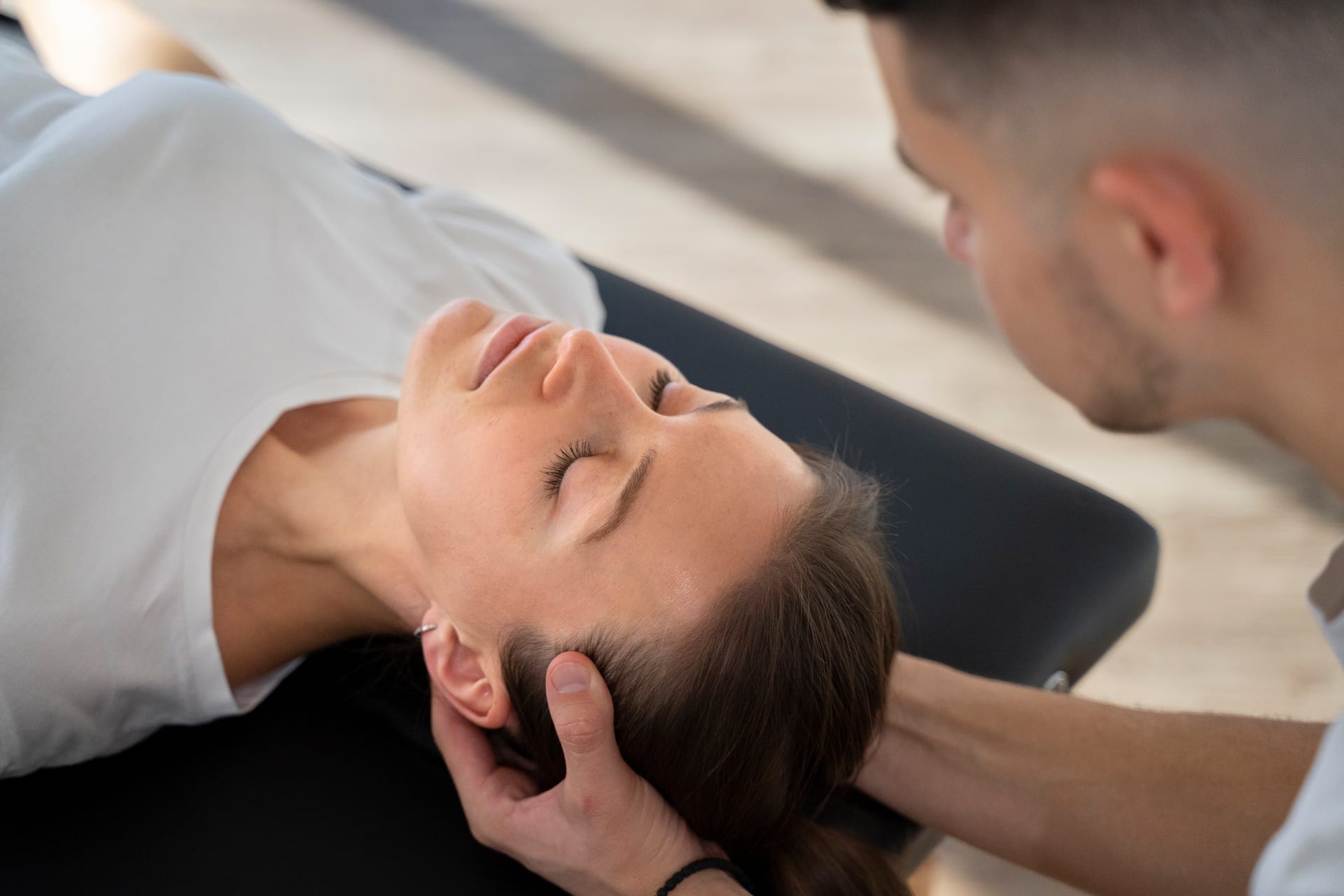
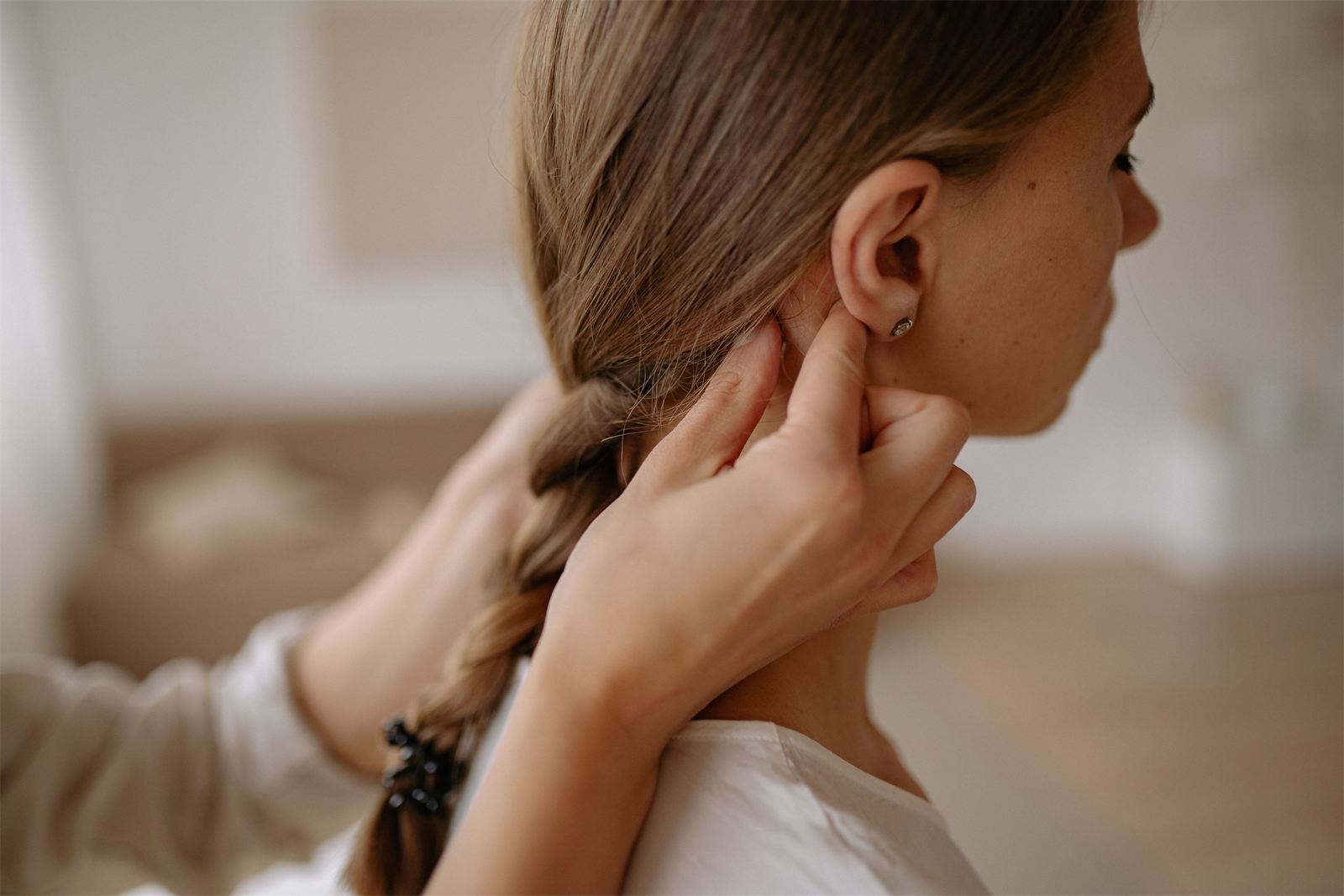
Hands-on release: gentle manual therapy to the jaw joint, the chewing muscles (including brief, consent-based intraoral work), and the suboccipital muscles at the base of the skull.
Dry needling where it fits: the masseter, temporalis, and upper trapezius respond well to trigger point release in clenchers.
Retrain the habits: tongue posture, clench awareness, desk setup, and specific jaw-control exercises that keep the relief you gain.
A combined exam finds whether your pain is joint, muscle, neck-driven — or all three.
02 — TREAT
Release the system
Manual therapy and dry needling calm the joint and the overworked muscles feeding your headaches.
03 — REBUILD
Break the cycle
Jaw-control exercises and habit retraining keep the clench-pain-headache loop from restarting.
What to expect at your first visit
Your story first. When the pain started, what your dentist has said, how you sleep, and where the headaches hit.
A jaw and neck exam. Mouth opening measurements, joint sounds, muscle palpation, and upper cervical mobility — nothing is forced.
Honest findings. We show you what's driving your symptoms and what's not, in plain language.
Treatment on day one. Most patients receive hands-on care at the first visit and leave with two or three specific exercises — not a generic sheet.
A coordinated plan. If a night guard, dental consult, or imaging is genuinely needed, we say so and coordinate with your providers.
Frequently asked questions
Can physical therapy really help TMJ pain?+
Yes. Systematic reviews and meta-analyses show moderate-to-high quality evidence that manual therapy reduces TMJ pain and improves mouth opening, and that adding therapeutic exercise helps maintain those gains long term.[1] Physical therapy is a recommended first-line, non-invasive treatment for most temporomandibular disorders.
Is my headache coming from my jaw or my neck?+
Often both. The jaw muscles, upper neck joints, and the trigeminal nerve system are closely linked, so clenching, neck stiffness, and posture can all feed the same headache. At RISE we examine your jaw and your neck together in the same evaluation, so the true driver gets treated instead of guessed at.
Do I need a referral from my dentist or doctor for TMJ treatment in Idaho?+
No. Idaho is a direct-access state, so you can book a TMJ evaluation at RISE without any referral. Some insurance plans — commonly Medicare, Medicaid, and Tricare — require a referral for coverage, and we're happy to verify your plan before your first visit. We also coordinate with your dentist when a night guard or dental workup is part of the picture.
What does TMJ physical therapy involve — will anyone work inside my mouth?+
Treatment usually combines gentle hands-on work to the jaw and neck, targeted exercises, and habit retraining. Some techniques involve brief gloved intraoral work to release the chewing muscles — always explained first and only done with your consent. Many patients feel a difference in jaw tension within the first few sessions.
Should I stop wearing my night guard during treatment?+
No — keep following your dentist's guidance. A night guard protects your teeth from clenching forces while physical therapy works on the muscle tension, joint mechanics, and neck contribution behind the clenching. The two approaches complement each other, and we'll coordinate with your dentist as needed.
How many visits does TMJ treatment usually take?+
Many patients notice reduced jaw tension and fewer headaches within 2–4 visits, with a typical plan of care running 6–10 visits depending on how long symptoms have been present and whether the neck is involved. Because every RISE session is a full 45 minutes one-on-one, progress tends to come faster than in high-volume clinics.
Does insurance cover TMJ physical therapy?+
Most major medical plans cover physical therapy for TMJ disorders because it's treated as a musculoskeletal condition. RISE is in-network with most major insurance plans in Idaho — check our insurance list or contact us and we'll verify your coverage before your first appointment.
Devon is a co-founder of RISE Physical Therapy and treats TMJ, headache, concussion, orthopedic, and sports injuries. He earned his Doctorate of Physical Therapy at Idaho State University. Meet the full team →
SOURCES
The Efficacy of Manual Therapy Approaches on Pain, Maximum Mouth Opening and Disability in Temporomandibular Disorders: A Systematic Review of Randomised Controlled Trials. 2023. ncbi.nlm.nih.gov/pmc/articles/PMC9967117
Efficacy of Manual Therapy in Temporomandibular Joint Disorders and Its Medium- and Long-Term Effects on Pain and Maximum Mouth Opening: A Systematic Review and Meta-Analysis. 2020. ncbi.nlm.nih.gov/pmc/articles/PMC7690916
Effects of Physiotherapy on Pain and Mouth Opening in Temporomandibular Disorders: An Umbrella and Mapping Systematic Review with Meta-Meta-Analysis. 2023. ncbi.nlm.nih.gov/pmc/articles/PMC9917698
 Medically reviewed by Dr. Devon Hoffman, PT, DPT, CSCS · August 2026