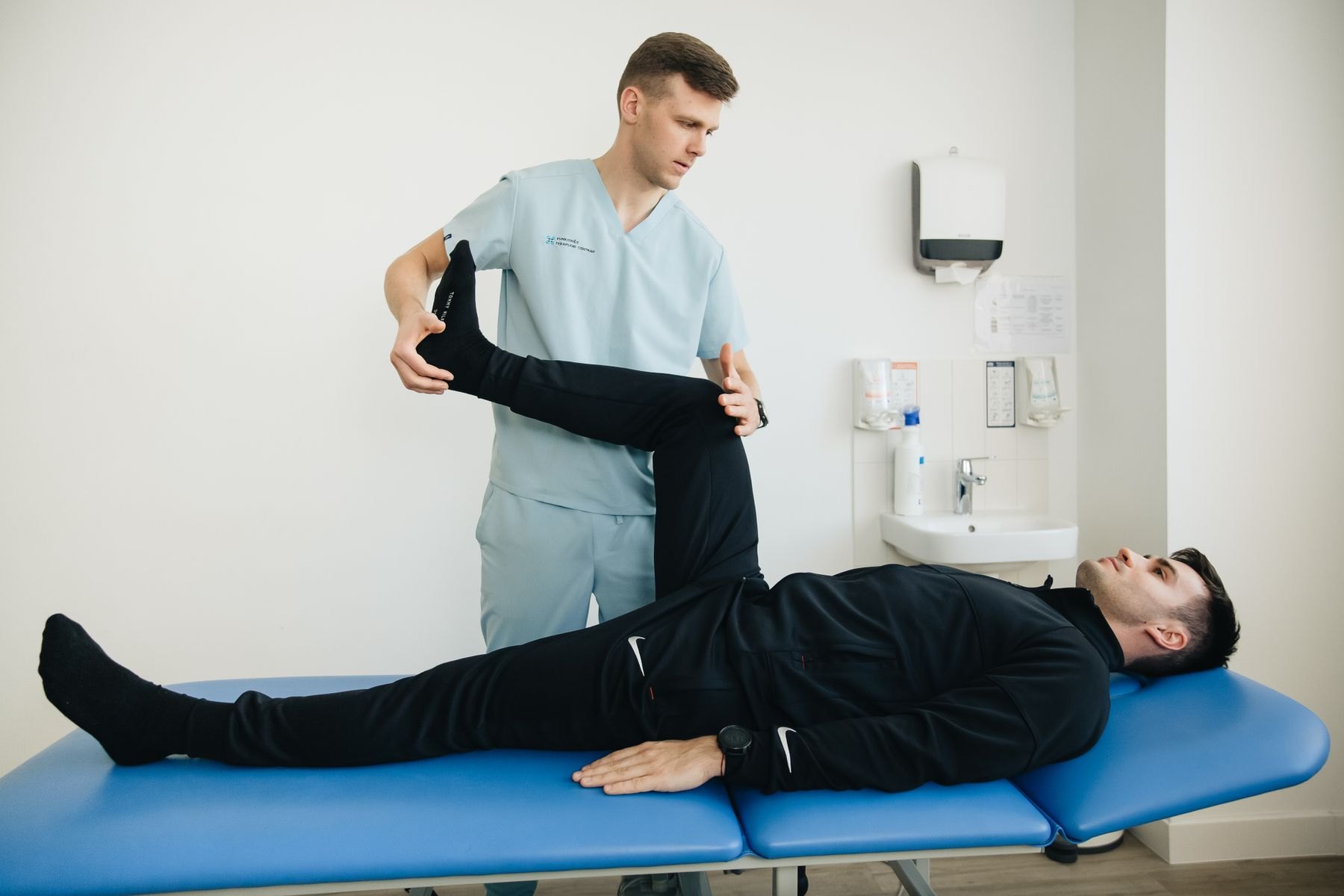
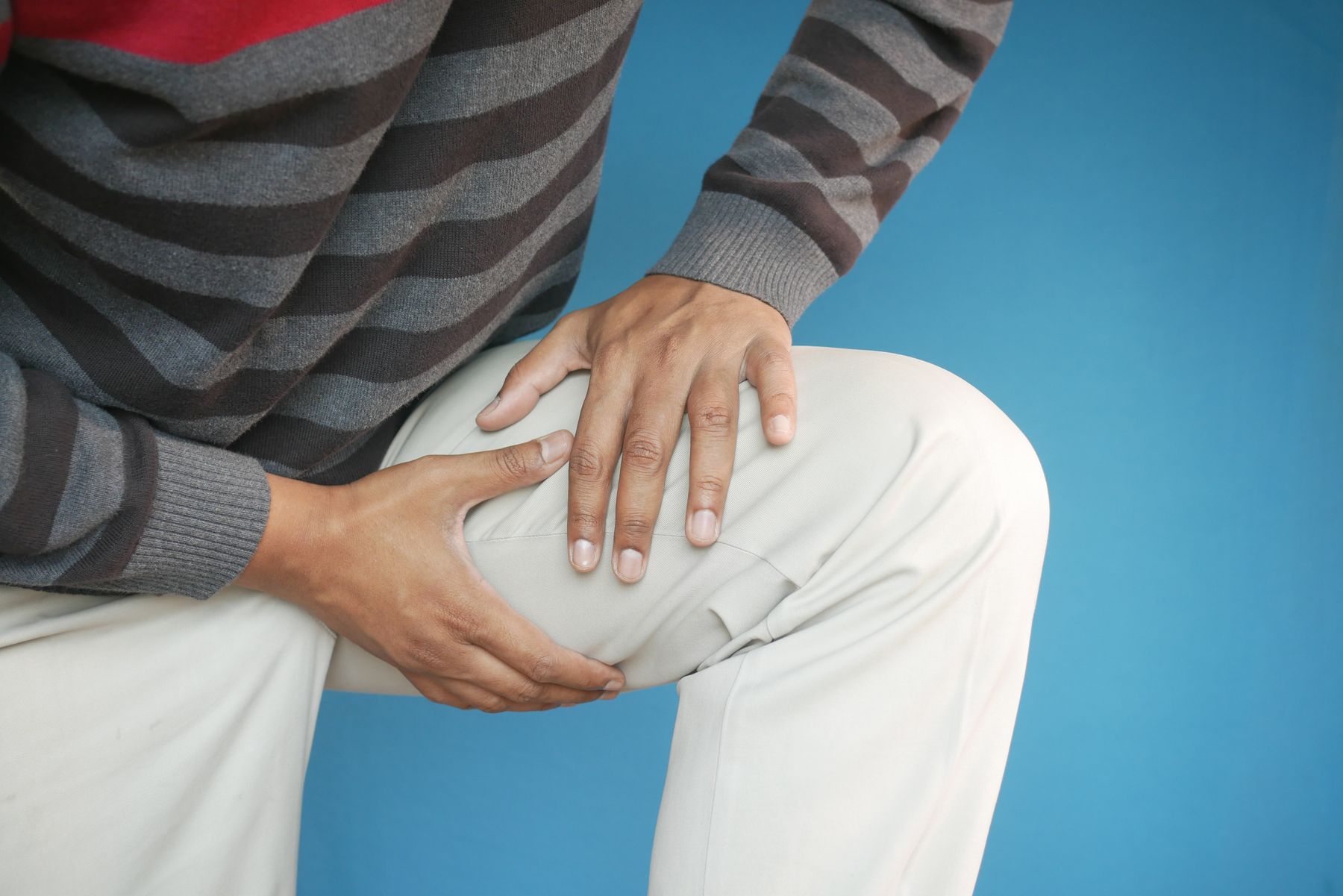
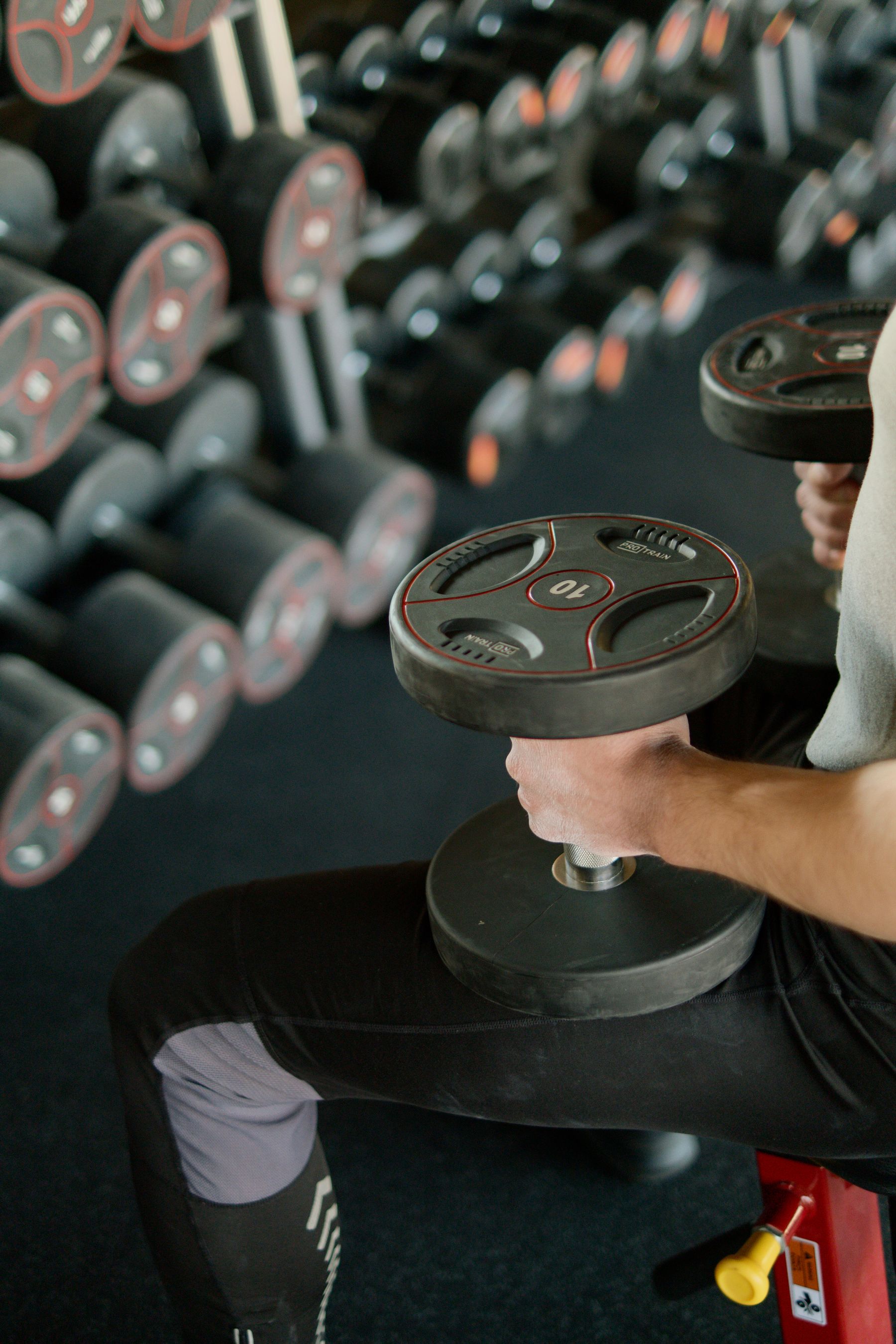
The grab at the back of the thigh that ends the sprint. Getting back is less about waiting for pain to stop and more about rebuilding strength where the muscle is long.
A hamstring strain is a tear of muscle and connective tissue at the back of the thigh, most often in the long head of the biceps femoris, and it has become the single most common injury in elite men's football — 24% of all injuries in the 2021/22 season of the UEFA Elite Club Injury Study, up from 12% two decades earlier. Rehab built around loading the hamstring in a lengthened position returned Swedish elite footballers to full team training in a mean of 28 days, against 51 days for a conventional program. RISE Physical Therapy rehabs hamstring strains one-on-one in 45-minute sessions in Boise and Nampa, Idaho, and Idaho law lets you start without a referral.
What is a hamstring strain?
A hamstring strain is a tear in one of the three muscles running down the back of the thigh — the biceps femoris, semitendinosus, and semimembranosus — usually where muscle fibres blend into tendon. The long head of the biceps femoris takes most of them, a pattern consistent enough that the 2022 clinical practice guideline from the Academy of Orthopaedic Physical Therapy treats muscle architecture as part of why this one is vulnerable.[5]
Two of those three muscles cross both the hip and the knee, which is the whole problem in one sentence: they slow a swinging leg down at the knee while the hip is still folding, and they do it while being stretched. Grades run from 1 (a few fibres, minimal strength loss) through 2 (a partial tear with clear weakness) to 3 (a full-thickness tear or an avulsion off the sit bone). Grade matters, but mechanism predicts your calendar better — which is where most people's expectations go wrong.
The hamstring's hardest job is producing force while it is being lengthened — which is where it tears, and, later, where it has to be rebuilt.
How do you know if you pulled your hamstring?
A hamstring strain usually announces itself: a sudden sharp catch or pull in the back of the thigh during a sprint, a kick, or a slide, sharp enough that you stop mid-stride. Slower-onset cases exist, but the classic story is abrupt. Book an evaluation if you have:
A distinct moment you can name — the stride, the kick, the reach — after which the leg was not the same
Tenderness you can trace along a line in the back of the thigh, or up at the sit bone
Bruising that appears over the following two or three days, sometimes tracking well below the injury
Pain or weakness bending the knee against resistance, or straightening the hip from a bridge
A shortened stride, a limp, or the sense that you cannot let the leg extend fully in front of you
Pain sitting on a firm chair, or pressure at the sit bone driving a car
Three patterns change the plan. A loud pop with immediate difficulty walking, marked weakness, and a gap you can feel near the sit bone can mean a proximal avulsion — one of the few hamstring injuries where an early surgical opinion genuinely matters. Numbness or pain shooting below the knee points at the sciatic nerve rather than the muscle; our sciatica page covers how that is told apart. And deep sit-bone pain that built gradually over months, worst when sitting, is more likely proximal hamstring tendinopathy — a different condition with a different loading plan.
Why do hamstrings pull when they do?
Hamstring strains happen at the two moments the muscle is asked to be strong while long: the end of the swing phase in high-speed running, and any movement that combines a flexed hip with a straight knee. That is why they cluster in matches rather than practices — across 21 seasons and 3,909 players, the UEFA study recorded 4.99 hamstring injuries per 1,000 match hours against 0.52 per 1,000 training hours, roughly a tenfold difference driven by how much sprinting a match actually contains.[1]
The risk factors that survive scrutiny are unglamorous. A prior strain is the strongest, with athletes 2 to 6 times more likely to strain again and the risk concentrated in the first weeks back — one review reported a relative risk of 6.33 for an injury sustained within the previous eight weeks.[6] Age is next: athletes over 25 have been reported at 2.8 to 4.4 times the risk of younger ones.[6] The current guideline adds the practical version — let the injury history shape the return-to-play progression, not just the diagnosis.[5]
Around the Treasure Valley the stories are seasonal: spring soccer, high school track when the first speed session arrives before the base work does, adult softball, and every summer a few water-ski injuries — the classic stretch-type mechanism, one leg forced straight while the hip folds. The common thread is not weakness in the abstract; it is a sudden demand for speed the leg had not seen recently.
How long does a hamstring strain take to heal?
Hamstring strain recovery ranges from about two weeks to several months, and mechanism predicts the timeline better than day-one pain does. In the Swedish elite football trial, players with stretching-type injuries took significantly longer to return than those with sprinting-type injuries, in both treatment arms.[2] The athlete who tore theirs reaching for a ball at full stretch should not be comparing calendars with a teammate who pulled up in a straight-line sprint.
The other number to plan around is recurrence. Of 2,636 hamstring injuries in the UEFA cohort, 18% were reinjuries, and 69% of those arrived within two months of returning to play.[1] Older field-sport reviews put recurrence above 30%.[6] That two-month window is the argument for finishing rehab instead of stopping when the pain does.
What does the research say about hamstring rehab?
The strongest evidence in hamstring rehabilitation says that loading the muscle in a lengthened position gets athletes back faster than conventional strengthening. Seventy-five Swedish elite footballers with MRI-verified acute hamstring injuries were randomised between two programs; the 37 assigned to lengthening-type exercises returned to full team training in a mean of 28 days (range 8–58), against 51 days (range 12–94) for the 38 doing conventional work — a 45% reduction, without a rise in reinjuries.[2] The exercises themselves are unglamorous and mostly bodyweight; what makes them work is that they train force production near end range instead of avoiding it.
On prevention the honest answer has two halves. A 2019 meta-analysis pooling 15 studies and 8,459 athletes found that programmes including the Nordic hamstring exercise roughly halved injury rates, with an injury risk ratio of 0.49 (95% CI 0.32 to 0.74).[3] Two years later a methodological reappraisal in the Journal of Clinical Epidemiology re-analysed the same work and concluded the preventive effect is inconclusive, because the underlying trials carry a high risk of bias.[4] We quote both — eccentric hamstring strength is cheap to build and worth doing either way, but "likely helpful" is what the evidence supports, and "proven to halve your risk" is not.
How we treat hamstring strains at RISE
Treating a hamstring strain at RISE means establishing which tissue tore and how, then loading it at progressively longer muscle lengths until it handles speed again. Every session is a full 45 minutes, one-on-one with the same Doctor of Physical Therapy — which is what makes running progressions and strength testing happen inside a visit rather than on a printout.
Establish the mechanism: sprinting-type or stretching-type, and how close to the sit bone the tender point sits. Both shape the timeline we give you.
Rule out the imposters: lumbar referred pain, sciatic nerve involvement, and proximal hamstring tendinopathy all cause back-of-thigh pain, and none respond to a strain protocol.
Load at length, early: lengthened-position and eccentric work introduced as soon as it is tolerated, dosed by symptom response rather than by calendar.
Rebuild top-end speed on purpose: a graded running progression to near-maximal sprinting, because the injury happens at speeds a jog never reaches.
Test before clearing: strength symmetry at long muscle lengths and sport-specific tasks, so returning is a measured decision.
Palpation from the sit bone down, resisted knee flexion at multiple angles, active and passive straight-leg testing, plus a lumbar and nerve screen to rule out referred pain.
02 — TREAT
Load it at length
Early isometrics for pain control, then lengthened-position and eccentric loading progressed by how the leg responds over the next 24 hours.
03 — REBUILD
Get the speed back
A graded running progression to near-maximal sprinting, strength retested at long muscle lengths, then a return-to-play decision made on numbers.
What to expect at your first visit
The moment it happened. Sprint or stretch, what you could do immediately afterward, and whether this leg has gone before — that history sets the timeline more than anything we measure.
A hands-on exam. Mapping the tender point down from the sit bone, resisted knee flexion at several angles, straight-leg testing, and a lumbar and sciatic nerve screen.
Numbers on day one. Pain-free range, side-to-side strength, and where the tender point sits — recorded, because progress on a hamstring is measured, not remembered.
Treatment the same visit. Your first loading dose, usually isometric holds early on, plus hands-on work if it improves how the leg moves right away.
A plan with a running ladder in it. What to do this week, the criteria for the next step, and the tests that decide when you sprint. Most people run 6–12 visits depending on grade and sport.
Frequently asked questions
How long does a hamstring strain take to heal?+
It depends far more on how the injury happened than on how much it hurt on day one. In the Swedish elite football trial, players rehabbed with lengthened-position loading returned to full team training in a mean of 28 days versus 51 days on a conventional program, with individual results ranging from 8 to 94 days.[2] Minor strains that happened at speed often settle inside 2–4 weeks; injuries that happened at full stretch — a high kick, a slide, a water-ski wipeout — routinely take considerably longer, because the damage sits closer to the tendon.
Should I stretch a pulled hamstring?+
Aggressive stretching in the first days is one of the more common ways to make a hamstring strain worse, because pulling on healing tissue is exactly the load it cannot yet tolerate. What the evidence supports is different: loading the muscle in a lengthened position under control, starting light and progressing as it tolerates. That is the principle behind the L-protocol exercises that halved return time in the Swedish trial.[2] The distinction matters — controlled load at length builds tissue, passive end-range stretching mostly tests it.
Do I need an MRI for a hamstring strain?+
Most hamstring strains do not need imaging, because the exam tells you what you need to know and the rehab plan is the same either way. Imaging earns its place in specific situations: a suspected avulsion at the sit bone, a felt pop with a palpable gap and marked weakness, or symptoms not improving on a well-run program. We will tell you plainly if we think you are in one of those groups and coordinate the referral.
Do I need a referral for hamstring treatment in Idaho?+
No. Idaho has direct access to physical therapy, so you can book a hamstring evaluation at RISE in Boise or Nampa without seeing a physician first — useful when the injury happened Saturday and you want it looked at Monday. Some plans, commonly Medicare, Medicaid, and Tricare, still require a referral for the visit to be covered, and we verify your specific plan's rules before your first appointment.
Why do hamstring injuries keep coming back?+
Because the usual reason for returning — the pain stopped — is not the same as the muscle being ready. Across 21 seasons of the UEFA Elite Club Injury Study, 18% of hamstring injuries were recurrences, and 69% of those recurrences happened within two months of return.[1] Older reviews of recurrence in field sports report rates above 30%.[6] Strength at long muscle lengths and top-speed exposure both lag pain relief by weeks, which is why we test them before clearing you rather than going by how the leg feels.
Do Nordic curls actually prevent hamstring injuries?+
Probably, with an honest asterisk. A 2019 meta-analysis of 15 studies and 8,459 athletes found programmes that included the Nordic hamstring exercise roughly halved hamstring injury rates, with an injury risk ratio of 0.49.[3] A 2021 methodological reappraisal in the Journal of Clinical Epidemiology re-ran that evidence and concluded the preventive effect is inconclusive, largely because the underlying trials carry a high risk of bias.[4] Our read: eccentric hamstring strength is worth building regardless, the downside is negligible, and the honest claim is "likely helpful" rather than "proven".
Does insurance cover physical therapy for a hamstring strain?+
Most major medical plans cover physical therapy for a hamstring strain. RISE is in-network with most major insurance plans in Idaho — see our insurance list or send us your details and we will verify your coverage, visit limits, and any referral requirement before your first appointment.
Thomas treats lower-extremity sports injuries and post-operative rehabilitation, including muscle strains in running and field-sport athletes. He earned his Bachelor's in Kinesiology at Washington State and his Doctorate of Physical Therapy at South College in Knoxville, Tennessee. Meet the full team →
SOURCES
Ekstrand J, Bengtsson H, Waldén M, Davison M, Khan KM, Hägglund M. Hamstring Injury Rates Have Increased During Recent Seasons and Now Constitute 24% of All Injuries in Men's Professional Football: The UEFA Elite Club Injury Study From 2001/02 to 2021/22. British Journal of Sports Medicine, 2023;57(5):292–298. pubmed.ncbi.nlm.nih.gov/36588400
Askling CM, Tengvar M, Thorstensson A. Acute Hamstring Injuries in Swedish Elite Football: A Prospective Randomised Controlled Clinical Trial Comparing Two Rehabilitation Protocols. British Journal of Sports Medicine, 2013. pubmed.ncbi.nlm.nih.gov/23536466
van Dyk N, Behan FP, Whiteley R. Including the Nordic Hamstring Exercise in Injury Prevention Programmes Halves the Rate of Hamstring Injuries: A Systematic Review and Meta-Analysis of 8459 Athletes. British Journal of Sports Medicine, 2019;53:1362–1370. pubmed.ncbi.nlm.nih.gov/30808663
Impellizzeri FM, McCall A, van Smeden M. Why Methods Matter in a Meta-Analysis: A Reappraisal Showed Inconclusive Injury Preventive Effect of Nordic Hamstring Exercise. Journal of Clinical Epidemiology, 2021;140:111–124. pubmed.ncbi.nlm.nih.gov/34520846
Martin RL, et al. Hamstring Strain Injury in Athletes: Clinical Practice Guidelines Linked to the International Classification of Functioning, Disability and Health. Journal of Orthopaedic & Sports Physical Therapy, 2022;52(3):CPG1–CPG44. pubmed.ncbi.nlm.nih.gov/35164536
Prior M, Guerin M, Grimmer K. An Evidence-Based Approach to Hamstring Strain Injury: A Systematic Review of the Literature. Sports Health, 2009. pmc.ncbi.nlm.nih.gov/articles/PMC3445075
 Medically reviewed by Dr. Thomas Kleingartner, PT, DPT · August 2026